Nitrogen+Syngas 403 Sep-Oct 2026

11 September 2026

Decarbonising large-scale ammonia production
AUTOTHERMAL REFORMING AND CARBON CAPTURE
Decarbonising large-scale ammonia production
Decarbonising ammonia at world scale requires carbon capture solutions that offer a robust, scalable and cost-effective route to substantial emissions reductions. Air Liquide’s Lurgi™ ATR technology, paired with its Recticap™ carbon capture process, targets dedicated low-carbon ammonia plants. Sophia Schmidt and Matthias Linicus of Air Liquide examine Recticap™’s design, compare it with alternative physical-absorption technologies, and assess its role in creating scalable, economically viable ammonia production while supporting the emerging hydrogen value chain and lowering industrial emissions at substantial scale.

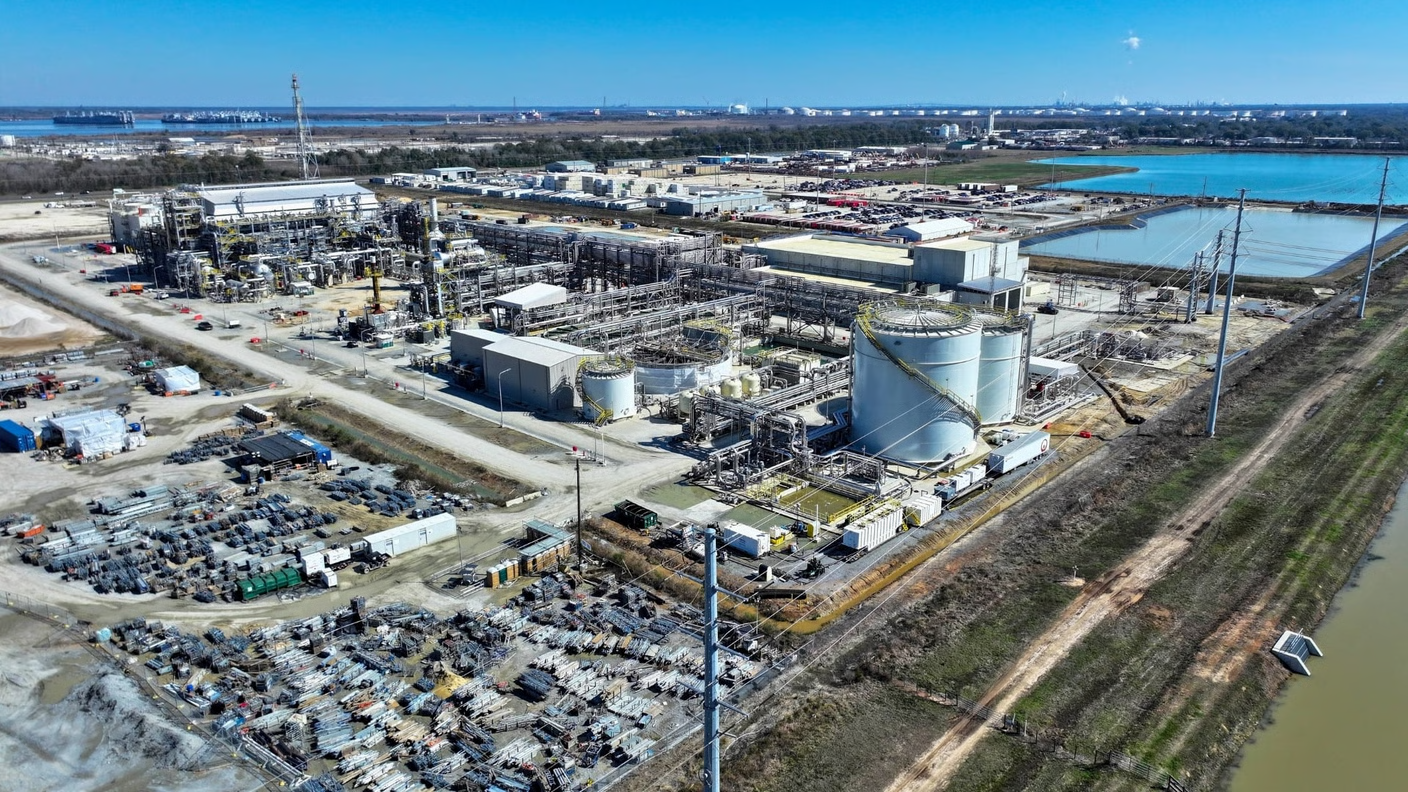
Lurgi Rectisol™ demonstration unit.
Hydrogen and ammonia are central to the decarbonisation of industrial processes, in refineries, chemical plants and for transport. Air Liquide provides low-carbon production and ammonia-cracking technologies across this value chain. Developing an economically viable hydrogen supply chain will require low-carbon ammonia production at very large scale.
Autothermal reforming (ATR) is a key route to high-capacity, low-carbon ammonia production. However, ATR synthesis gas presents specific carbon capture challenges: high operating pressures, high carbon dioxide (CO2) concentrations and very large gas flow rates. These conditions demand specialised capture solutions.
Air Liquide addresses these requirements through a proprietary technology portfolio that includes Cryocap™, Lurgi Rectisol™, Recticap™ and amine wash technologies. This portfolio enables the selection and optimisation of the most appropriate carbon capture solution for each project.
When combined with carbon capture, Air Liquide’s Lurgi™ ATR technology offers different optimisation pathways according to a plant’s production objectives. For facilities designed to flexibly co-produce hydrogen and ammonia, Cryocap™ H2 technology can maximise hydrogen yield while maintaining low carbon intensity. For projects focused exclusively on dedicated, large-scale low-carbon ammonia production, the combination of Recticap™ carbon capture and Lurgi™ ATR provides a streamlined and economically viable solution.
Recticap™ technology
Recticap™ is Air Liquide’s proprietary carbon capture technology, developed from the widely referenced Lurgi Rectisol™ gas purification process. It draws on more than 75 years of experience in physical absorption using cold methanol to remove a broad range of impurities.
Recticap™ has been specifically streamlined for CO2 capture downstream of autothermal reforming, particularly in large-scale ammonia and hydrogen production facilities.

Potential applications (Fig. 1) include:
- ammonia synthesis gas preparation;
- hydrogen production for fuel-grade and chemical-grade applications;
- methanol synthesis gas production;
- Fischer–Tropsch synthesis gas production.
In the process, shown in Fig. 2, synthesis gas from the ATR is first cooled before entering an absorber column. There, it comes into contact with chilled methanol solvent, which selectively absorbs CO2.

The CO2-lean synthesis gas exits the top of the absorber with a residual CO2 concentration ranging from 1–2 vol-%down to less than 10 ppmv, meeting stringent purity requirements for downstream applications.
The CO2-rich solvent is subsequently regenerated through a series of flash stages. During this process, most of the absorbed CO2 is released in gaseous form, while the solvent is cooled down by the evaporation of the desorbed CO2.
Because the flash stages operate at different pressure levels, the CO2 product can be released at pressures ranging from below 1 bar to 6 bar. This reduces the power required for multi-stage CO2 compression. Where required, residual CO2 can be removed from the methanol in a distillation column through heat input.
As Recticap™ operates at sub-zero temperatures, the lean solvent must be recooled before returning to the absorber. Efficient heat integration is therefore essential to recover heat of absorption under sub-zero conditions and to provide refrigeration duty that compensates for unavoidable heat losses.
The process can produce a high-purity CO2 stream of more than 99 mol-%, suitable for pipeline transport, permanent storage or utilisation.
Comparing carbon capture solvents
Several solvents can be used for CO2 absorption. They are generally classified as either chemical or physical solvents.
Chemical solvents, such as amines, bind CO2 through a reversible chemical reaction. Physical solvents, including methanol, absorb CO2 according to its physical solubility in the solvent.
The appropriate solvent depends on several project-specific factors, including:
- plant capacity;
- CO2 partial pressure;
- heat and power availability and cost;
- required CO2 product conditions;
- downstream process requirements.
For large-scale low-carbon ammonia production based on ATR technology, physical solvents offer valuable advantages. This reflects the distinct characteristics of ATR synthesis gas compared with conventional ammonia production routes based on steam methane reforming (SMR) combined with air-blown ATR.
The ATR route produces synthesis gas at higher pressure and with higher CO2 content. It can also involve significantly larger gas volumes as plant capacities increase. These conditions require a different approach to carbon capture.
With physical solvents, CO2 loading increases approximately in proportion to CO2 partial pressure. By contrast, loading in chemical solvents is constrained by chemical equilibrium (see Fig. 3). At higher CO2 partial pressures, the greater loading capacity of physical solvents reduces solvent-circulation requirements. This can result in smaller equipment, lower pumping duties and reduced regeneration energy consumption.

Physical solvents are principally regenerated through pressure reduction, or flashing. Chemical solvents, by comparison, typically require substantial heat input to release the absorbed CO2. This results in higher energy consumption for regeneration of chemical solvents and may necessitate multiple process trains for very large gas capacities.
Among physical solvents, methanol – used in Recticap™ and Rectisol™ technology – offers favourable properties for CO2 removal. Its high CO2 solubility at low temperatures and low freezing point of approximately −92°C enable operation at cold temperatures, maximising absorption efficiency. In addition, methanol’s low viscosity at cold operating conditions supports effective fluid handling and mass transfer.
Table 1 compares the properties of methanol with those of other physical solvents commonly used for industrial gas purification.

Given these characteristics, Recticap™ is well suited to energy transition applications. It offers energy-efficiency and cost advantages at high feed gas pressures – starting at approximately 25 bar – and large capacities, beginning at around 300 kNm³/h of hydrogen or 3,000 t/d ammonia.
Low-carbon ammonia at scale
For low-carbon ammonia projects, Recti-cap™ offers several distinctive advantages.
Proven technology
Recticap™ is a streamlined version of Air Liquide´s established Lurgi Rectisol™ technology. With more than 110 Rectisol™ references worldwide, including 40 commissioned in the past 20 years, Air Liquide offers extensive design and operational experience.
This includes experience operating two large-scale units in Asia, supporting high availability and reliable performance.
Large capacity
A key advantage of Recticap™ is its ability to process exceptionally large gas volumes. A single train can treat more than 1 million Nm³/h of synthesis gas, making it well suited to world-scale low-carbon ammonia projects.
Recticap™ and Rectisol™ are carbon capture technologies with commercial references at synthesis gas capacities exceeding those required for a 6,000 t/d ammonia plant. The largest operating Lurgi Rectisol™ facility treats 1.1 million Nm³/h of synthesis gas in each of its four trains.
High CO2 capture rate and low energy consumption
Recticap™ can capture up to 99.7% of CO2 while requiring as little as 0.25 GJ/t CO2, excluding compression. Its energy demand comprises both electrical and thermal components.
The relatively low thermal-energy requirement is advantageous for large-scale low-carbon ammonia projects. Waste heat from the front end can be used effectively, leaving more heat available to optimise the overall plant energy balance. Where renewable electricity is available, further Scope 2 emissions reductions may also be achieved.
Integration of Recticap™ with Air Liquide’s liquid nitrogen wash unit can further improve energy efficiency and hydrogen recovery, while producing an inert-free synthesis gas stream for ammonia synthesis.
Compact design
Drawing on Air Liquide’s expertise in column design and structured packing, developed through its Rectisol™ demonstration unit, Recticap™ absorber columns are designed to be compact. This can reduce shell volume and associated investment costs by approximately 30%.
Single-train Recticap™ units are feasible for 6,000 t/d ammonia facilities, with equipment dimensions designed to remain within typical transport limits for remote project locations.
Cost-effectiveness
As a streamlined form of Rectisol™, Recticap™ reduces equipment requirements and capital expenditure. For a typical 6,000 t/d low-carbon ammonia plant, it can provide an efficient total cost of ownership through lower capital investment and optimised operating expenditure.
Conclusion
Recticap™ provides a proven, efficient and scalable carbon capture solution for large-scale industrial applications, particularly low-carbon ammonia production. Its ability to accommodate high-pressure, CO2-rich ATR synthesis gas at world-scale capacities makes it a strong option for projects seeking substantial emissions reductions while maintaining operational efficiency and economic competitiveness.