Nitrogen+Syngas 403 Sep-Oct 2026
16 September 2026
All this and El Niño too…?
“A strong El Niño will have a negative impact on the world economy…”
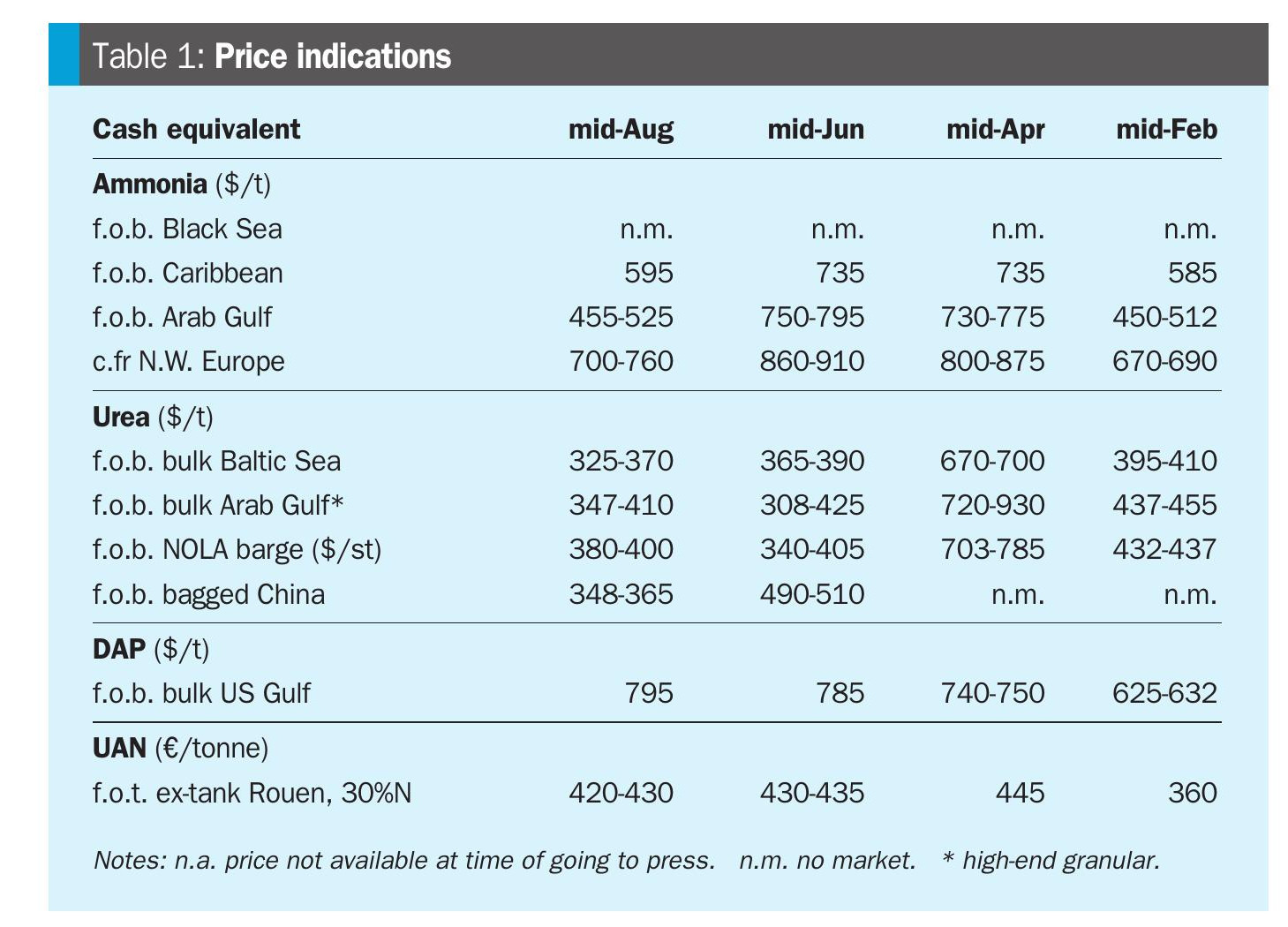
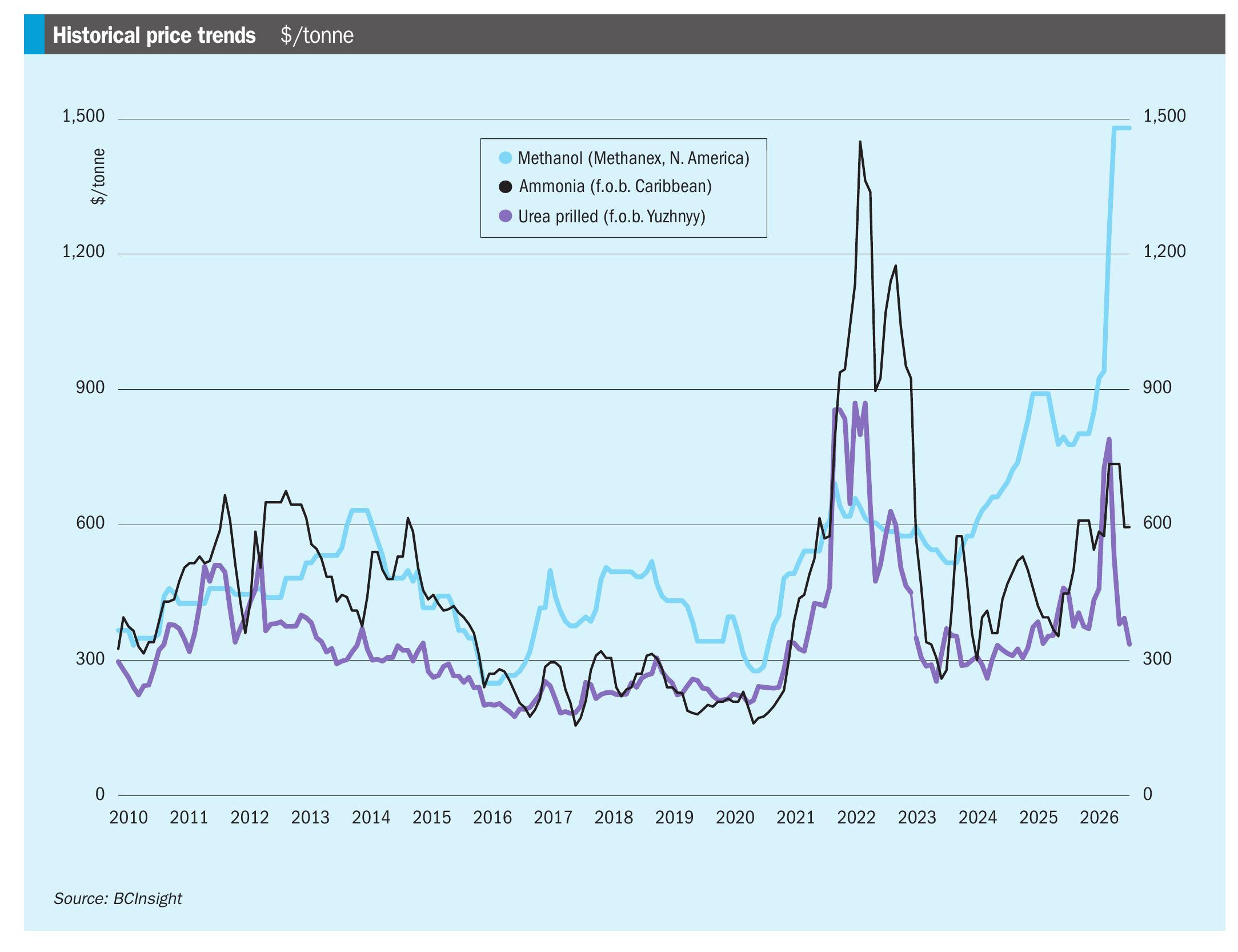
The August deadline for talks between the US and Iran came and went, as expected, with no resolution to the conflict. At time of writing, both sides were exchanging tit for tat attacks on ships in the Strait of Hormuz, with Iran claiming that it would be instituting a new ‘exclusion zone’, and no sign of a diplomatic resolution in sight. With the flow of ammonia, urea and other commodities like oil, LNG and sulphur from the Gulf still slowed to a trickle, the summer of high prices and demand destruction looks set to extend well into autumn at least.
But meanwhile, on the other side of the world, something equally momentous appears to be happening, with the previous two La Niña years ending, and Pacific surface temperature trends moving towards what is shaping up to be one of the largest El Niño events in history. The World Meteorological Organisation (WMO) recently released data on the weather phenomenon, showing it could be the strongest for more than 70 years and last until at least February 2027.
El Niño – so called because it was first noticed around Christmas (El Niño means the Christ child) – is associated with a band of warm ocean water that develops near the equator in the central and eastern Pacific Ocean. It develops when the westward winds in the Pacific weaken, allowing warm water to spread eastwards towards South America, bringing with it high rainfall. The event typically triggers drought across large swathes of Asia and Australia, while the Americas typically experience excess rain and flooding. El Niño’s effects are also felt further afield, particularly in Africa.
The last so-called ‘Super El Niño’ event occurred in the winter of 2015-2016, and led to a weak monsoon and summer heatwave in India, followed by flooding in South Asia. Rainfall during September and October 2015 was also the third lowest on record in Australia. There was drought followed by fires in Indonesia and a 60% fall in the maize harvest in Central America. A strong El Niño will have a negative impact on the world economy, mainly driven by four key factors.
• Extreme temperatures caused by El Niño, or in the worst case a ‘Super El Niño’, are likely to increase the number of natural disasters in many parts of the world, including forest fires, droughts and the spread of diseases.
• Droughts will reduce hydropower availability in certain markets, which will increase the costs of producing and processing certain commodities. Demand for energy alternatives will increase, along with rising demand for cooling, particularly in Asia where a large part of the world population will be exposed to these higher temperatures. In other words, an El Niño is likely to result in higher energy prices.
• The heightened risk of natural disasters, coupled with the current and continuing low availability of fertilizers from the Middle East (especially sulphur and urea) and rising energy prices would be disruptive for the world’s agricultural production. This will raise food prices worldwide, or worse, even cause shortages in some regions. This could fuel global inflation and result in interest rates remaining higher for longer.
• Global trade will also be affected. Higher energy prices could raise transportation costs and many inland waterways will be impacted by changing water levels. One of the most important arteries for world trade is the Panama Canal. Throughput was severely disrupted during the brief El Niño period at end-2023, when sea temperatures in the Pacific Ocean only reached 1.5 ˚C above normal levels.
Fertilizer applications in India are already falling due to a weak monsoon and anticipated later conditions, and potash demand has fallen in anticipation of the coming El Niño. The final quarter of 2026 and 1Q 2027 could see markets in for an even bumpier ride than they have had this summer.