
The crisis behind the crisis: why fertilizer belongs at the heart of the food and energy conversation
Energy, food, and fertilizer are three faces of the same system, says Alzbeta Klein, CEO of the International Fertilizer Association (IFA).


Energy, food, and fertilizer are three faces of the same system, says Alzbeta Klein, CEO of the International Fertilizer Association (IFA).
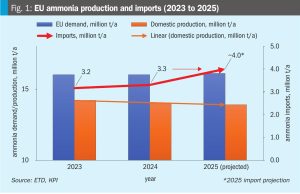
VK Arora of Kinetics Process Improvements, Inc. (KPI) looks at how – while carbon border taxes may reshape ammonia trade – the economics of hydrogen and electricity will ultimately determine the long-term competitiveness of European production.

A review of papers presented at this year’s Sulphur World Symposium, held by The Sulphur Institute (TSI) in Vancouver, Canada this year from April 28 to 30.
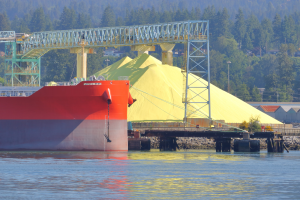
Policy decisions and geopolitical shocks are now the dominant drivers of sulphur and phosphate fertilizer markets, overriding more traditional seasonal fundamentals. The conflict in the Middle East, including the escalation around Iran, has tightened sulphur availability and lifted costs sharply, while China’s export restrictions continue to restrict global phosphate supply.

The Zambian government has introduced a new permit system to manage the export of sulphuric acid, which came into effect on 27 March, 2026, according to an announcement from the Ministry of Commerce, Trade and Industry. The move comes at a time of significant exceptionally high prices and sourcing challenges in the global sulphur market, adding another layer of tightness for regional consumers. The Ministry stated that the measure is designed to correct a "critical market imbalance" and ensure supply for the country's domestic industries. The system aims to safeguard local downstream sectors that rely on the acid, while still ensuring that the needs of the export market are met, it said.

CRU’s Phosphates+Potash Expoconference was held in Paris in mid-April, with the Iran crisis uppermost in everyone’s mind. Margins are under pressure, sulphur has become a strategic constraint, and the phosphates investment pipeline is thin. CRU Principal Consultant Humphrey Knight examined the fallout from the closure of the Strait of Hormuz, noting that fertilizers have been hit harder than most bulk commodities. A large share of exportable sulphur and traded urea normally originates in, or passes through, Gulf producers. The effective closure of the strait has squeezed the traded part of these markets, where international prices are set, and pushed benchmarks up sharply. The global phosphate market is structurally tight, and the combination of Chinese export policy and Middle East logistics has pushed the traded segment into a much more fragile state.
Russia has again extended its ban on the export of industrial sulphur, with the latest decree prolonging the restriction until 30 June 2026. The announcement was made via the government’s press service on 31 March. This decision is aimed at stabilising the supply of raw materials for the domestic market to support the production of phosphate-based fertilizers. The restriction covers the export of liquid, granulated, and lump sulphur.
India's cabinet approved a proposal to spend $4.49 billion to subsidise phosphate and potassium fertilizers for the Kharif 2026 season, according to an 8 April government statement. The allocation represents an increase of approximately $460 million over the Kharif 2025 season budget, reflecting adjustments for recent trends in international prices of fertilizers and inputs including urea, DAP, MOP, and sulphur.
Morocco's OCP is bringing forward its maintenance schedule and expects a reduction of up to 30% in output for the second quarter of 2026, the company said 2 April, with some plants beginning maintenance next week.
Turkey has prohibited exports of sulphur under GTP 2503 from 7 April through the second and third quarters of 2026, according to a 6 April communication from the Ministry of Commerce. The measure does not apply to customs declarations lodged before 7 April. The restriction followed a request from the Ministry of Agriculture and Forestry, which said sulphur prices had risen by 35-40% and that supply had tightened for fertilizer production, including AS, DAP and other compound fertilizers. The General Directorate of Exports will review any exceptional cases arising during implementation.