Community
22 April 2026
Europe's P4 phosphorus gap: What the industry needs to know
Written by Natalie Noor-Drugan
A session at the CRU Phosphates+Potash Expoconference 2026 in Paris last week examined the strategic importance of white phosphorus — P4 — and the supply risks facing European industry.
The ingredient many overlook
White phosphorus — P4 — receives relatively little attention in the broader phosphate industry, even as it underpins a wide range of strategic applications. While the sector’s attention has focused on fertiliser supply chains and the growing LFP battery market, P4 has become one of the more strategically exposed materials in the global chemical industry.
Robert Van Spingelen, President of the European Sustainable Phosphorus Platform (ESPP), and Willem Schipper of Willem Schipper Consulting used their joint session at the CRU Phosphates+Potash Expoconference in Paris to set out the case for P4 to receive greater attention from industry, investors and policymakers.
What is P4, and why does it matter?
P4 is elemental white phosphorus. It is not made by the wet acid process that dominates fertiliser production. Instead, it is produced by heating phosphate rock with coke and silica in an electric arc furnace at extremely high temperatures, condensing the phosphorus vapour driven off into liquid P4.
It is reactive, hazardous and energy-intensive to produce. ESPP describes its uses as non-substitutable across a range of applications. P4 is not a finished product — it is a chemical building block. Its derivatives include glyphosate; flame retardants used in electronics and aerospace components; pharmaceutical compounds; and thermal phosphoric acid used in food-grade applications. P4 also underpins the production of lithium hexafluorophosphate (LiPF₆) — the electrolyte salt used in lithium-ion batteries, including LFP cells. From 2030, phosphorus will be included in EU battery recovery calculations, making the P4 supply chain directly relevant to the energy transition.
P4 accounts for approximately 2% of total global phosphorus use by volume, but the industries it serves span several strategically important sectors.
Europe is 100% import-dependent
The EU has had zero domestic P4 production since 2012, when the last European producer, Thermphos in the Netherlands, closed. The bloc is now entirely reliant on imports — principally from Vietnam and Kazakhstan, with P4 derivatives also flowing from China.
P4 was listed as a Critical Raw Material under the EU Critical Raw Materials Act 2024/1252. ESPP is calling for it to be elevated to “Strategic” status — a designation that would unlock EU support mechanisms and accelerate domestic production initiatives. The SCRREEN reassessment process was underway at the time of the conference, with ESPP having participated in a stakeholder workshop in Brussels in February 2026.
Van Spingelen drew a parallel between Europe’s P4 dependency and the critical mineral exposure faced by Japan, India and South Korea — countries he cited as comparable reference cases.
The supply picture in 2026
Schipper’s market analysis outlined a challenging P4 supply landscape in 2026. In Vietnam — Europe’s primary source — a government crackdown on the country’s largest P4 producer, a tank incident at another facility, and declining feedstock quality combined to drive a 50% price increase in 2026.
P4 prices were relatively stable at $2,700–$3,200 per tonne until 2020, rising to $3,700–$4,000 per tonne in 2022, with Vietnamese material exceeding $6,000 per tonne at that point, before some relaxation since 2023. The current Vietnamese disruptions could push costs to $5,000 per tonne.
Kazakhstan presents its own complications. European supply runs through Ukraine, Russia and Belarus — a route severely disrupted by the ongoing conflict. India, meanwhile, is receiving Kazakhstani P4 via a rail route through the International North-South Transport Corridor, transshipped at Bandar Abbas.
A new 48,000-tonne-per-year plant in Malaysia has started after a two-year power-supply delay — though off-specification product is expected during commissioning until at least Q3 2026. New plants are under consideration in the MENA region, but high power costs remain a significant hurdle.
Routes to European production
ESPP is also promoting emerging technologies that could establish European P4 production from secondary sources, reducing import dependency without requiring new mining. The most advanced is Spodofos, developed by ThermusP with investment from SNB, LANXESS, Aquafin, GMB BioEnergie and STOWA, which produces P4 from sewage sludge incineration ash using scrap aluminium as an energy source in an exothermic process — reducing energy costs. A pilot plant is operating in the Netherlands.
The Flashphos project, EU R&D-funded and piloting at ARP in Leoben, Austria, recovers P4 from secondary phosphate streams. ESPP is also tracking further emerging routes — including RECOPHOS, FerroPhos and work from UC Dublin — as part of its Nutrient Recovery Technology Catalogue.
The technology required to produce P4 at industrial scale is specialised. As the slides note, the equipment needed is “not (fully) off the shelf,” and none of these secondary-source routes have yet reached commercial scale.
What this means for the wider industry
The companies that produce glyphosate, manufacture flame retardants, supply electrolyte salts for batteries, or produce pharmaceutical intermediates are all downstream P4 customers facing the same supply risks. Schipper’s assessment was that supply chain risks remain elevated, new capacity is slow and expensive to build, and planned capacity in the MENA region faces persistent cost challenges.
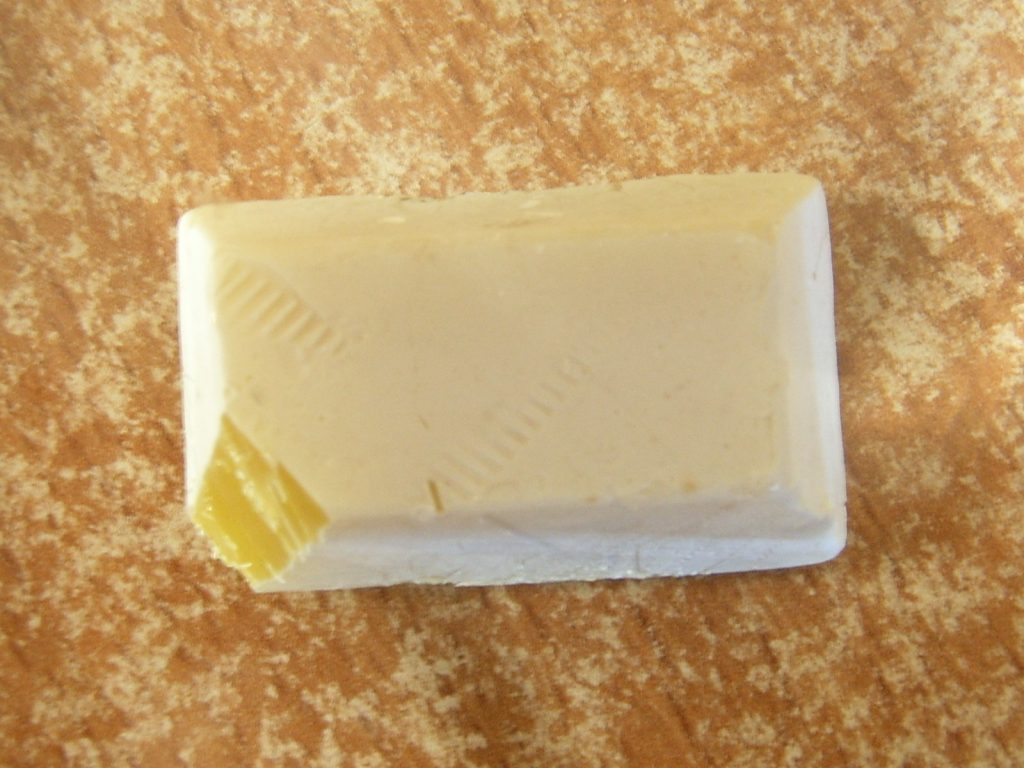
Image: By BXXXD, CC BY-SA 3.0, https://commons.wikimedia.org/w/index.php?curid=1096986