A year of positives for Anglo American
Fertilizer International interviews Mike Garnett, the Chief Commercial Officer of Anglo American Crop Nutrients, ahead of IFA's Annual Conference in June.
Brussels has put Europe’s gas‑exposed fertilizer industry at the centre of its new Fertilizer Action Plan, warning that high energy costs and plant closures threaten the region’s nitrogen capacity and long‑term food security.
Controlled-release fertilizers (CRFs) can help food processors and consumer packaged goods (CPG) companies cut their Scope 3 emissions.
VK Arora of Kinetics Process Improvements, Inc. (KPI) looks at how – while carbon border taxes may reshape ammonia trade – the economics of hydrogen and electricity will ultimately determine the long-term competitiveness of European production.
Multiple drone strikes have hit the industrial city of Cherepovets in Russia's Vologda Oblast region, according to Russian news agency TASS. The area contains PhosAgro's largest phosphate fertilizer production site. Cherepovets has a production capacity of around 700,000 t/a NPK and around 814,000 t/year DAP/MAP, according to CRU data, making it the largest phosphate fertilizer production site across Europe and the CIS. The site also contains several sulphuric acid plants with a combined capacity of 4.5 million t/a, making it Russia's largest production hub for the acid. This entire volume is consumed domestically.
InfraLeuna GmbH, the owner and operator of the Leuna chemical site, has unveiled a new state-of-the-art heating terminal as part of a new central infrastructure facility established at the Leuna chemical site to address the changing demands of the chemical industry’s supply chains.
Russia has again extended its ban on the export of industrial sulphur, with the latest decree prolonging the restriction until 30 June 2026. The announcement was made via the government’s press service on 31 March. This decision is aimed at stabilising the supply of raw materials for the domestic market to support the production of phosphate-based fertilizers. The restriction covers the export of liquid, granulated, and lump sulphur.
HyOrc Corporation says that it has signed a project development and technology agreement with Bulgaria-based OnEnergy Group to develop a waste-to-methanol facility. Under the agreement, HyOrc will serve as the technology partner for Stage 3 of the project, which focuses on thermochemical conversion of refuse-derived fuel (RDF) into green methanol. The facility is designed to process approximately 50,000 t/a of RDF, operating around 330 days per year with a daily throughput of approximately 150-155 t/d. Expected methanol production capacity is approximately 38-42 t/d (13,200 t/a), subject to final engineering configuration.
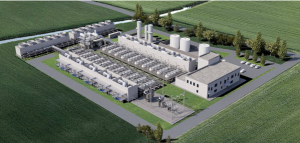
Swedish e-fuel developer Liquid Wind and Finnish energy company Turun Seudun Energiantuotanto (TSE) have signed a memorandum of understanding (MoU) for the development of a green methanol plant at Naantali, Finland. The facility is planned to be adjacent to TSE’s local power plant, Naantali 4, which will deliver biogenic CO 2 and steam for the production of methanol. Process and waste heat will be used for district heating, reducing the share of incineration-based district heat production by TSE. Once operational, the plant is expected to produce 100,000 t/a of green methanol made from green hydrogen and biogenic CO 2 . The final investment decision (FID) is planned for 2026, and the facility is expected to be operational in 2029.
Perpetual Next has selected Bilfinger Engineering & Consultancy as lead consultant for its Methanol Moerdijk project, a planned biomethanol facility in the Port of Moerdijk, the Netherlands. The appointment covers environmental impact assessment and permitting support for the development of the project. Under the agreement, Bilfinger will support Methanol Moerdijk BV with key permitting activities, including the environmental impact assessment (MER/ EIA), support for environmental and nature permits, stakeholder and authority coordination, and project management and quality assurance. The Methanol Moerdijk project is being developed as a large-scale biomethanol facility intended to convert approximately 313,000 t/a of biologically-derived carbon into around 216,000 t/a of biomethanol.