Fertilizer International 527 Jul-Aug 2025
7 July 2025
Bio-based fertilizer materials: benefits and challenges
PRODUCT INNOVATION
Bio-based fertilizer materials: benefits and challenges
The B-FERST project has proven the feasibility of manufacturing a family of innovative bio-based fertilizers. These mineral and organo-mineral fertilizers contain nutrients recovered from selected waste sources and also incorporate biodegradable coatings and biostimulants. Fertiberia’s Cinta Cazador Ruiz outlines the project’s aims and highlights its major successes.
Biobased materials: benefits and challenges
Sustainable agriculture aims to meet the current food needs of society without compromising farming for future generations. To help meet this sustainability challenge, the European Union (EU) is improving cooperation between farmers and bio-based industries through its Circular Economy Package.
In particular, the EU faces several great challenges:
• Firstly, large nutrient-rich flows are being dispersed into the environment as both mineral (e.g. phosphorus) and organic waste streams.
• Secondly, the EU is strongly dependent on external non-renewable resources for the supply of key fertilizers used in agriculture.
• Thirdly, securing the availability of crop nutrients at affordable prices is necessary to safeguard European food supply.
To answer these challenges in a sustainable way, the farming sector will also need to increase its productivity and use nutrients more efficiently. However, the EU’s high external dependency for phosphorus (P), for example, illustrates a lack of a circular approach currently.
The recovery of P from urban and industrial flows is a matter of growing urgency in EU countries, due to both limited regional reserves and concerns about the rate of consumption. Thermal treatments (e.g. incineration or sludge pyrolysis) offer one of the most promising recovery strategies, followed by leaching, precipitation and chemical adsorption1 .
Turning waste into resources
Increasing waste generation and resource scarcity are entwined worldwide problems, with the European Union alone producing over 2.5 billion tonnes of waste per year. This is a discouraging situation for a society facing a future of water, food, and resource scarcity, as the global population continues to increase.
Turning waste into resources is central to the shift to a circular economy. The recovery of bio-waste, for example, offers many possibilities for generating chemicals, fuels and other valuable products.
Current phosphorus recovery processes are typically based on the crystallisation or precipitation of struvite from a supernatant liquid. This is separated from solid sludge by digesters at wastewater treatment plants (WWTPs).
However, the recovery rate of phosphorus from the liquid phase generally ranges from 10-60% of the WWTP influent. This compares to 35-70% P recovery possible from sewage sludge and the significantly higher 70-98% recovery from sewage sludge ash2 . Other potentially suitable recovery processes include the capture of phosphorus from incinerated municipal solid waste (MSW) ash, using methods such as acidic leaching-precipitation or acidic-alkaline leaching3 .
Despite the wide range of process options, significant technological and market barriers to large-scale commercialisation of nutrient recovery and the development of marketable products remain. Addressing these is a matter of urgency due to impending legislation – with several European countries making P recovery from sewage sludge mandatory, including Switzerland by 2026, Germany by 2029 and Austria by 2033.
B-FERST – a fertilizer industry paradigm shift
The B-FERST project was created to overcome these barriers. Its overall approach has been to a build a new value chain by developing a novel bio-based process for nutrient recovery from waste – a new concept for the fertilizer industry. This innovative approach involves introducing bio-based materials into existing industrial fertilizer production lines to partly replace conventional mined raw materials.
The project’s full title is Bio-Based fertilizing products as the best practice for agricultural management sustainability. The project was designed to:
• Valorise bio-wastes and integrate these in agriculture management plans.
• Create new circular and bio-based fertilizer value chains by bringing together municipal waste management, the agrifood industries and fertilizer producers.
• Encourage bilateral cooperation between the farming and fertilizer sectors.
• Create a paradigm shift in the fertilizer value chain by formulating eight specialised fertilizers.
B-FERST has proven the feasibility of manufacturing the following innovative bio-based fertilizers:
1. Bio-based mineral fertilizer
2. Bio-based mineral fertilizer enhanced with a microbial plant biostimulant (MPB)
3. Bio-based mineral fertilizer enhanced with a non-microbial plant biostimulant (NMPB)
4. Organo-mineral fertilizer enhanced with MPB
5. Organo-mineral fertilizer enhanced with NMPB
6. Bio-based organo-mineral fertilizer enhanced with MPB
7. Bio-based organo-mineral fertilizer enhanced with NMPB
8. NMPB based on bio-waste by-products from dry industrial oil crops or compost extracts.
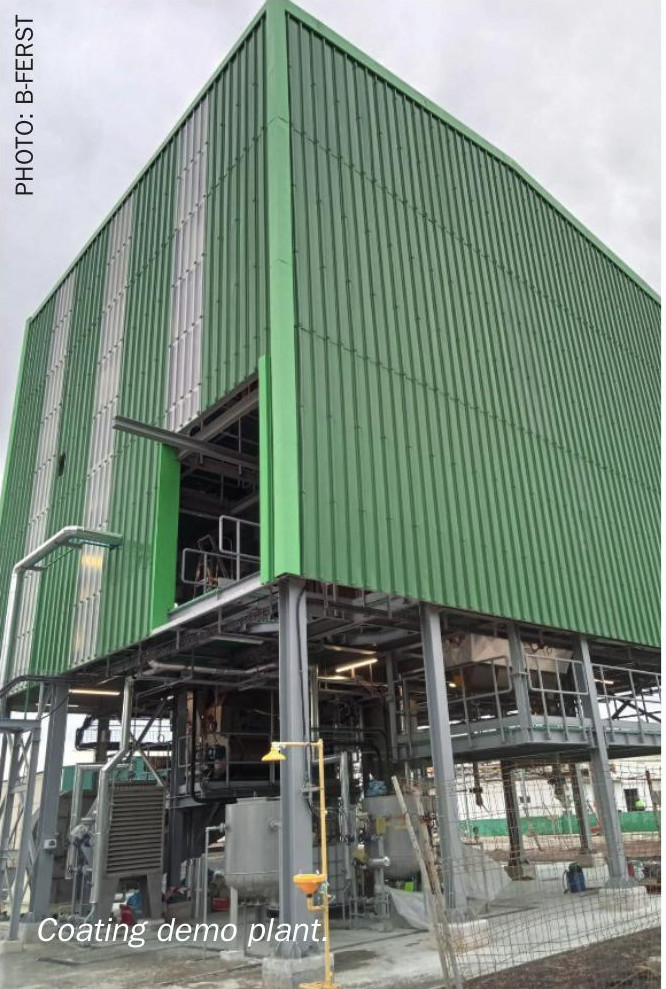
These eight fertilizer products were manufactured in two demonstration plants via a three-stage process:
• Nutrient recovery
• Granulation
• Bio-based conditioning (addition of NMPB/MPB and biodegradable coatings).
As well as achieving more sustainable resource management, these specialised formulations offer tailor-made nutrient dosing for farming systems.
The B-FERST project, led by Fertiberia, comprised a balanced consortium of 10 partners covering the entire value chain, including bio-based industries, SMEs, research and technology organisations, and academic institutions. Project activities were divided between nine work packages.
From biowaste to potential raw materials
The project mapped biowastes from different sectors in European countries to find materials suitable for fertilizer production.
A comprehensive list of requirements was then drawn up to ensure the success and viability of these new bio-based raw materials. The list was based on EU Regulation 2019/10094 and the specific needs of the fertilizer industry. The following requirements were identified as the most critical factors influencing the use of these novel bio-wastes:
Quality. Nutrient concentration and solubility are paramount and the main quality factors for a potential bio-based material. Nutrient concentration should be high enough to allow the incorporation of at least 1-2% of N, P2O5 or K2O within NPK fertilizers. Crucially, to guarantee the final quality of new bio-based NPK formulations, these nutrients must be plant-available and therefore water soluble and/or soluble in ammonium citrate, citric acid, etc.
Regulatory. Any selected bio-waste must comply with the requirements of the new fertilising product regulation (FPR) 2019/1009, including its stipulations for Component Material Categories (CMC) or Product Function Categories (PCF). National regulatory requirements must also be considered.
Security. The absence of pathogens and a low heavy metal concentration are of critical importance, based on current regulations, as is compliance with product safety requirements.
Processing feasibility. The main process considerations include how to handle and introduce bio-based materials as feed into the fertilizer granulation process and how to maintain or increase nutrient availability. Physical properties and chemical composition are also highly significant. In particular, parameters such as moisture content, granulometry and density of the new raw material need to be assessed, as they directly affect successful incorporation in the process.
Availability. A continuous supply of potential new raw materials is necessary. Sufficient volumes of the bio-based waste source therefore need to be available throughout the year. Availability needs to be reviewed and updated frequently in response to the changing market and international situation.
Logistics. Transportation to the fertilizer production plant can be a challenge. Transportation distance is a key parameter as it directly influences overall economics, the carbon footprint, transport costs and environmental impacts etc.
Stability. Linked with security and availability, the composition, biological activity and supply of the bio-based material all need to be stable. Stability is a challenge – as the fertilizer industry requires raw materials with homogeneous physical properties and chemical composition – and therefore must be assessed from the very beginning. It is particularly important to ensure the absence of pathogens within the whole fertilizer value chain.
Economic feasibility. All the above factors influence the costs of bio-based materials. These costs are critical as, to ensure viability, they need to be below the current market prices of standard crop nutrient products. Economic feasibility therefore involves comparing the unit cost of conventional fertilizer raw materials with the unit cost of bio-based materials (nutrient per tonne basis). In some cases, the waste management costs avoided by nutrient recovery make bio-based materials highly affordable from an economic point of view.
Carbon footprint. Targets to cut the environmental impacts and carbon footprint of fertilizer manufacturing are widespread nowadays. Helping achieve these targets by substituting biowastes for conventional raw materials is therefore helpful when it comes to the final decision-making.
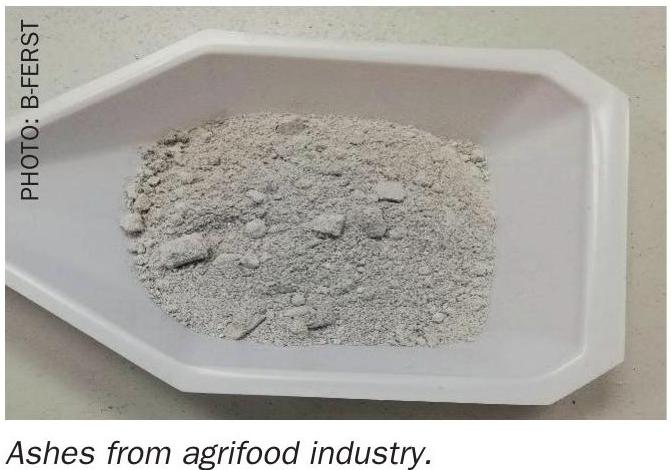
While more than 150 bio-based materials (see example photo of agrifood industry ash) were identified across Europe, only 5% of these met all of these requirements.
Fertilizer industry implementation
The quality of nutrients – particularly plant availability – was identified as one of the main factors determining successful adoption of bio-based materials in fertilizer manufacturing. The incorporation of soluble nutrients is crucial for final acceptance by the fertilizer end-user.
Ashes produced by the incineration of sludges from WWTP, manure or slaughterhouse are abundant in Europe. While many of these contain P2O5 at high concentrations, the P present is insoluble in water and therefore requires extraction using strong acid solutions.
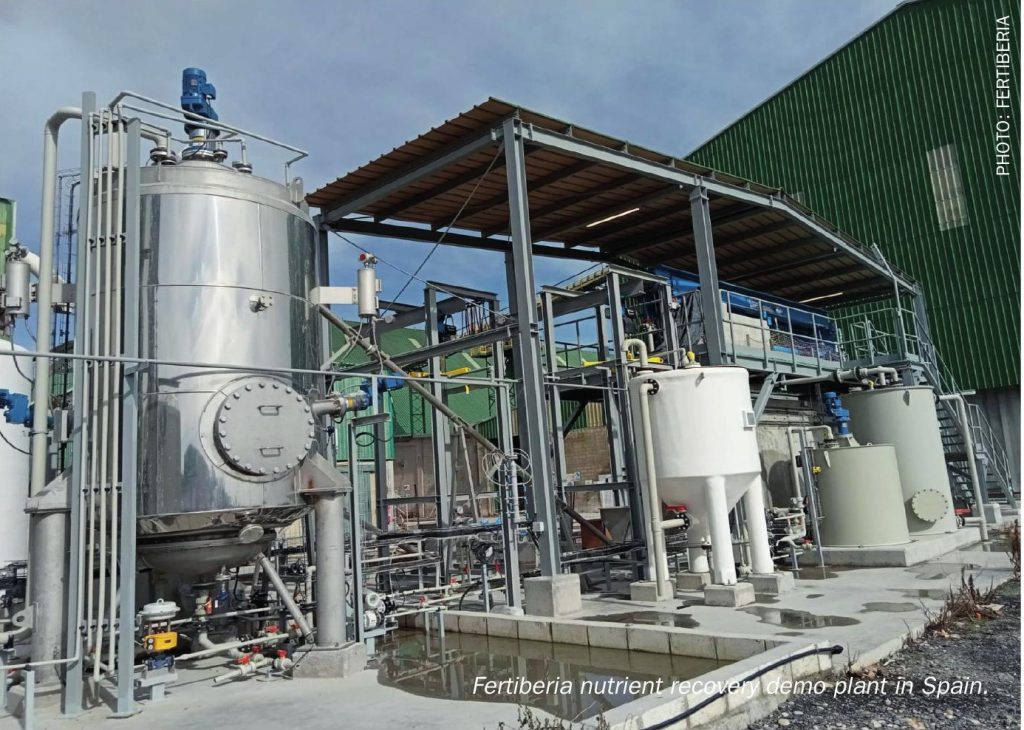
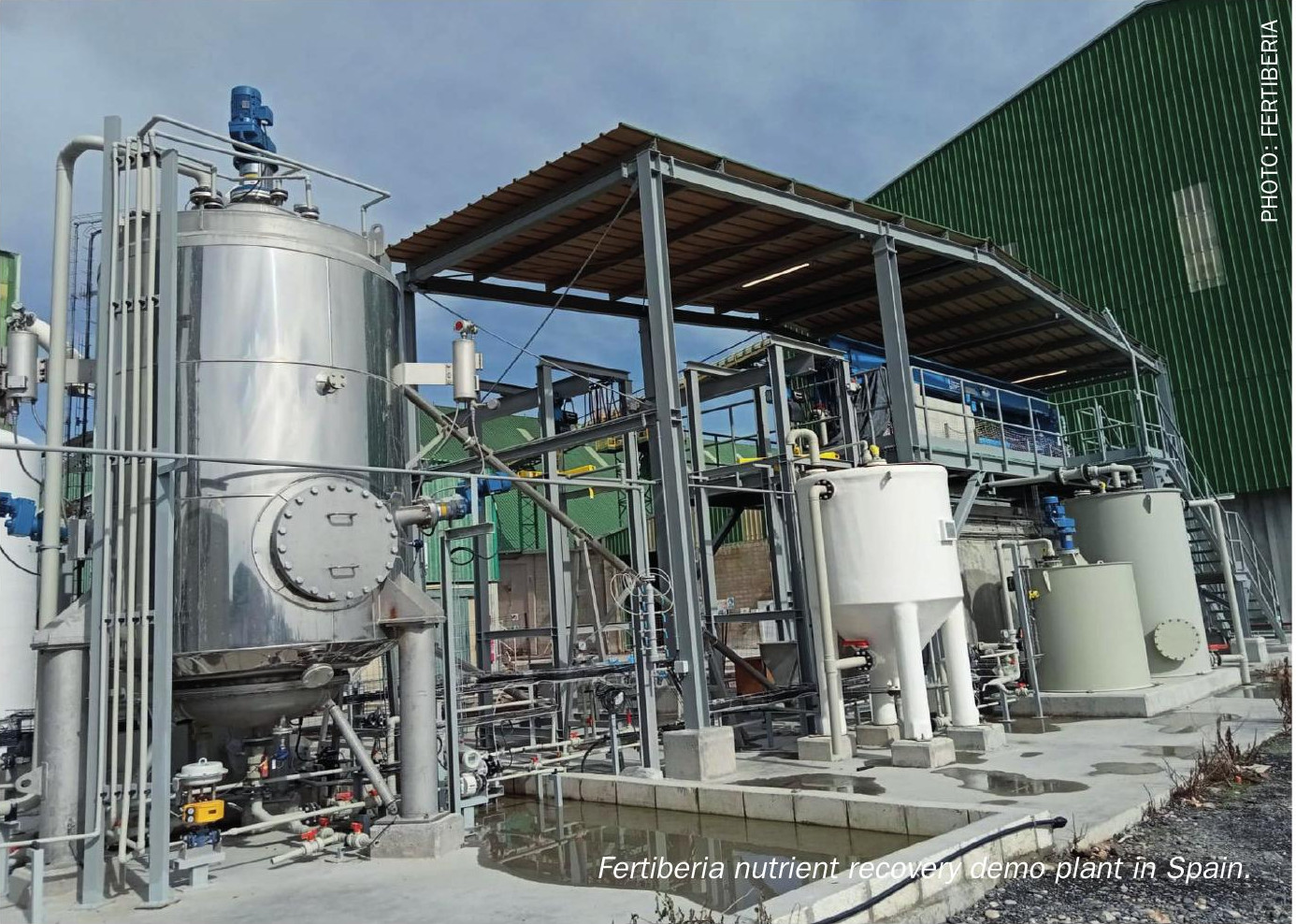
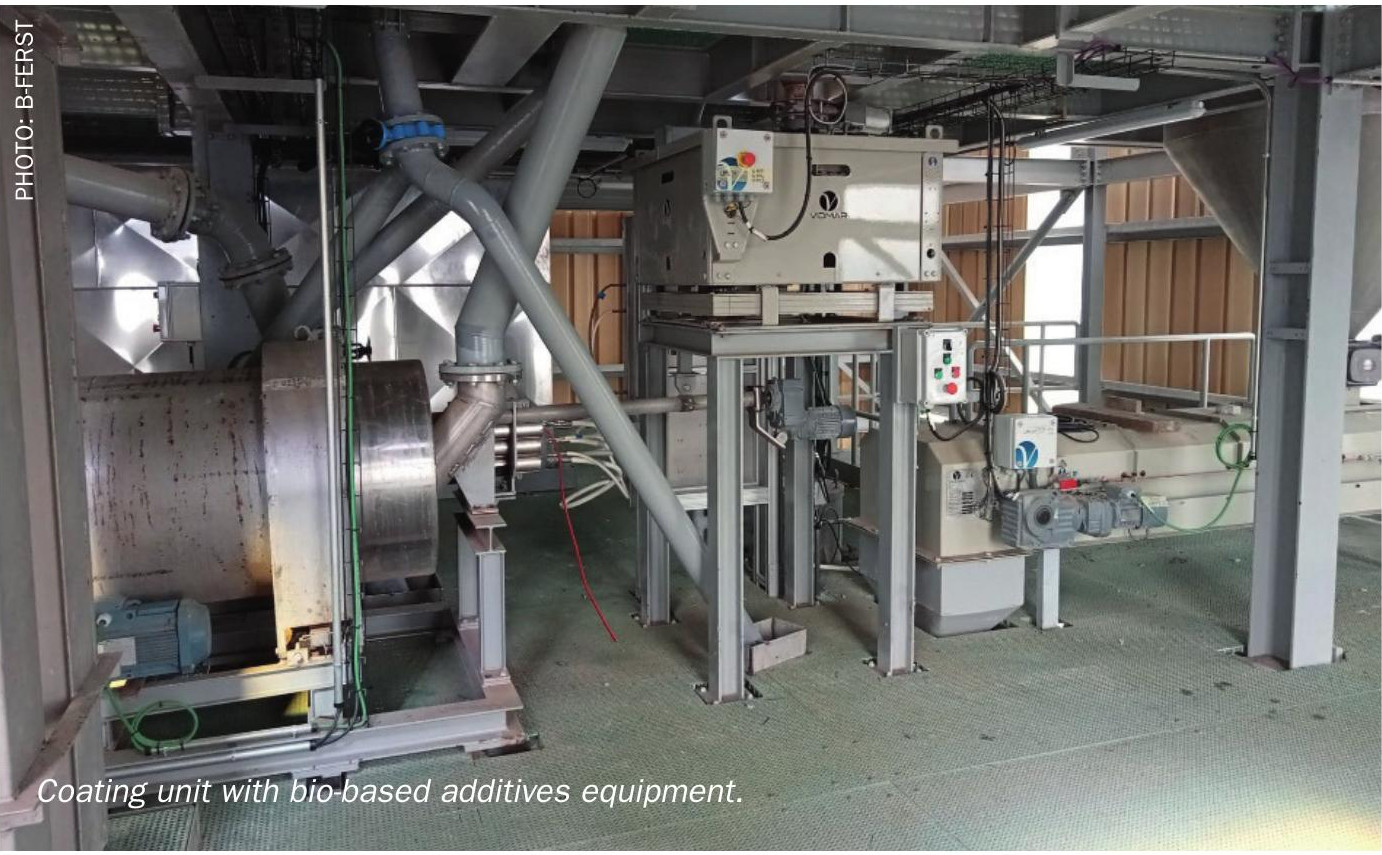
A first-of-its-kind demo plant for P extraction from ashes (based on acid leaching in a thermally coupled reactor) has been developed, built and validated at Fertiberia’s operations in Spain (see main photo). The plant can extract up to 93% of the P2O5 from sludge ash and produce 500 kg/h of dicalcium phosphate (DCP, see photo), an ideal source of plant-available phosphorus.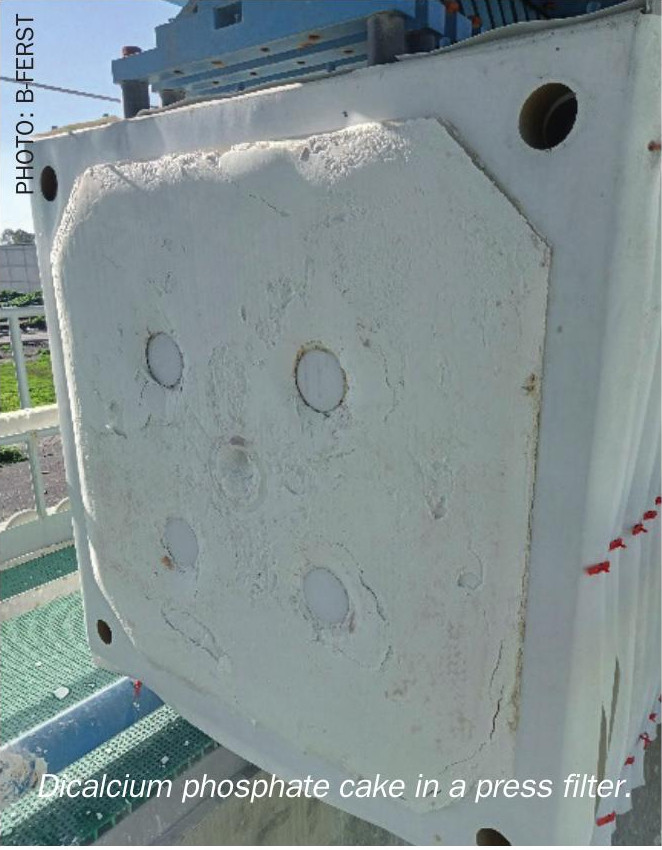
Improving fertilizer performance
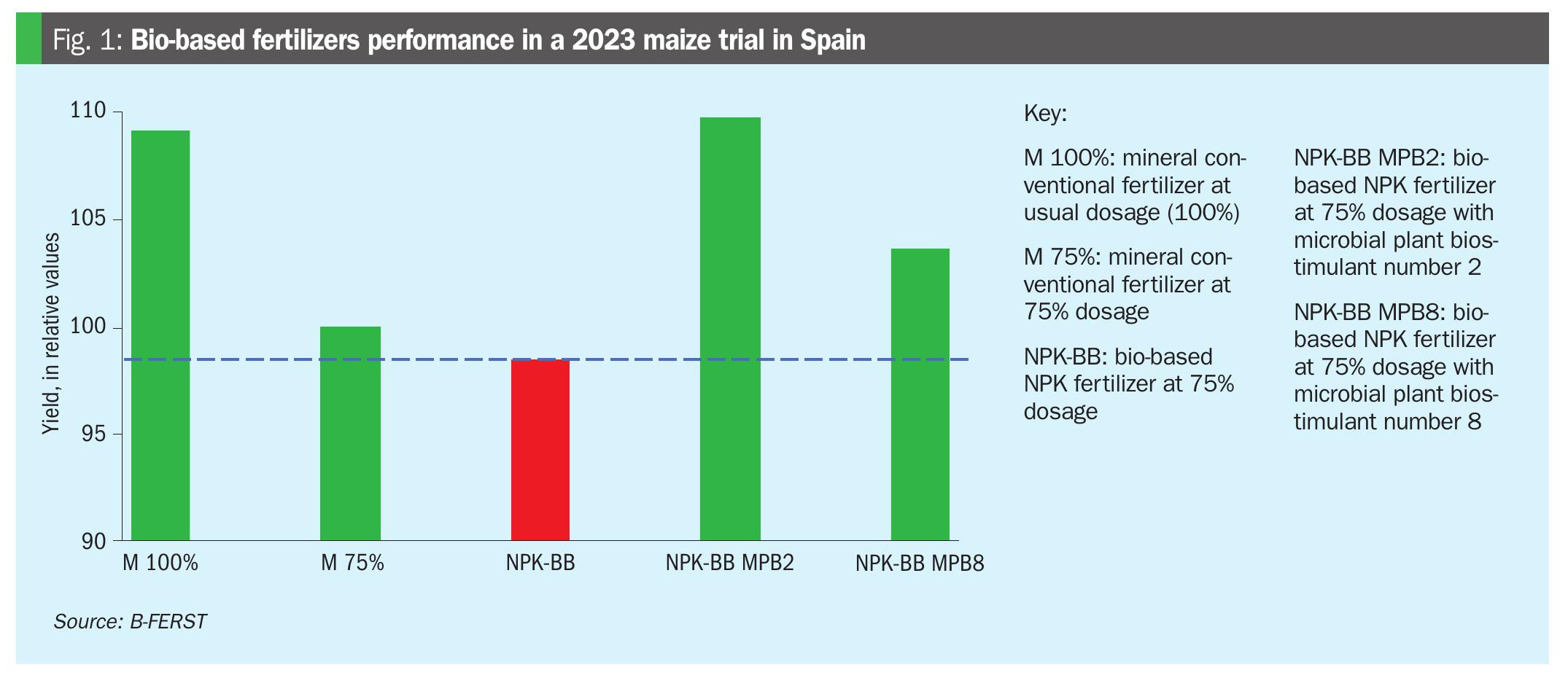
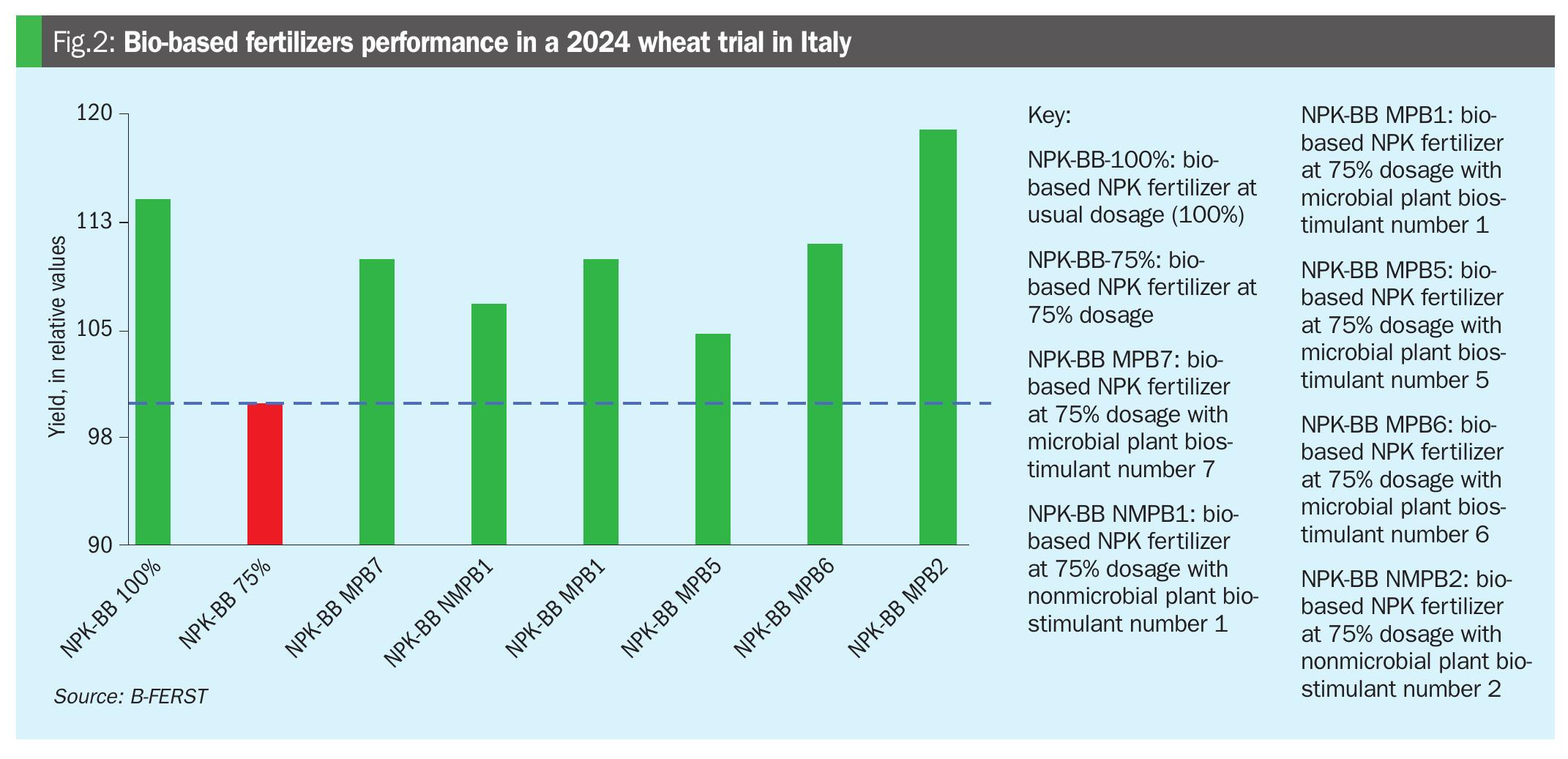
The project carried out 16 field trials across four field campaigns in Spain, Italy, Portugal and Poland. These were designed to test bio-based fertilizers in different soils and climate conditions. Crop trials were carried out on bio-based mineral and organo-mineral fertilizers from selected sources (ashes from olive oil industry, chicken litter ash and composts) as well as on biodegradable coatings and microbial/non-microbial biostimulants. Nutrients present in these biowastes, while not water soluble, were soluble in neutral ammonium citrate. These crop trials and the use of bio-based materials in agriculture are fully supported by the goals of Fertiberia’s sustainability strategy and the EU’s Green Deal and Farm to Fork Strategy.
The main lessons and conclusion from the crop trials (Figures 1 and 2) are that:
• Bio-based fertilizers can perform equally well as conventional fertilizers
• Bio-based fertilizers need to incorporate other components such as biostimulants to outperform conventional fertilizers.
Soil biological properties and biodiversity were also assessed as part of the field trials5 with the following results:
- There was no significant change to soil biological properties as a result of using either conventional or bio-based fertilizers.
- Similarly, metagenomic analysis showed there were no big differences in biodiversity between the treatments, except for the enhancement to the biodiversity of bacterial communities by the addition of non-microbial plant biostimulants.
- DNA analysis did not reveal any adverse effects on soil biodiversity. The highly variable responses suggest that soil background conditions were determining the ultimate effect of treatments on soil diversity.
New enhanced bio-based fertilizer family
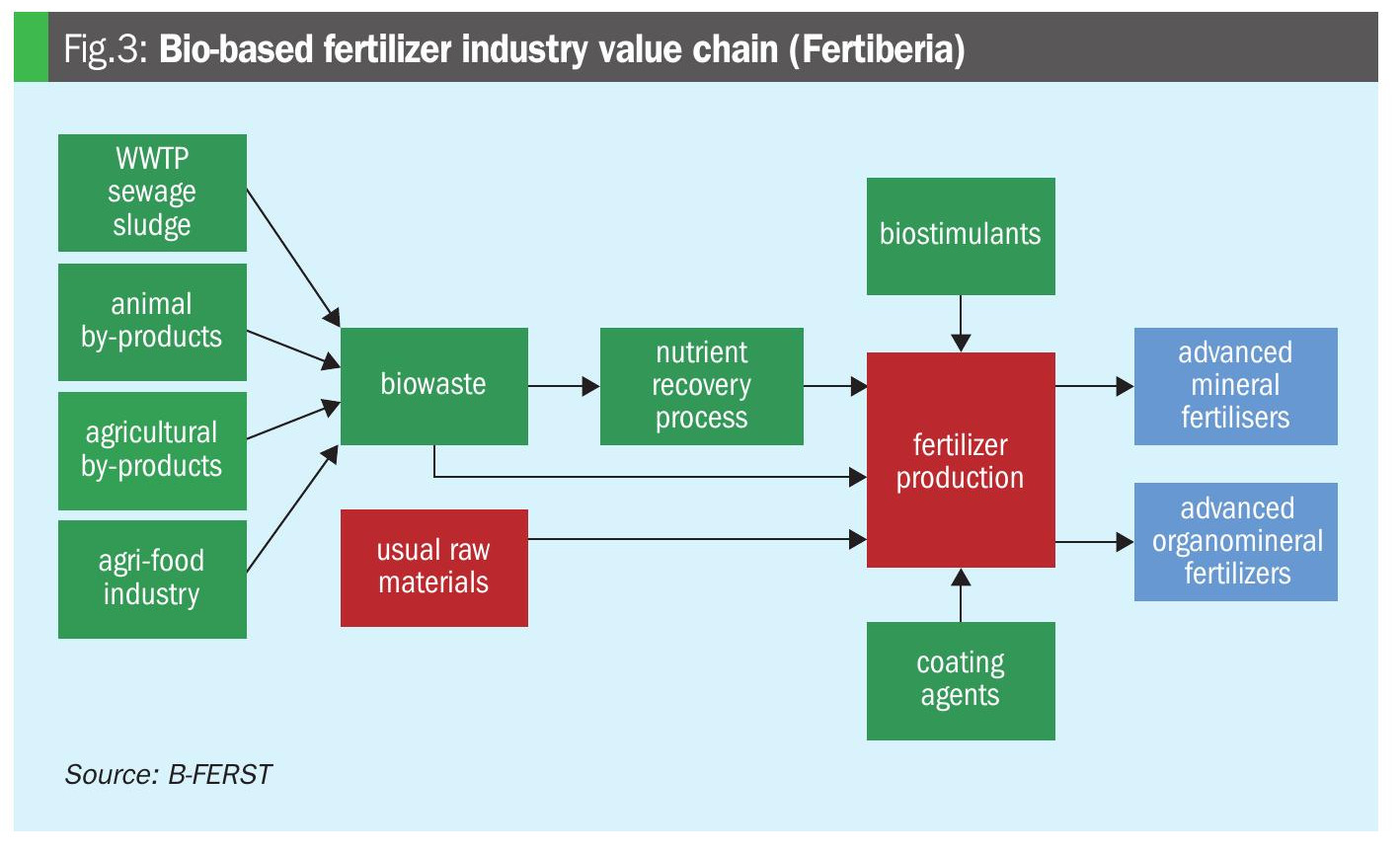
The most promising bio-based materials were incorporated into the fertilizer production value chain (Figure 3).
These new bio-based fertilizers have the following properties:
- Contain up to 42% bio-based materials
- Up to 16% of the nutrients (N, P2O5, K2O, N+P2O5, N+K2O, P2O5+K2 O) derived from bio-based sources
- Up to 8% organic carbon content
- 100% of nutrients plant-available
- More than 80% of nutrients water-soluble
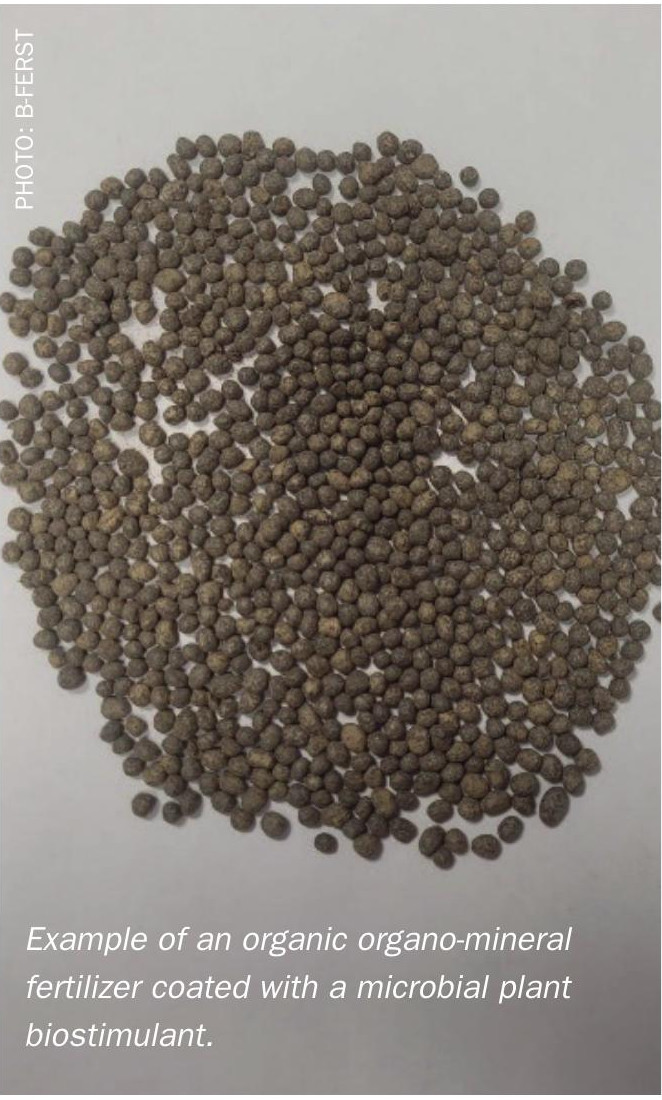
- Biodegradable coatings
- Incorporate microbial or non-microbial plant biostimulants.
References
About the project
B-FERST consortium was led by Fertiberia and composed of 10 other partners: University of Leon (Spain), FCC Aqualia (Spain), Agrisat Iberica SL (Spain), Novamont (Italy), Fundazione ICONS (Italy), FKuR Kunststoff GmbH (Germany), Vlaamse Instelling Voor Technologisch Onderzoek N.V. (Belgium), Arcadia International (Belgium), AgFutura Technologies DOOEL (North Macedonia) and Instytut Uprawy Nawozenia I Gleboznawstwa Panstwowy Institut Badawczy (Poland).
This project was financially supported by the European Commission – BBI JU project ‘Bio-based Fertilising products as the best practice for agricultural management sustainability (BFERST)’. H2020-BBIJTI-2018, Grant agreement ID: 837583. www.bferst.eu
About the author
Cinta Cazador is Project Manager, Research & Development Department, Fertiberia.