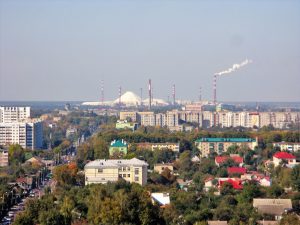
Phosphogypsum for clinker production: delivering a circular economy solution
A new treatment process from thyssenkrupp Uhde converts phosphogypsum into a valuable feedstock for clinker production and can generate sulphuric acid.


A new treatment process from thyssenkrupp Uhde converts phosphogypsum into a valuable feedstock for clinker production and can generate sulphuric acid.
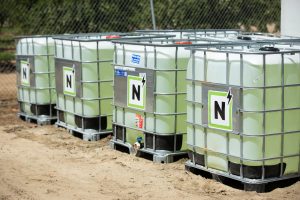
Nitricity has secured $50 million in funding and commenced building a liquid fertilizer production plant in Delhi, California.
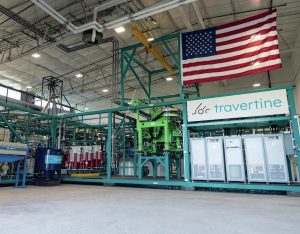
Travertine Technologies, Inc., has began operations at its demonstration plant in New York state. The core Travertine process demonstrated at this plant combines three major unit operations: salt-splitting electrolysis, caustic direct air capture, and mineralisation. This process produces sulphuric acid, calcium carbonate, and green hydrogen from waste gypsum and carbon dioxide captured directly from the air. The demonstration plant will produce 125 t/a of sulfuric acid, 125 t/a of calcium carbonate, and 55 t/a of carbon dioxide sequestration. The plant will supply sustainable sulphuric acid for local partner Sabin Metal Corporation's precious metals recycling and refining business.
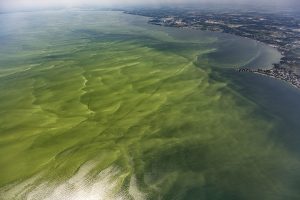
The past few years have seen a rapid increase in attempts to generate ammonia from streams of nitrate polluted wastewater, but how practical are these methods?
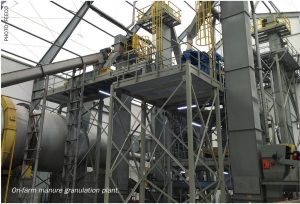
Granulation offers a scalable and reliable way of recovering crop nutrients from waste, says Nick Reckinger of FEECO International.
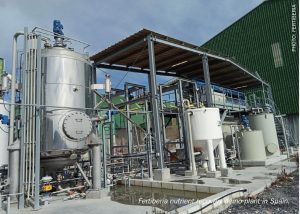
Fertiberia’s Cinta Cazador Ruiz outlines the aims of the B-FERST project and highlights its major successes.
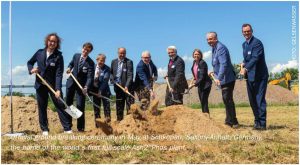
EasyMining’s Christian Kabbe provides an update on the company’s first full-scale Ash2™Phos plant in Germany.

The International Fertilizer Association (IFA) released a new report on phosphogypsum (PG) in May, ahead of its Annual Conference in Monaco.

Carbon Recycling International (CRI), which operates a geothermally powered green methanol plant at Svartsengi, 40km southwest of Reykjavik, had to evacuate its site in late November when a 3km fissure opened in the earth a few kilometres away and lava began spilling across adjacent land. Satellite photos of the area taken on November 24 show a large field of molten and cooled lava to the north, west, and south of Svartsengi, though the plant itself remained undamaged. CRI’s Iceland facility runs on CO2 , water, and renewable electricity from the Svartsengi geothermal power station. CRI says the low-carbon energy source allows it to produce 4,000 t/a of methanol with a greenhouse gas footprint just 10–20% that of conventional methanol.

Van Iperen International is pursuing an ambitious sustainability strategy to cut its carbon footprint by 50%.