Fertilizer International 529 Nov-Dec 2025
Nitricity raises $50M to go global

US fertilizer startup Nitricity secured $50 million in Series B funding in September, ahead of the groundbreaking ceremony at its new liquid fertilizer production plant in Delhi, California.
The funding round was co-led by new investor World Fund, Europe’s leading climate venture capital firm, and returning investor Khosla Ventures. Chipotle’s Cultivate Next venture fund, Change Forces, Susquehanna Sustainable Investments, EIP, and Fine Structure Ventures also took part.

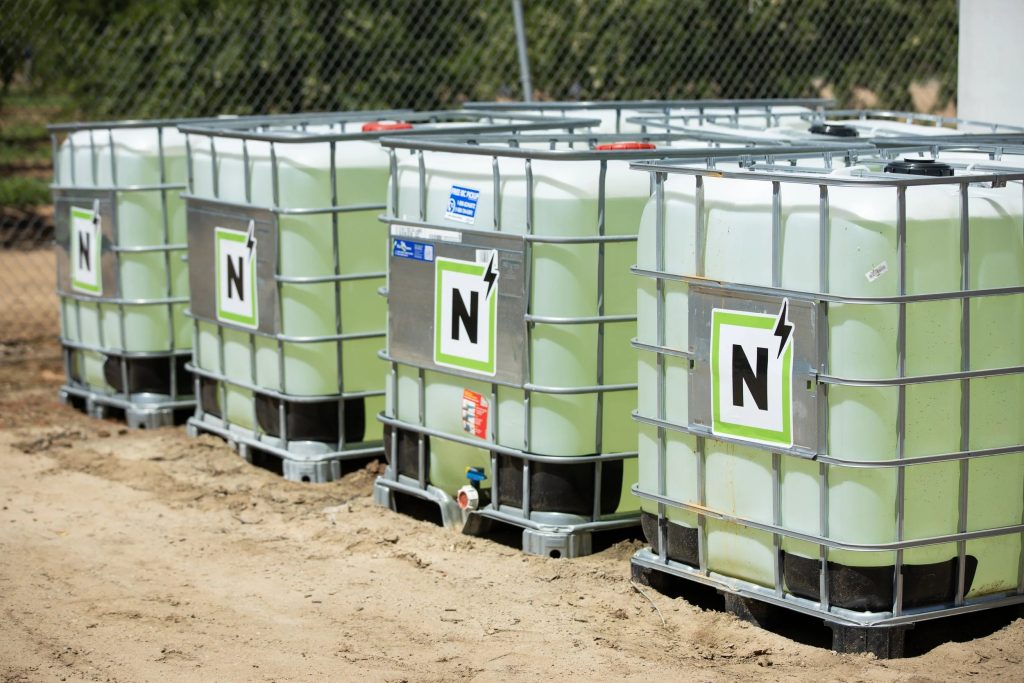
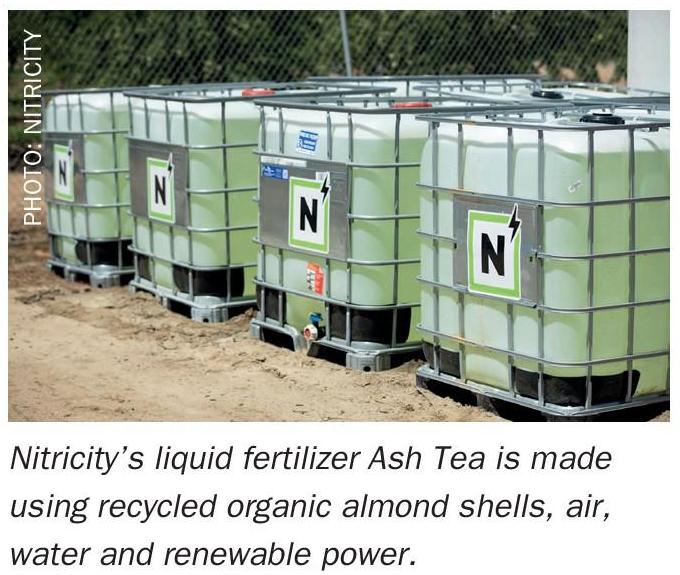
Nitricity manufactures a nitrogen liquid fertilizer – Ash Tea – from recycled organic almond shells, air, water and renewable power. This is being marketed as a low-carbon and organic alternative to traditional nitrogen-based synthetic fertilizers. Crop trials with Ash Tea have shown yield increases of up to 30% and noticeable improvements in early plant growth, the company reports.

Nitricity says Ash Tea is a safer, more effective fertilization option designed to meet the growing demand for sustainable, regenerative practices. The company, founded in 2018 by three Stanford University graduates, has grown to secure over $150 million in its sales pipeline following a period of rapid growth.

Nitricity will use the fresh capital to scale its fertilizer technology across the US and into Europe. Its plans include hiring 10 extra staff, adding to its existing 38-person team, and R&D investments.

The company is currently building production capacity in the western US to serve organic farmers and expand into high-value fruit markets. The new funding will also enable Nitricity to start pilot and field trials across Europe and recruit staff on the continent.

Nitricity plans to use local agricultural waste materials, including wood and waste from olive oil manufacturing, for fertilizer production in Europe. The extra R&D investment will also be used to improve system efficiency and expand into markets such as corn and wheat.

Dr Nicolas Pinkowski, Nitricity’s cofounder and CEO, said: “This is an inflection point for Nitricity. We’re scaling across the US and we’re very excited to expand into Europe in a serious and assertive way. The European market for our organic fertilizer is even larger than in the US, and demand is only growing against a backdrop of European governments looking to boost resilience and create circular agriculture economies. We offer an exceptional organic, circular solution for the market.”

World Fund, which invests in climate tech companies with decarbonisation potential, has previously backed successful startups IQM, Space Forge and Planet A Foods. Nitricity is its first US investment.

Dr Nadine Geiser, Principal at World Fund, said: “The Haber-Bosch process typically sees around 60-70% of nitrogen applied to crops get lost. This cannot continue. Our calculations show Nitricity’s brilliant, price-competitive sustainable, organic alternative provides an <92% reduction in emissions on average. As the EU looks to meet sustainability and organic requirements, demand for Nitricity’s solution is only rising, and we are proud to be supporting Nicolas and the team as they scale into Europe and beyond.”

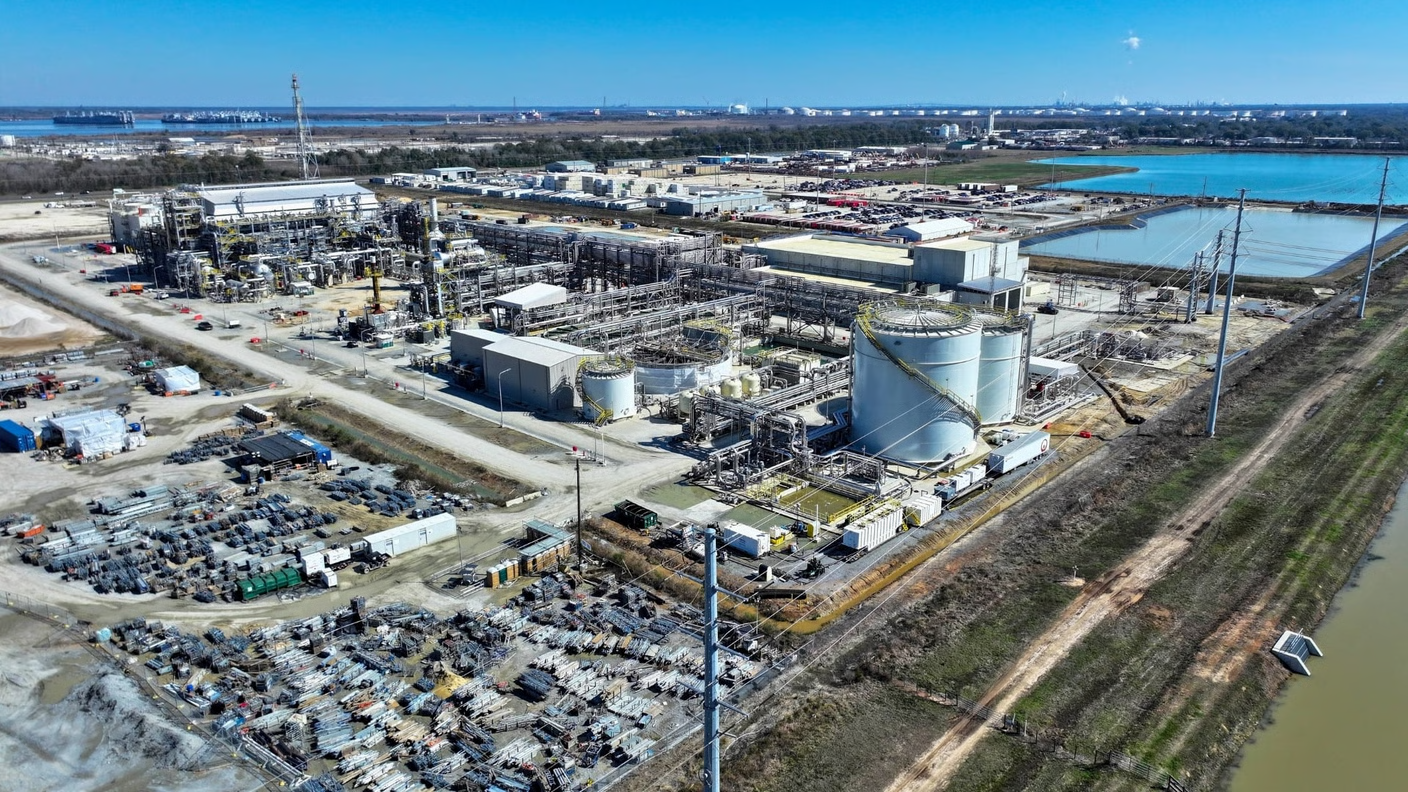
Nitricity’s under-construction organic fertilizer plant in Delhi, California, is scheduled to enter production in 2026. With a 100-fold increase on previous capacity, it will produce organic nitrogen fertilizer at commercial-scale. The total output of the plant, which was funded by Elemental Impact and Trellis Climate, is already sold out through to 2028 under binding offtake agreements with local organic growers.

Latest in Decarbonisation

Waste to energy demonstration plant completed

Compact Syngas Solutions (CSS) says that it has completed work on a government funded demonstration project which aims to be “the next generation of waste-to-energy plants”. The new £4 million ($5.4 million) MicroHub plant, developed as part of the Department for Energy Security and Net Zero’s (DESNZ) Hydrogen BECCS Innovation Programme, produces hydrogen and electricity from biogenic waste while capturing carbon emissions using water scrubbing. Unlike traditional methods that use chemical solvents like amines, CSS’s system uses water to remove carbon dioxide from syngas, which the company says is a safer and more sustainable solution.

Funding in place for waste to methanol plant

HyOrc Corporation says that it has secured financing for the first module of its 8 t/d (2,650 t/a) waste-to-methanol facility in Porto, Portugal. Manufacturing is actively underway for an initial modular unit capable of producing up to 1 t/d of green methanol, targeted for shipment in September 2026. The plant uses municipal waste as a feedstock, gasifying it and converting it into syngas for downstream methanol synthesis. HyOrc has previously completed a 25 t/d gasifier in Coimbatore, India, and a 3 t/d waste to methanol unit in Assam, India (May 2026).