• Skip to main content

    402 Jul-Aug 2026

    L&T, BCGCL and Casale advance India’s first coal to nitrates complex

    Written by Natalie Noor-Drugan


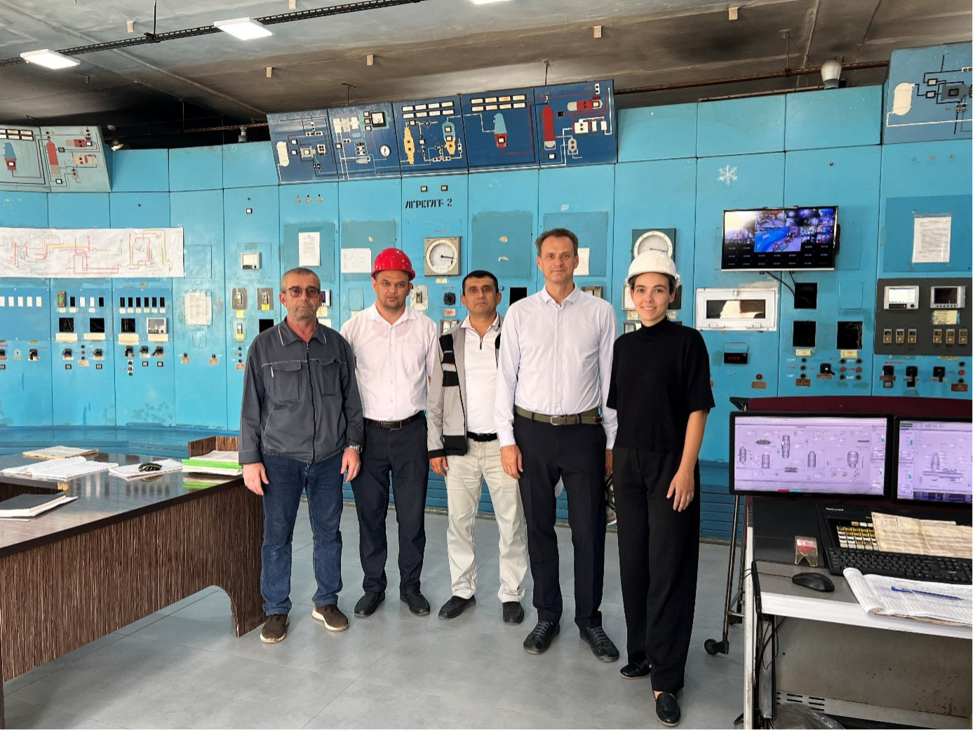
    L&T Energy Hydrocarbon Onshore has won a “significant” EPC contract from Bharat Coal Gasification and Chemicals Ltd (BCGCL) for a coal to ammonium nitrate complex in Odisha, India, with Casale now confirming its role as ammonia technology provider on the same project. L&T will deliver the lump sum turnkey Package 3 ammonia synthesis unit, while Casale says it will supply technology and proprietary equipment for a 920 t/d ammonia synthesis loop at the heart of what it describes as India’s first coal gasification based nitrates complex.

    Coal based ammonia at the core of a new value chain

    According to L&T’s press release, the ammonia plant will provide clean syngas based ammonia as feedstock for downstream nitric acid and ammonium nitrate units, ensuring “operational efficiency, process reliability and seamless integration across the plant.” L&T’s scope runs from process licence and basic design through detailed engineering, procurement, construction, commissioning and performance guarantee runs, with single point responsibility for the ammonia synthesis unit and associated facilities. Casale says the project is being developed on an L EPC basis by L&T and BCGCL, and that its N LOOP™ ammonia synthesis technology will supply the essential building block for nitric acid and ammonium nitrate production in the integrated coal to chemicals chain.

    Once on stream, the coal to chemicals complex is intended to produce around 2,000 t/d of ammonium nitrate, primarily serving mining, infrastructure and other industrial users rather than the agricultural urea market. That positions the project squarely in the industrial explosives and heavy industry value chain, even though it still adds to India’s wider nitrogen processing base.

    Strategic push on domestic nitrogen capacity

    L&T frames gasification based downstream chemical infrastructure as central to India’s self reliance agenda and says the order reinforces its role as an EPC partner for “technologically complex and nationally important projects.” Casale similarly stresses the project’s strategic dimension, pointing to strong government backing and presenting the complex as part of a broader effort to maximise the value of domestic coal resources while securing local supplies of ammonium nitrate. For engineers and project developers, the Odisha scheme underlines India’s willingness to use coal gasification not just for power, but as a route into integrated ammonia and nitrates capacity, with international technology providers embedded in the design.

    Latest in Asia

    Nickel Industries starts up ENC acid plant

    Nickel Industries announced started up the sulphuric acid plant at its new Excelsior Nickel Cobalt (ENC) HPAL project in the final week of June. The ENC Project is a massive, multi-billion dollar high-pressure acid leach (HPAL) facility located in the Indonesia Morowali Industrial Park (IMIP) in Central Sulawesi, Indonesia. It is operated by Australia’s Nickel Industries to supply battery-grade materials for the electric vehicle (EV) market. At capacity, it is expected to yield roughly 72,000 t/a of contained nickel equivalent as mixed hydroxide precipitate (MHP), nickel sulphate, and nickel cathode.

    Russia bans rail transport of Kazakh sulphur

    Russia has ordered a “temporary cessation” of rail transport of all sulphur originating from Kazakhstan that is destined for Russian seaports and railway checkpoints, representing a significant policy shift, according to an official order from the Federal Agency for Railway Transport (Roszheldor). The directive, which took effect from May 26th, orders a halt to the loading and movement of Kazakh sulphur “until further notice.” While the measure is officially described as temporary, the order provides no specific timeline for when the transit might resume. The action cites instructions from Russia’s First Deputy Prime Minister, D.V. Manturov, as its basis.

    Restart for Hongda smelter

    Hongda's 100,000 t/a zinc smelter, in China's Sichuan Province, completed scheduled maintenance and equipment upgrading and officially resumed production on 21st June, the company said. The smelter had been shut down for planned maintenance since January, during which time a modernisation project for the electrolytic zinc smelting system was also carried out. Following the nearly six-month revamp, the resumption of production is expected to improve overall operational efficiency, reduce unit production costs, and increase the utilisation rate, The company said. The stable supply of sulphuric acid generated by the zinc smelter will effectively leverage the synergies of the "sulphur-phosphorus" industrial chain in the company, an help alleviate cost pressures on the company's phosphorus chemical business segment.