Asia

ICL opens specialty fertiliser plant in India

Written by Natalie Noor-Drugan


ICL Group has opened a new specialty fertiliser production facility in Maharashtra, India, as geopolitical disruption to global shipping routes intensifies pressure on fertiliser supply chains.

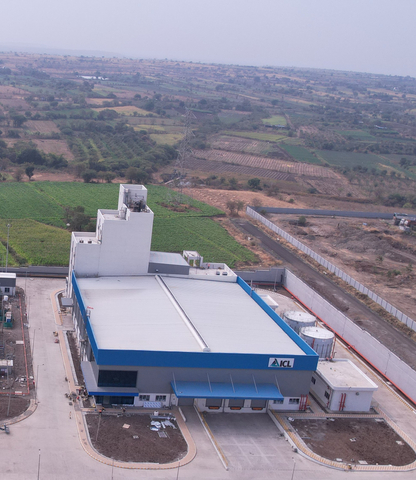
The plant will produce Water Soluble Fertilizers (WSF), replicating ICL’s existing production model in Israel. It spans approximately seven acres (28,000 square metres) and is designed to deliver the same product range currently exported from Israel to the Indian market. India’s WSF market has demonstrated high single-digit compound annual growth in recent years, according to customs import data cited by ICL.

The opening comes as the closure of the Strait of Hormuz — a key global shipping corridor — is disrupting fertiliser supply routes and affecting availability in import-dependent markets. India relies heavily on fertiliser imports, and ICL says the new facility directly addresses supply resilience risks arising from those disruptions.

“With geopolitical tensions disrupting global trade routes and delaying fertilizer shipments through a key corridor such as the Strait of Hormuz, building local production capacity is essential,” said Nir Ilani, President of the Growing Solutions Division of ICL. “This facility enhances India’s supply resilience and ensures farmers have consistent access to high-quality solutions.”

ICL has operated in India for more than three decades, generating approximately $250 million in annual revenues. The new facility supports the Government of India’s Make in India initiative and forms part of ICL’s broader strategy to expand local production in high-growth markets.

The India opening is consistent with a wider strategic refocus announced alongside ICL’s full year 2025 results. The Tel Aviv and New York-listed group reported full year 2025 consolidated sales of $7.15 billion, up 5% on 2024, with adjusted EBITDA of $1.49 billion. Chief executive Elad Aharonson said the company is concentrating resources on two growth engines — specialty crop nutrition and specialty food solutions — while divesting non-core activities. ICL has discontinued its downstream expansion into lithium iron phosphate battery materials and is exploring the sale of its Boulby potash operations in the UK. For 2026, the company is guiding consolidated adjusted EBITDA of between $1.4 billion and $1.6 billion.

Image: ICL’s plant in India, courtesy of ICL Group.

Latest in Asia

Nickel Industries starts up ENC acid plant

Nickel Industries announced started up the sulphuric acid plant at its new Excelsior Nickel Cobalt (ENC) HPAL project in the final week of June. The ENC Project is a massive, multi-billion dollar high-pressure acid leach (HPAL) facility located in the Indonesia Morowali Industrial Park (IMIP) in Central Sulawesi, Indonesia. It is operated by Australia’s Nickel Industries to supply battery-grade materials for the electric vehicle (EV) market. At capacity, it is expected to yield roughly 72,000 t/a of contained nickel equivalent as mixed hydroxide precipitate (MHP), nickel sulphate, and nickel cathode.

Russia bans rail transport of Kazakh sulphur

Russia has ordered a “temporary cessation” of rail transport of all sulphur originating from Kazakhstan that is destined for Russian seaports and railway checkpoints, representing a significant policy shift, according to an official order from the Federal Agency for Railway Transport (Roszheldor). The directive, which took effect from May 26th, orders a halt to the loading and movement of Kazakh sulphur “until further notice.” While the measure is officially described as temporary, the order provides no specific timeline for when the transit might resume. The action cites instructions from Russia’s First Deputy Prime Minister, D.V. Manturov, as its basis.

Restart for Hongda smelter

Hongda's 100,000 t/a zinc smelter, in China's Sichuan Province, completed scheduled maintenance and equipment upgrading and officially resumed production on 21st June, the company said. The smelter had been shut down for planned maintenance since January, during which time a modernisation project for the electrolytic zinc smelting system was also carried out. Following the nearly six-month revamp, the resumption of production is expected to improve overall operational efficiency, reduce unit production costs, and increase the utilisation rate, The company said. The stable supply of sulphuric acid generated by the zinc smelter will effectively leverage the synergies of the "sulphur-phosphorus" industrial chain in the company, an help alleviate cost pressures on the company's phosphorus chemical business segment.