Commodity

17 March 2026
IFA open letter highlights global fertilizer supply risks from Middle East conflict
The International Fertilizer Association (IFA) has published an open letter warning of the potential risk to global fertilizer supply chains from the current Middle East conflict.
With the region accounting for 34% of global urea trade, and nearly 18.5 million tonnes of urea passing through Hormuz in 2024 alone, IFA wants policymakers to recognise fertilizers as a strategic component of global food systems. These concerns were highlighted by the Association in its 17th March open letter, as published in full below:
Open Letter: Protect Fertilizer Supply Chains to Safeguard Global Food Security
Recent conflicts in the Middle East have placed renewed focus on the Strait of Hormuz — one of the world’s most important maritime chokepoints for energy and commodity trade. While attention has understandably focused on oil and gas, disruptions in this corridor could also affect the global supply of fertilizers, a cornerstone of modern agriculture.
Fertilizers are essential to feeding the world. Research shows that roughly half of the global population depends on crops grown with manufactured fertilizers. When fertilizer supply is disrupted, the consequences are felt directly in farmers’ fields and ultimately in global food availability.
The Middle East plays a pivotal role in global fertilizer trade. In 2024, Iran, Qatar, Saudi Arabia, the UAE and Bahrain together accounted for 23% of global ammonia trade, 34% of global urea trade, and 18% of global ammoniated phosphate trade. Across the wider region, the Middle East supplied close to 30% of global exports of major fertilizers.
Urea — the most widely traded nitrogen fertilizer — is particularly exposed. In 2024, nearly 18.5 million tonnes of urea were exported via the Strait of Hormuz. Any prolonged disruption to shipping in this corridor would quickly ripple through global fertilizer markets.
Energy markets add another layer of vulnerability. Nitrogen fertilizers are produced from ammonia, which relies heavily on natural gas as both hydrogen feedstock and energy source. Volatility in energy prices therefore directly affects fertilizer production costs, particularly in higher-cost regions such as Europe.
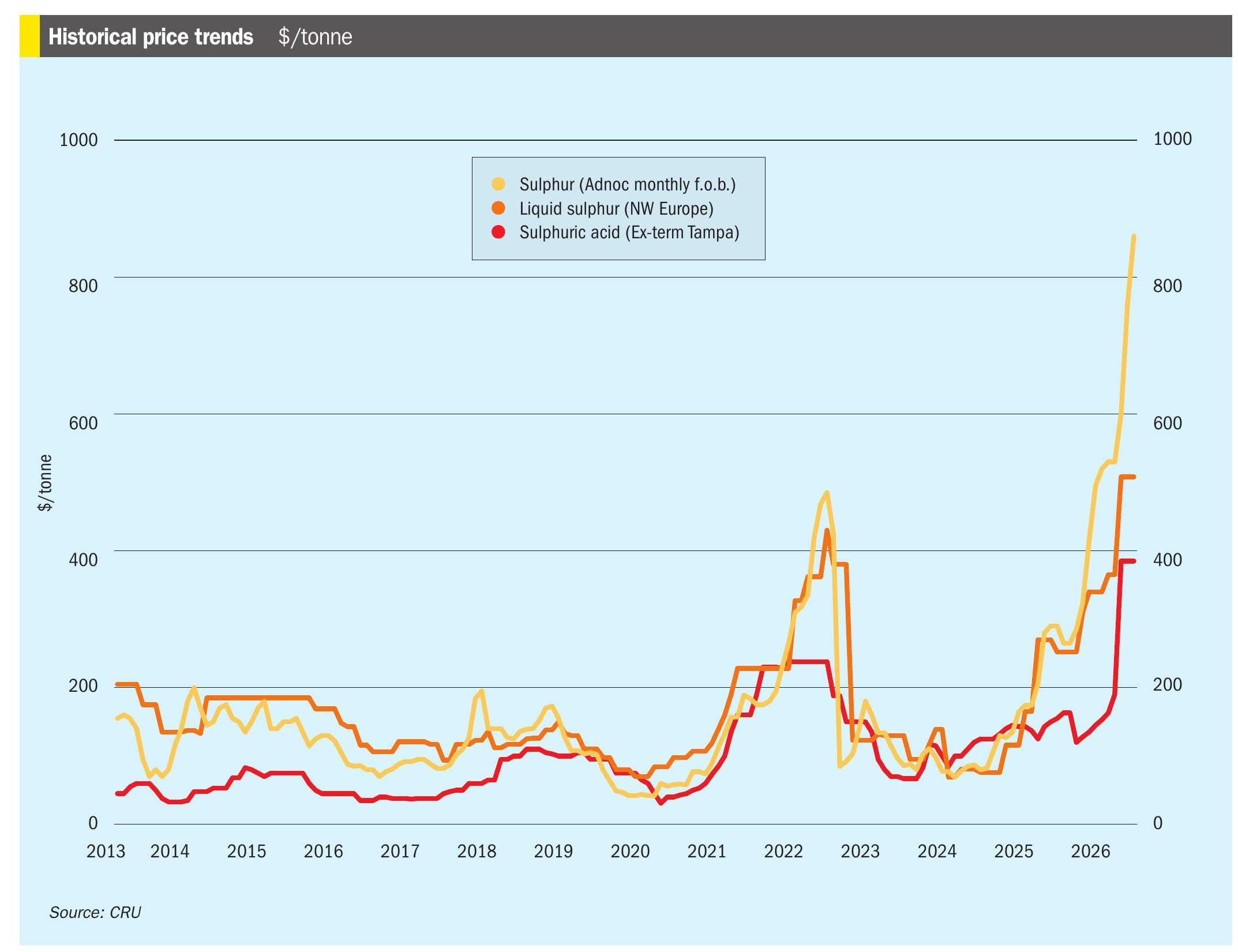
Phosphate supply chains are also tied to the Strait. Around 18% of global trade in ammoniated phosphates moves through Hormuz, while nearly half of global sulfur trade passes through the same route. Sulfur is a critical raw material in phosphate fertilizer production, meaning disruptions could affect the phosphate fertilizer value chain.
If disruptions to energy and fertilizer trade routes persist, the impacts will be felt most strongly in countries that depend on imported fertilizers. Smallholder farmers in parts of Sub-Saharan Africa and South Asia are particularly vulnerable, as fertilizer availability and affordability directly influence crop yields and food production.
For these reasons, maintaining stable fertilizer supply chains is essential. Reliable access to fertilizers helps farmers sustain crop production, supports global food stability, and strengthens resilience in the face of geopolitical shocks.
At a time of heightened uncertainty, it is critical that policymakers recognize fertilizers as a strategic component of global food systems and work to keep key agricultural supply chains functioning smoothly. Ensuring that fertilizers can move reliably across borders and through major maritime routes is essential to supporting farmers and safeguarding food security worldwide.
Further information: free CRU webinar
CRU is providing an overview of the impacts of the Gulf conflict on fertilizer, aluminium, steel raw materials and base metal value chains in its latest on-demand webinar. The discussion points include:
- An assessment of the risks and timeframes for direct disruptions
- Identifying the the knock-on regional dependencies for commodity supply, cost of production and margins
- Q&A session
Click below to register:

Note: data cited in the open letter are sourced from IFASTAT, the statistical database of the International Fertilizer Association (IFA).