Fertilizer International 514 May-Jun 2023

SPEAKING TO INVESTORS


PROJECT UPDATE

SPEAKING TO INVESTORS

Anglo American’s CEO Duncan Wanblad spoke in detail about the company’s new strategy for the Woodsmith mine during an annual results presentation on 23rd February. Selected highlights are provided below.

A big reset

A lot has happened since we acquired Woodsmith [mine project] immediately before the pandemic set in. 2022 was a big reset year for us following further integration [of the project] into Anglo American and our technical review.

“Firstly, …we have made significant changes to the scope, design, and approach to execution, ensuring that we bring the project up to Anglo American’s high safety and technical standards, and employing modern mining methods, to set the project and the operation up to deliver its full potential. We have changed the execution strategy to an EPCM [engineering, procurement and construction management] model… and engaged a specialist contractor to execute the deep shaft sinks.

“Secondly, on the project timelines and scope, we are making changes to allow for an expanded scope …which we want to set up correctly from the beginning. Nobody wants to turn around in ten years’ time and wish we had made everything more scalable.”

Progress on core infrastructure

“On the two deep shafts: These are both being excavated using Shaft Boring Roadheaders (SBRs). We are over 20 percent down the service shaft, while in January we hit a key milestone as the SBR began cutting on the production shaft, 120 metres below surface.

“On the Mineral Transport Tunnel (MTS), we are well over halfway on tunnel boring activities, currently at around 21.7 kilometres of the 37-kilometre distance between mine and port. Three shallower intermediate shafts … sink down to the MTS at depths of between 320-360 metres – and are all progressing well. One, Lockwood Beck, has been completed and connected to the tunnel and the other two are planned for completion this year.”

Phased project development

“Let me assure you, in Anglo American’s hands we are taking a long-term view focused on maximising value for the asset’s life, which extends well beyond 40 years.

“We are setting up to be able to deliver 13 million tonnes per annum – a 30 percent larger operation than the previous plan of 10 [million tonnes]. We are going bigger because we believe in the asset, we believe in the product and we believe in the market.

“Our project will cost more and take longer than was envisaged under its previous owner. The annual spend will vary from year-toyear but is likely to be around the $1 billion mark. We expect to hit polyhalite by 2027, from which point we will be in a position to bring some volume to market.

“The exact ramp-up will depend on the outcomes of [additional] studies and our market development work …and remains subject to board approval. But we expect Woodsmith to have the capacity to produce up to five million t/a by 2030, with the ability to expand to 13 t/a as the market develops.

“Gone are the days where mining companies invest billions on the back of a single bankable feasibility study. You need the detailed technical information to get these things right and to ensure that you are embedding the very latest techniques and technologies. That’s critical for assets of this scale and longevity.”

A larger, scalable operation

“In underground mines you need to build the core infrastructure such as the shafts and tunnel up-front, as changing this later once the operation is up and running becomes very challenging and costly. Do it once and do it properly.

“As an example, on the core infrastructure, we have already taken the decision to widen the deep shafts by 75 centimetres to deliver the operating performance we expect at that larger scale.

“Something that we have previously raised is addressing additional ventilation requirements. This would bring forward investment that would anyway have been required to allow future expansions.

“We also need to do the studies to conclude the optimal mining method. The baseline is continuous mining – but given the rates at which technologies are developing, we think there may be interesting opportunities and we have the time to get that right.

“Next, we will review the capacity of the underground conveyor and optimise the tunnel fit-out for larger volumes over time. And finally, we need to get the correct configuration of the materials handling, port and storage facilities to allow all these parts of the process to handle higher volumes of material.”

Duncan Wanblad, Anglo American’s CEO.
PHOTO: ANGLO AMERICAN

Latest in Outlook & Reviews

CRU Phosphates+Potash conference focuses on sulphur

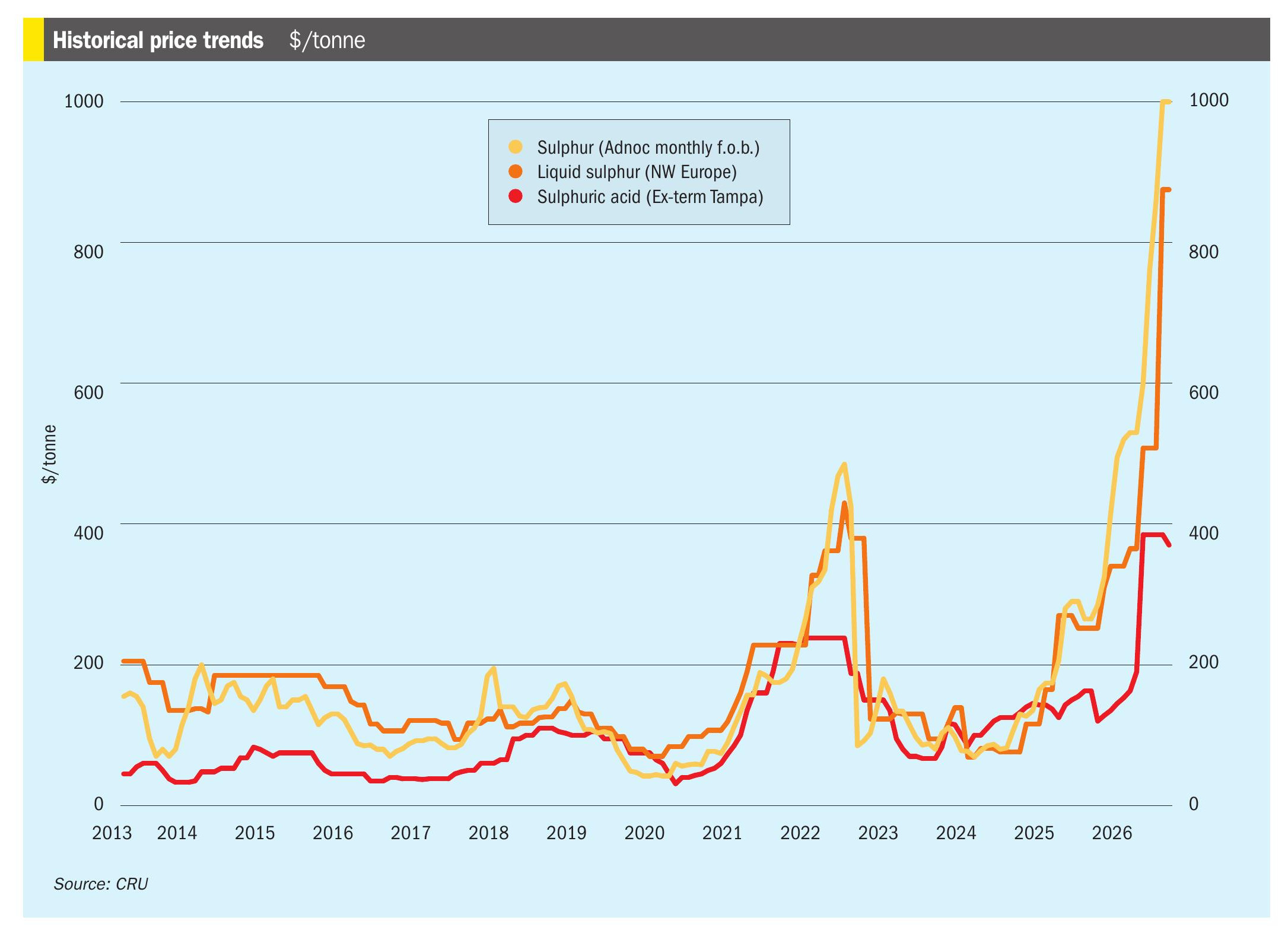
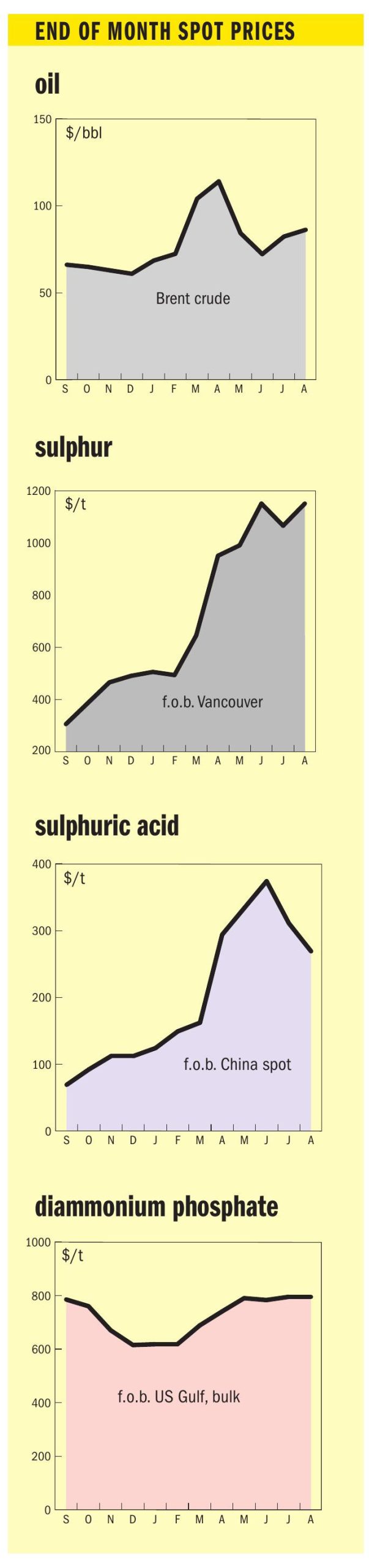
CRU’s Phosphates+Potash Expoconference was held in Paris in mid-April, with the Iran crisis uppermost in everyone’s mind. Margins are under pressure, sulphur has become a strategic constraint, and the phosphates investment pipeline is thin. CRU Principal Consultant Humphrey Knight examined the fallout from the closure of the Strait of Hormuz, noting that fertilizers have been hit harder than most bulk commodities. A large share of exportable sulphur and traded urea normally originates in, or passes through, Gulf producers. The effective closure of the strait has squeezed the traded part of these markets, where international prices are set, and pushed benchmarks up sharply. The global phosphate market is structurally tight, and the combination of Chinese export policy and Middle East logistics has pushed the traded segment into a much more fragile state.

Supply crisis worsens

It is two months on from our previous issue, and almost none of the news has been good from sulphur and downstream markets. Only three sulphur cargoes are confirmed to have transited the Strait of Hormuz since the US and Israeli strikes on Iran began, all loaded at Ruwais, with destinations in India, Tanzania and Morocco, carrying a total of 160,000 tonnes. It is believed that a couple of Iranian vessels with a total of 75,000 tonnes may also have left covertly. But in spite of some Middle Eastern sulphur making its way to Saudi Red Sea ports or Duqm on Oman’s Indian Ocean coast, around 700,000 tonnes is still trapped on ships stranded in the Gulf, and coupled with production cuts in the region, it is estimated that over 1.2 million tonnes has so far been removed from the market.