Sulphur 401 Jul-Aug 2022

Where is oil going?


“For refiners, meanwhile, these are good times…”

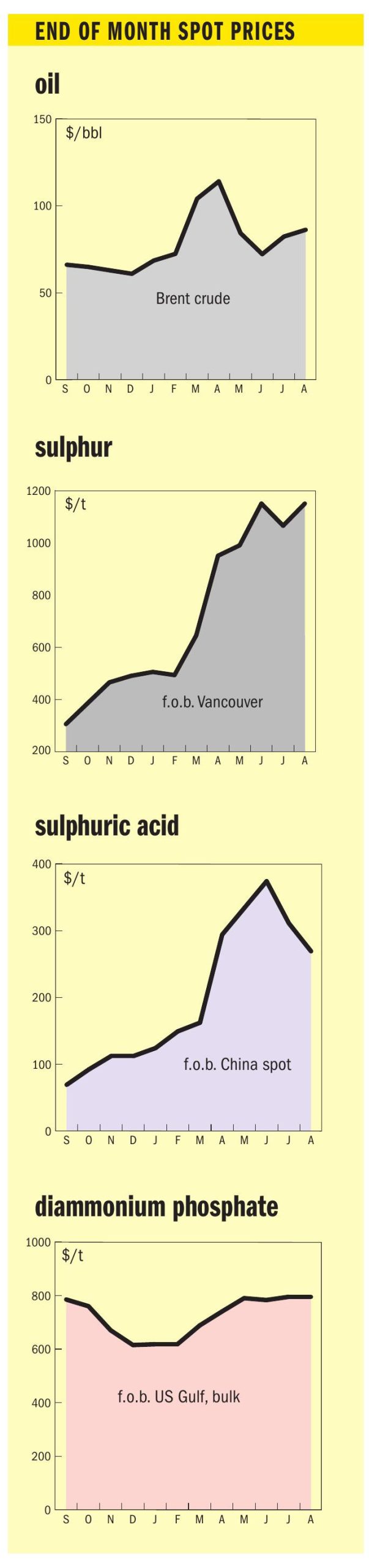
The past couple of years have been quite the wild ride, with major global events dominating markets outside of the usual concerns of broad market supply and demand. It seems like a long time ago now, but this time last year, the price of a barrel of Brent crude was about $75. Go back two years, in the wake of the onset of covid restrictions, and that barrel would have cost you $40 (and just $25 a couple of months before that). In the wake of Russia’s attack on Ukraine, you could easily have paid $130, and it has been hovering around $110/bbl for the past few months. The last time oil spent any time at that level was in 2014, just before the Chinese economy ran out of steam and prices slumped by 70%.

So where is oil going now? As is often the case, there are no shortages of opinions on the matter. If you believe a recent JP Morgan Chase report, in response to the G7 toying with the idea of capping the price of oil from Russia to try and deny Moscow the funds to continue waging its war, Russia could decide to tighten supplies to Europe in the autumn and winter to try and gain leverage over Ukraine negotiations, and prices could soar to $190/bbl if output was cut by 3 million bbl/d, or the incredible figure of $380/bbl if the cut was by a “worst case” amount of 5 million bbl/d. On the other hand, if you believe Citigroup, then many countries are already in recession, with demand falling, and oil could drop to $65/bbl by the end of this year, and $45/bbl by the end of 2023. Well, between $45 and $380 is quite a range, and it’s probably safe, though undeniably unhelpful, to say that the true figure will be somewhere between the two! For the record, most analysts are still predicting a price of somewhere between $80-110/bbl for this year.

What is certainly true is that OPEC has agreed to increase its August quota figure by 650,000 bbl/d, and Brent prices at the start of July had already dropped below $100/bbl, as the prospect of recession started to become more real, and the continuing Omicron outbreak in China continues to lead to major restrictions on movement. Russian oil continues to sell, mainly to China and India, at a discount of up to $30/bbl to ensure sales. The prospect of recession seems inevitable, with central banks chasing inflation by monetary tightening in spite of positive economic signs like near-full employment and continued job growth. The supply shock caused by the war has not been as bad as expected, and Russia may feel it’s doing well enough at current prices to try not to rock the boat by shutting off supplies to Europe. We may be heading to somewhere closer to the Citigroup forecast than the JP Morgan one.

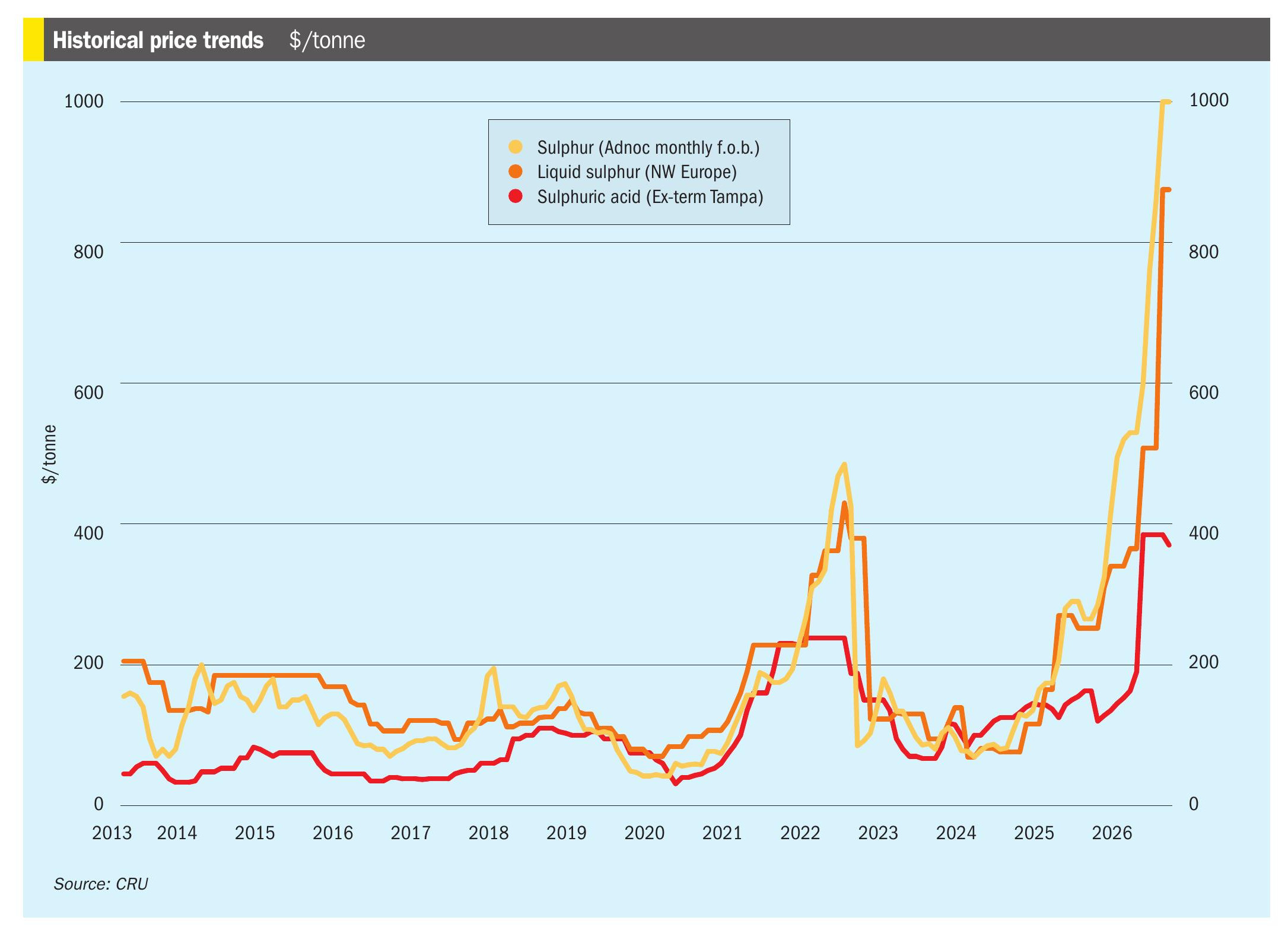
For refiners, meanwhile, these are good times – US refineries have been operating at or near maximum utilisation levels in recent weeks as demand recovers. Petroleum stocks are sitting at multi-year lows, and with gasoline prices at the pump high, refining margins are at unheard of levels – $35/bbl in the US, and reportedly up to $40/bbl on gasoline and $50/bbl on diesel in the UK. US refinery utilisation is at 95%, the highest level since before covid. And they can add to that the extra cash from sulphur – at levels of $400-500/t, they are more than double that of this time last year, and more like six to eight times that of July 2020, though seemingly finally on their way back down as phosphate producers begin to balk at such price levels.

In sulphur, at least, supply is usually slightly more predictable, and new sulphur recovery projects are in the process of completing which will raise output levels at the same time that phosphate demand is contracting. In theory, the next year ought to see prices back down to more familiar levels. But then, that was what we thought last year as well!

Latest in Outlook & Reviews

CRU Phosphates+Potash conference focuses on sulphur

CRU’s Phosphates+Potash Expoconference was held in Paris in mid-April, with the Iran crisis uppermost in everyone’s mind. Margins are under pressure, sulphur has become a strategic constraint, and the phosphates investment pipeline is thin. CRU Principal Consultant Humphrey Knight examined the fallout from the closure of the Strait of Hormuz, noting that fertilizers have been hit harder than most bulk commodities. A large share of exportable sulphur and traded urea normally originates in, or passes through, Gulf producers. The effective closure of the strait has squeezed the traded part of these markets, where international prices are set, and pushed benchmarks up sharply. The global phosphate market is structurally tight, and the combination of Chinese export policy and Middle East logistics has pushed the traded segment into a much more fragile state.

Supply crisis worsens

It is two months on from our previous issue, and almost none of the news has been good from sulphur and downstream markets. Only three sulphur cargoes are confirmed to have transited the Strait of Hormuz since the US and Israeli strikes on Iran began, all loaded at Ruwais, with destinations in India, Tanzania and Morocco, carrying a total of 160,000 tonnes. It is believed that a couple of Iranian vessels with a total of 75,000 tonnes may also have left covertly. But in spite of some Middle Eastern sulphur making its way to Saudi Red Sea ports or Duqm on Oman’s Indian Ocean coast, around 700,000 tonnes is still trapped on ships stranded in the Gulf, and coupled with production cuts in the region, it is estimated that over 1.2 million tonnes has so far been removed from the market.