Sulphur 394 May-Jun 2021
31 May 2021
A difference of opinion
“Global foreign direct investment (FDI) was down 42% in 2020″
There is an old adage that if you put two economists in a room, you will get three different opinions. As the world enters its second year of dealing with the coronavirus pandemic, that certainly still seems to be the case among those grappling with predicting an increasingly uncertain world.
In early April, the International Monetary Fund (IMF) released its biannual World Economic Outlook (WEO), which revised its previous figures upwards by 0.5% in predicting that the global economy would grow by a record 6% in 2021, after an average fall of 3.3% in 2020 (though others put the fall closer to 4.5%). Yet just last week I saw a headline that told me: ‘Why India’s coronavirus crisis will derail the world economy’. The surge of cases and deaths in India appears to follow official complacency following a relatively successful handling of the first wave in 2020, and has taken the world by surprise and shock. The speed and scale of the return of the virus is a salutary warning that things can change very quickly if governments do not keep on top of cases.
There is also a noticeable bifurcation that has evolved globally between the way developed economies and emerging markets have weathered the storm. Last year, globally interconnected developed world countries were hit hardest by the virus, with average output falling 4.7% compared to 2.2% for emerging markets, but now the bifurcation appears to be moving the other way. We appear to be moving into a world of vaccine haves and have nots, while tourism money that used to boost economies like Thailand may take a long time to return. The US and China are expected to do well this year, with growth of 6.4% and 8% respectively, and to a lesser extent Western Europe at 4.4%, with emerging markets growth (ex-China) put at 4-6%, depending upon who you believe, but the US is now struggling with vaccine hesitancy that may make achieving herd immunity difficult. Meanwhile, every week of bad news from India revises figures downwards, and the downside risks for global trade are based around already developing trends of protectionism that might only be accelerated by vaccine nationalism. Longer term, the IMF predicts that while developed economies may reach 2024 only 1% down on pre-pandemic predictions, for developing economies that figure may be 4-8% down, as they take longer to deal with the impact of the pandemic and are unable to afford the job furlough schemes and stimulus packages that richer countries can. Oil market demand, itself driven by growth in emerging markets, may also take longer to return than had been initially anticipated. For developed economies, levels of unemployment and debt may still be a drag on economies for some years.
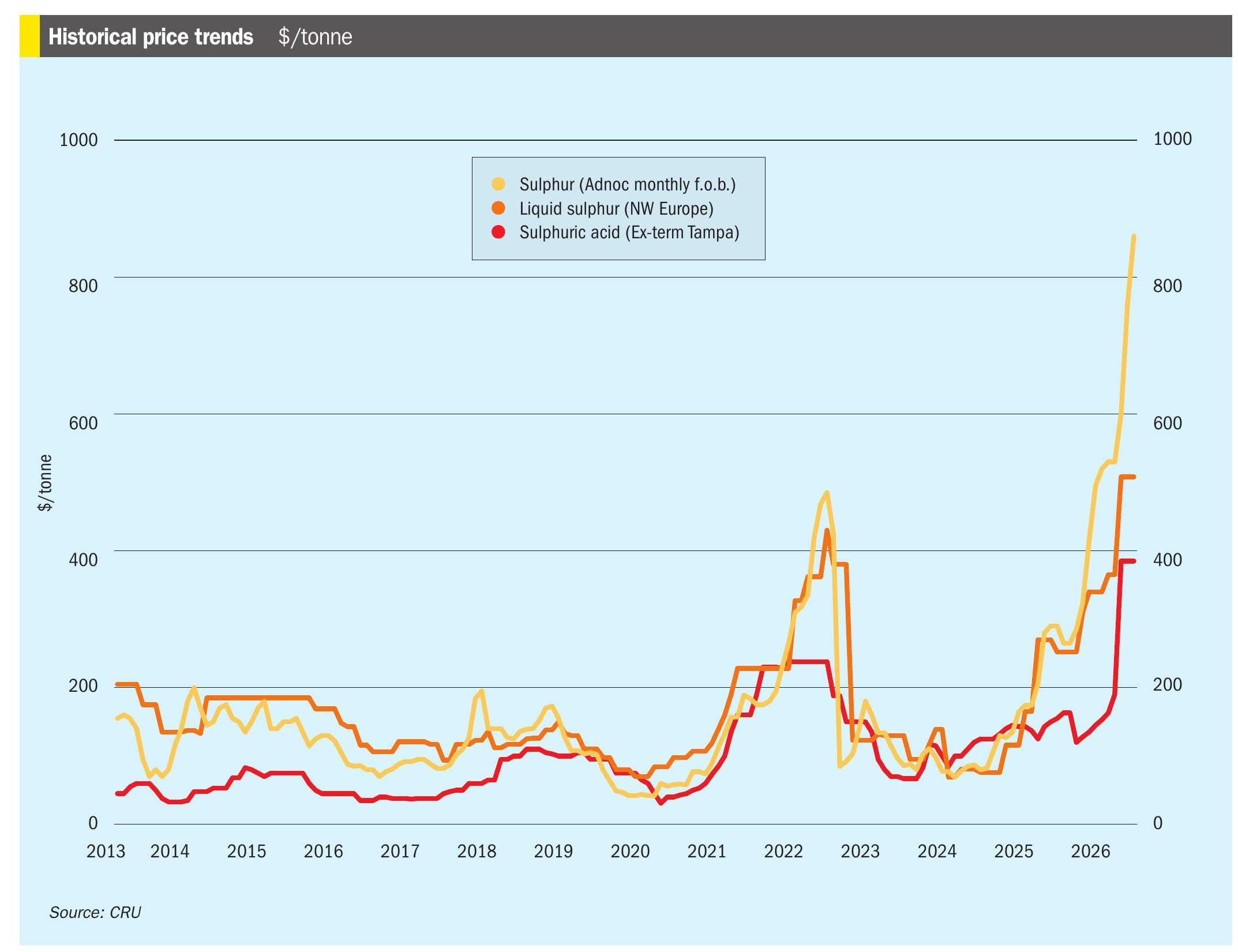
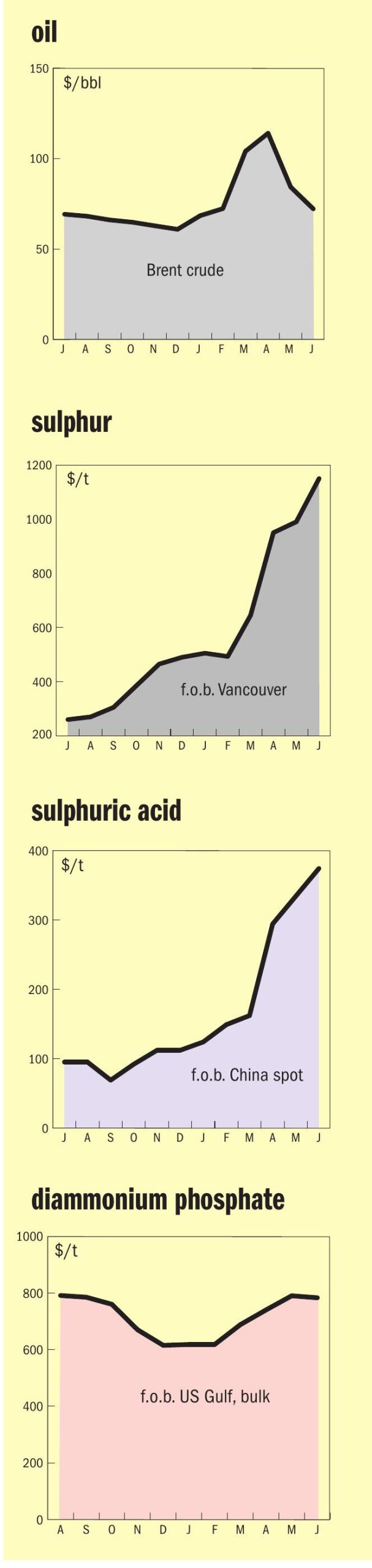
For the primary processing industries that dominate the sulphur and sulphuric acid markets, the headline figure is that global foreign direct investment (FDI) was down 42% in 2020, and global trade fell by nearly 10%, while FDI predictions for 2021 could see another 5-10% contraction. The effects of this may take a couple of years to make themselves felt, as inventories take some of the strain in the interim, but are sure to cause further disruptions and dislocations further down the line. Some markets are already feeling the pinch. Phosphate demand continues to be strong while some sulphur generating projects continue to be delayed. In Europe, lack of refinery sulphur availability due to continued lockdowns and reductions in commuting has impacted upon sulphuric acid availability, helping to increase acid prices globally even though copper markets are booming to such an extent that Chinese refiners cannot source enough concentrate. The copper concentrate shortage should ease as new mines expand this year and next, but of course covid could still throw a spanner in that prediction. Meanwhile, India has been a major buyer of acid for phosphate production, but as the pandemic worsens there, calls are growing for a national lockdown similar to the one it undertook in April 2020, which saw phosphate operations badly disrupted for a couple of months.
If the copper market is anything to go by, the IMF may be right about 2021. Metal traders sometimes refer to it as ‘Dr Copper’, as the metal seems to have a PhD in economics, being a reliable leading indicator of economic health and anticipated consumer demand. Let’s hope so.