Sulphur + Sulphuric Acid 2020
The coronavirus outbreak necessitated a ‘virtual’ CRU Sulphur + Sulphuric Acid conference last year, held in November 2020.


The coronavirus outbreak necessitated a ‘virtual’ CRU Sulphur + Sulphuric Acid conference last year, held in November 2020.
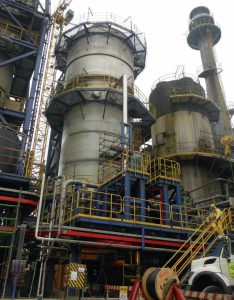
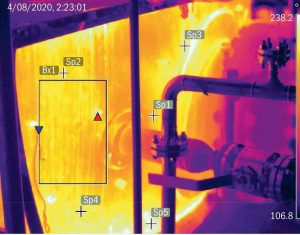
A. Bhargav and A. Krishnan of Helium Consulting Pvt. Ltd discuss how it is possible to reduce SOx emissions within the existing system setup of an oil refinery or gas plant through detailed analysis, expedited corrective actions and the use of automated algorithms in real-time, by using a digital IIoT solution to monitor, control and optimise.
New approaches and novel processing schemes employing oxygen enrichment in sulphur recovery units have been developed and commercialised. In this feature Siirtec Nigi, Linde, Blasch, Fluor and RATE report on their latest developments.

Demand for oil in developed countries was already falling before the coronavirus outbreak, and consumption growth is slowing in the developing world. Peak oil demand may arrive in the next decade. Coupled with more reinjection of sour gas rather than sulphur extraction, could we be seeing falling elemental sulphur production in a decade or so?

A look back at some of the major events of 2020 for the sulphur and sulphuric acid industries, as well as a look forward as to how 2021 might look.

In a few short years Abu Dhabi has grown to become the world’s largest sulphur producer and exporter, and new sour gas projects will lead to additional sulphur recovery capacity, provided they can overcome economic challenges.
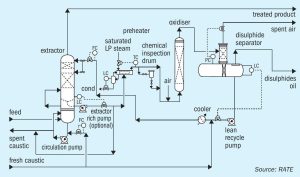
An advanced mecaptan removal process has been developed and implemented by RATE. The RATE-Oximer process is an oxidative air-based regeneration process, designed to remove mercaptans from liquid and vapour phases. M. Rameshini of RATE describes the key features of the process and its applications.
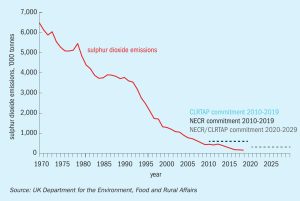
Legislation to control emissions of sulphur dioxide continues to tighten, via vehicle exhausts, and refinery and smelter emissions, leading to increased recovery of both sulphur and sulphur dioxide.
Do you remember Peak Oil? This was the theory, driven by research originally conducted by petroleum geologist M.K. Hubbert in the 1950s, that oil production inevitably followed a bell curve, with supply eventually peaking as easier reserves were exhausted, leading to an inflexion point in production and a long tailing off. Originally Hubbert was talking solely about US oil production, and he seemed to have been borne out by the evidence. But a lack of discoveries of new large fields in the 1990s led to a revision of the theory that predicted a global production peak in 2005-6, potentially leading to rapidly rising oil prices until demand destruction occurred.
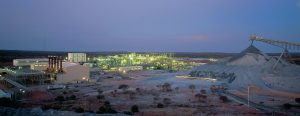
Sulphur demand in Australia has been boosted by the restart of the nickel leaching plant at Ravensthorpe, and new HPAL projects are under development, but a slew of new phosphate projects are not scheduled to consume more acid domestically.