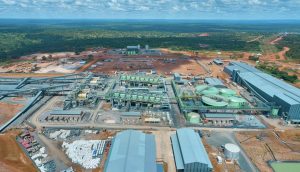
Southern Africa’s sulphur and acid mix
Copper leaching and smelting projects in Zambia and Zimbabwe continue to dominate acid production and consumption, with output expected to increase from the Kamoa-Kakula project.


Copper leaching and smelting projects in Zambia and Zimbabwe continue to dominate acid production and consumption, with output expected to increase from the Kamoa-Kakula project.
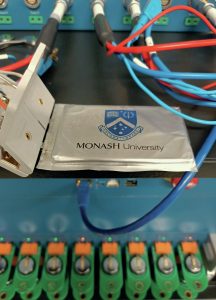
Researchers from Australia’s Monash University say that they have created a new generation of lithium-sulphur batteries which could provide a cheaper, cleaner and faster-charging energy storage solution that outlasts lithium-ion alternatives and is rechargeable hundreds of times without failing. The team has creating a new interlayer which allows for exceptionally fast lithium transfer, as well as an improvement in the performance and lifetime of the batteries.

US refiners have upgraded to take advantage of generally cheaper, sourer crude feeds. However, a ban on oil imports from Russia may make that harder to come by.
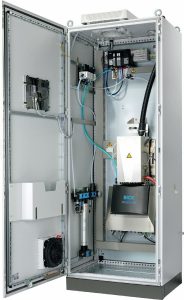
The trend for multicomponent analysis of emissions from sulphur recovery units is becoming more widespread. David Inward of Sick reports on a recent field trial to test the suitability of a hot extractive infra-red analyser for this application. In addition to reliably measuring and reporting emissions to air, the analyser is also capable of contributing to reducing overall tail gas emissions by supporting enhanced optimisation of the thermal oxidiser.

The fourth SulGas Conference organised by Three Ten Initiative Technologies took place 1-4 February as a virtual event. Selected highlights from some of the presentations from SulGas 2022 are given below.

As the world looks to a lower carbon future, refineries are having to examine their operating models, and look to, for example, renewable hydrogen production for desulphurisation technologies.

Global demand for oil products has seen strong recovery in 2021, but depressed kerosene demand from the aviation sector continues to be a major barrier to full recovery, according to data and analytics company GlobalData. The company’s analysis of oil product flows suggests that when kerosene is excluded, oil product demand in Q3 2021 had fully recovered compared to the same period in 2019. However, demand for kerosene, mostly used for jet fuel, has hovered at around two thirds of pre-Covid-19 levels throughout the year, and when that is taken into account, total oil product demand was 3% below pre-Covid levels for Q3 2021. Kerosene demand saw the greatest impact from Covid-19 due to restrictions on air travel. While the sector recovered, to an extent, in the second half of 2020, recovery stalled in 2021 due to new waves of infections and restrictions, with new restrictions linked to the Omicron variant likely to have hit demand again in Q4.
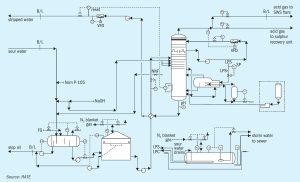
M. Rameshni and S. Santo of RATE discuss different sour water stripping gas processing options, depending on contaminants in the sour water streams and site-specific requirements.
The UK has published its Hydrogen Strategy, setting out the government’s ambition to create a low carbon hydrogen sector, with up to one third of the UK’s energy consumption being hydrogen-based by 2050. The commitments set out in the strategy unlocks £4 billion of government investment by 2030. The government plans 5GW of low carbon hydrogen production capacity and the establishment of carbon capture, use and storage (CCUS) in four industrial clusters by 2030, as well as blending of hydrogen into the existing gas network and a ‘twin-track’ approach to hydrogen production, using both electrolytic and CCUS-enabled low carbon hydrogen production in order to scale up production in time to meet the UK’s 2030 and 2050 carbon emissions targets.
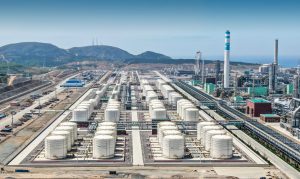
China is the world’s largest importer of sulphur, mainly to feed domestic phosphate production. Sour gas in Sichuan and new refinery production, coupled with rationalisation in the phosphate sector are all leading to reduced imports, while new smelters are increasing sulphuric acid production and reducing the need for pyrite-based and sulphur burning acid production.