Fertilizer Industry News Roundup
Recent protests in Belarus have triggered a wave of share price volatility, London’s Financial Times reported on 18th August.


Recent protests in Belarus have triggered a wave of share price volatility, London’s Financial Times reported on 18th August.

Spanish fertilizer producer Fertiberia is teaming up with energy firm Iberdrola to build Europe’s largest plant for generating green hydrogen for industrial use – in this case ammonia production. The 100MW solar plant and accompanying 20 MWh lithium-ion battery system and 20MW electrolytic hydrogen production system will be built at a cost of $174 million, and electrolyse water to produce 720 t/a of hydrogen. When fed into Fertiberia’s existing ammonia plant at Puertollano, 250km south of Madrid, the hydrogen will allow a 10% reduction in natural gas use by the plant, saving the company 39,000 t/a in annual CO 2 emissions. Start-up is planned for 2021. Fertiberia will also use electrolysis-generated oxygen as a raw material for nitric acid, which is used to produce ammonium nitrate at the site.
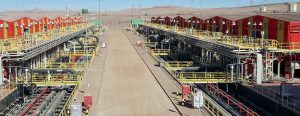
There was a rapid increase in sulphuric acid demand for copper, uranium and nickel leaching from 1995-2015, but over the past few years growth in this sector has slowed dramatically. Now however there are signs that demand is starting to pick up again with several new projects under development.
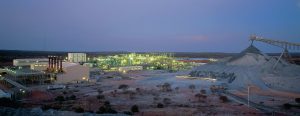
Sulphur demand in Australia has been boosted by the restart of the nickel leaching plant at Ravensthorpe, and new HPAL projects are under development, but a slew of new phosphate projects are not scheduled to consume more acid domestically.
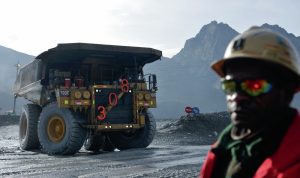
The Indonesian government’s decision to enforce the processing of more copper and nickel ores domestically rather than export them to China has led to the rapid development of domestic smelter capacity as well as nickel acid leaching projects.
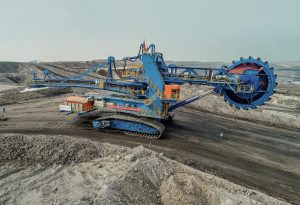
We look at state-of-the-art technology used in phosphate and potash mining, including equipment and systems for excavation, tailings thickening, transport, tunnelling and processing.
The Ma’aden Wa’ad Al Shamal Phosphate Company (MWSPC) has signed a service agreement for a period of three years with DuPont Clean Technologies for its sulphuric acid plant at Sirhan. The service programme will include activity testing of catalyst samples, evaluation of catalyst performance, plant optimisation, troubleshooting and management of catalyst replacement. DuPont says that it will also track plant performance and assess its overall health using pre-agreed metrics and its proprietary PeGASyS™ gas chromatography system, which can be used to detect possible leaks in gas-gas heat exchangers, identify SO2 gas bypassing and measure overall plant conversion in order to optimise plant operation, reduce SO 2 emissions, increase production and improve converter performance.
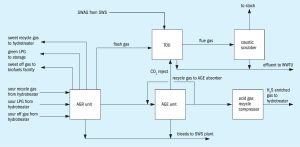
M. van Son and S. Sreejit of Comprimo present a case study involving the design and potential integration of the sour water and acid gas treatment units for a renewable diesel facility with an existing refinery sulphur complex. The case study evaluates the potential for operating cost reduction by integrating an enrichment loop in the acid gas treatment plant as well as for using the existing infrastructure of the refinery to limit emissions.