Sulphur + Sulphuric Acid 2021
A look at papers presented at CRU’s annual Sulphur + Sulphuric Acid conference, which was once again held virtually, in November 2021.


A look at papers presented at CRU’s annual Sulphur + Sulphuric Acid conference, which was once again held virtually, in November 2021.
Commodity markets are often volatile, and sulphur and sulphuric acid can be more so than most, with much of their supply coming from involuntary production, and sulphur supply in particular often dependent on the timing of large scale oil and gas projects. Even so, this year’s price rises, in some cases tripling in just over a year, have been especially eye-catching.
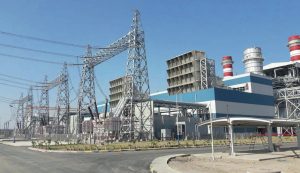
Maire Tecnimont SpA says that its subsidiaries MET Development, Stamicarbon and NextChem have collectively begun work on a renewable power-to-fertilizer plant in Kenya. MET Development has signed an agreement with Oserian Development Company for the development of the plant at the Oserian Two lakes Industrial Park, on the southern banks of Lake Naivasha, 100 km north of Nairobi.
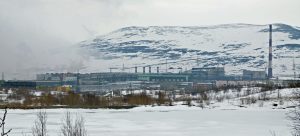
Ineos subsidiary Inovyn has announced the permanent closure of its ‘sulphur chemicals’ (mainly sulphuric acid) plant at its Runcorn site, and its withdrawal from the UK sulphur chemicals market. The company said in a statement that the decision follows a management review of the business in the light of recent events. Specifically, in October 2020, an unexpected interruption to the third-party power supply to the Runcorn site resulted in the plant being taken offline, and during restart, it was identified that a number of critical plant components had suffered significant damage. As a result, to ensure the safety and integrity of the plant it was taken back offline. Since then, in spite of significant effort and investment to rectify these issues, Inovyn says that it has become clear that it will not be possible to safely restart the plant for at least a further 18-24 months, and the company has decided to close the plant permanently.
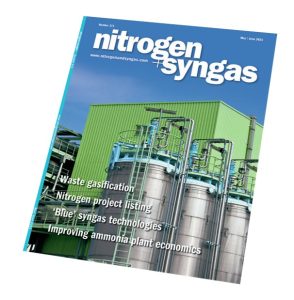
Judging by the pages of the project announcements in our news section, you’d be forgiven for thinking that the ammonia and methanol industries were all running off hydrogen generated from electrolysis, and that we had already entered an era of ‘clean’ chemical generation which did not require fossil fuels as a feedstock. Of course, while companies can naturally be forgiven for wanting to put the best public face on their green credentials, it does obscure the fact that for the moment 99% of syngas generation comes from natural gas, coal, and some coke or naphtha.
During the 10th Russian Corporate Governance Forum, Andrei Guryev, PhosAgro’s CEO and a member of the company’s board, was declared the winner in the category: “Contribution to the Development of ESG Culture”. PhosAgro’s Corporate Secretary, Sergey Samosyuk, was named the winner in the category “Corporate Governance Director/Corporate Secretary”.
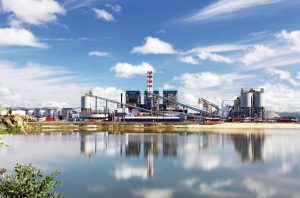
Demand for nickel sulphate is expected to rise rapidly this decade to feed increased battery production for electric vehicles. At the same time, diminishing sources of high grade nickel ores are leading to a renewed focus on high pressure acid leaching (HPAL) of laterite ores, with a significant impact on sulphur and sulphuric acid demand.
Copper major Freeport-McMoRan is reportedly on verge of finalising a $2.8 billion deal with China’s Tsingshan to build a copper smelter in Weda Bay, Indonesia. The Indonesian government said that the companies were aiming to conclude negotiations by the end of March. It also said that most of the financing will be borne by Tsingshan, with Freeport possibly only needing to provide funding for 7.5% of the total project cost. The smelter would have a copper concentrate input capacity of 2.4 million t/a.

In a carbon-constrained world, carbon capture and utilisation or storage (CCUS) installed on a methanol plant is a necessary and feasible solution. The new, patented AdWinMethanol CC® technology, jointly developed by thyssenkrupp Industrial Solutions AG and GasConTec GmbH, integrates carbon capture into large-scale, natural gas-fuelled methanol production to yield a drastically reduced carbon footprint. U. Koss and W. Balthasar of GasConTec and J. Wagner of thyssenkrupp Industrial Solutions discuss how it removes CO 2 emissions in an efficient, cost effective, and environmentally friendly manner, taking advantage of the design features of AdWinMethanol ® .
In early October Tesla held a ‘battery day’ event at its headquarters in Fremont, California. Speaking at the event, company founder and CEO Elon Musk outlined his vision for the electric car industry over the coming decades, and spoke particularly to his ambitions for the nickel industry. He had already called for more mining of nickel earlier in the year, and has said that Tesla is developing cathodes that will contain higher nickel and no cobalt. The latter comes after a lawsuit against Tesla and several other high-tech US firms for allegedly supporting human rights violations by buying cobalt from the Democratic Republic of Congo. Musk echoed the potential ‘reputational risk’ for the nickel market and called for more sustainable nickel production, dangling the prospect of a “giant contract” with any miners that could produce nickel in an “environmentally sensitive way.” Tesla is reportedly in discussions with Vale and BHP as well as the Indonesian government concerning potential investments in nickel production.