Category: North America

Wabash Valley project to abandon CCS

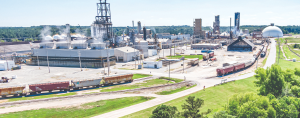
The US Department of Energy has agreed a $1.5 billion loan for the Indiana-based Wabash Valley Resources LLC to finance a coal-powered ammonia plant in West Terre Haute. The project will restart and repurpose a coal gasification plant that has been idled since 2016. However, previous plans to include carbon capture and storage in the project, as agreed as recently as May by the US Environmental Protection Agency (EPA), appear to have been abandoned. The loan comes from the Trump administration’s Energy Dominance Financing Program financed via the so-called “big beautiful bill”. It aims to reduce US dependence on foreign sources of fertilizer and to provide domestic sources of consumption for America’s shrinking coal industry. The facility is aiming to produce 500,000 t/a of ammonia using coal from a mine in southern Indiana as well as petroleum coke as feedstock.

Technology license for blue methanol

Topsoe has been selected as technology provider by Sandpiper Chemicals LLC, for their new blue methanol plant in Texas City, Texas. Topsoe will license its Syn-COR™ technology, which will be combined with carbon capture & storage (CCS) for the production of blue methanol. The project, when operational will produce 3,000 t/d of blue methanol. The IEA estimates that methanol demand is expected to grow to 120-150 million t/a by 2030. Today, methanol is primarily used within the chemical industry, but growing demand is coming from the shipping industry as it looks to lower emissions.

Topsoe technology selected for Indiana refinery

Topsoe has been selected as the renewable diesel technology partner for CountryMark’s Mount Vernon, Indiana refinery. Located in southwestern Indiana, the refinery processes 35,000 bbl/d of crude oil. With the addition of Topsoe’s HydroFlex technology, CountryMark aims to produce up to 250,000 barrels of renewable diesel annually. The new unit is expected to enable an emission avoidance of approximately 84,500 t/a of CO2 e. CountryMark, a farmer-owned cooperative, will use local soybean oil as the primary feedstock to produce renewable diesel, helping create a locally sourced renewable fuel economy in Indiana.

Marimaca to acquire acid plant

Marimaca Copper Corp. says that it has recently executed a binding asset purchase option agreement to acquire a used sulphuric acid plant in Chile from CEMIN Holding Minero. Sulphuric acid is one of the key input costs for the Marimaca Oxide Deposit, and the ability to produce a significant amount of its own supply will reduce exposure to a volatile acid market. The agreement has an exclusivity period of three months to allow further detailed technical and engineering reviews including capital and operating cost estimates for the installation and operation of the 150,000 t/a sulphuric acid plant, whose output would represent approximately 30-40% of total acid consumption at the Marimaca Oxide Deposit, depending on the phase of development. Marimaca says that, based on market research and quotations received, the estimated equipment cost of a new sulphuric acid plant of similar capacity is approximately $35-40 million, with a total installation cost of $50-60 million. The cost of breaking down and relocating the plant to the site at Mejillones and the start-up costs of the used plant are expected to be materially lower than cost of new equipment. Indicative operating costs show the potential for an approximately 30% reduction in acid cost relative to current long-term forecast and normal historical spot and contract acid prices delivered to Mejillones.

Upcycle launches potassium sulphate project

Upcycle Minerals Inc. has launched a brine to potassium sulphate fertilizer with carbon capture project in south-central Saskatchewan. The company says that it plans to use its mineral assets, including the Tuxford potash mineral permit and the Whiteshore and Lydden Lake Alkali Leases as feedstock for its patented process. Along with the production of potassium sulphate (SoP), the process also generates two co-products with established markets; ammonium sulphate fertilizer and precipitated calcium carbonate. Upcycle says that it intends to become an ecologically conscious, low-cost producer of SoP with low net CO2 emissions.