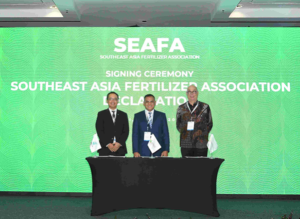
Southeast Asia Fertilizer Association launched in Bali
Three leading regional fertilizer producers have established the Southeast Asia Fertilizer Association (SEAFA).


Three leading regional fertilizer producers have established the Southeast Asia Fertilizer Association (SEAFA).
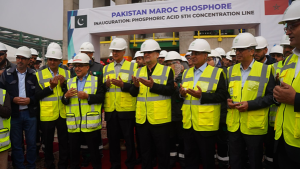
The new line was inaugurated on the 2 April and has a capacity of 400 tonnes per day.

Indian Farmers Fertiliser Cooperative Limited (IFFCO) has inaugurated its new, third sulphuric acid plant at its facility in Paradeep, Odisha. This expansion significantly boosts the site's total production capability from 750,000 t/a to 2.2 million t/a. The plant, dedicated by Union Minister Amit Shah, highlights a major increase in domestic capacity for India's fertilizer industry.

Coromandel International says that it has started trial production at its new sulphuric acid and phosphoric acid plants in Kakinada, Andhra Pradesh. The company says that this marks a crucial step towards transforming the unit into a fully integrated facility, significantly enhancing production capacity and diminishing reliance on imported raw materials for fertiliser manufacturing. The company is now focusing on a phased ramp-up. The new plants have of 2,000 t/d of sulphuric acid and 650 t/d of phosphoric acid, respectively. The integration of these acid plants is strategic, aligning with Coromandel's objective to strengthen backward integration in its fertiliser manufacturing value chain. By producing key intermediates in-house, the company aims to secure stable supplies, enhance cost efficiencies, and achieve greater self-sufficiency, thereby reducing dependence on imported raw materials. The project aims to replace over 50% of the Kakinada plant's imported acid requirements and mirror the integration levels seen at its Vizag and Ennore facilities.
Four Chinese-operated nickel plants at the Indonesian Morowali Industrial Park have temporarily ceased operations following a fatal landslide in February, in a development that will significantly reduce regional demand for sulphur and sulphuric acid. The shutdowns affect facilities run by China’s GEM Co. and its partners, which together account for 30% of Indonesia’s high-pressure acid leaching (HPAL) capacity. The move comes amid heightened regulatory scrutiny. The largest of the four plants, PT QMB New Energy Materials, could remain offline for up to three months.

The North Caspian Operating Company (NCOC), which operates the huge Kashagan oil field in Kazakhstan, has said that it is seeking international arbitration to resolve its ongoing dispute with the government of Kazakhstan. Kazakhstan has imposed a swingeing $4.6 billion fine for alleged violations of sulphur storage regulations at the NCOC site. In December, a special administrative court in Astana turned down an appeal by NCOC, although it also granted leave to appeal in a higher court. NCOC, a partnership between Shell, Eni, TotalEnergies, ExxonMobil, China National Petroleum Corporation, Inpex and Kazakh state oil and gas company KazMunayGaz, continues to maintain that its sulphur handling operations have been conducted in compliance with Kazakhstan’s laws and that it had the required permits in place.
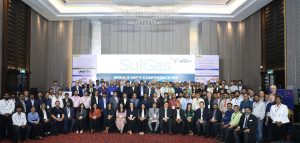
The 8th SulGas® Mumbai sulphur recovery and gas treating conference and exhibition, organised by Three Ten Initiative Technologies LLP, took place on 5 and 6 February 2026. We report on some of the key topics on the agenda.
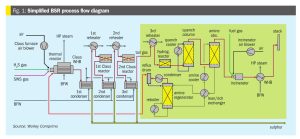
Worley Comprimo has carried out an evaluation of technologies allowing 99.8+% sulphur recovery for an Indian refinery case. The TopClaus process was compared to alternative technologies, focussing on modern technical challenges, investment operation and maintenance costs, as well as CO2 considerations.
For the first time in twelve years, we are taking MEScon beyond the Middle East with the launch of MEScon Connect: Central Asia, with the goal of expanding the community.
Coromandel International says that it has started trial production at its new sulphuric acid and phosphoric acid plants in Kakinada, Andhra Pradesh. The company says that this marks a crucial step towards transforming the unit into a fully integrated facility