Stamicarbon to revamp urea plant
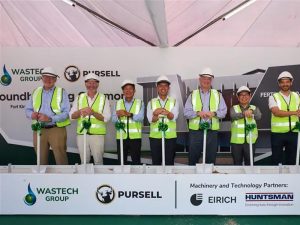
Hulunbeier New Gold Chemical Co has selected Stamicarbon to revamp a urea plant in Hulunbuir, northeastern Inner Mongolia.
Although China remains the world’s largest phosphate producer, it has been overtaken as the largest exporter by Morocco in recent years as domestic producers face continuing restrictions on exports.
The Caspian Sea region is home to extensive sour gas reserves which produce large volumes of sulphur. Exports are difficult, but the Kazakh uranium industry is consuming an increasing amount.
Continuing growth in Chinese ammonium sulphate production is leading to a continuing flood of exports, as greater awareness of the utility of sulphur as a fertilizer leads to increasing global demand.
India’s phosphate production is using increasing volumes of sulphuric acid, but new domestic smelter and sulphur burning acid capacity may mean reduced imports in future.
NextChem has been awarded two contracts to upgrade and expand the capacity of the Heydar Aliyev Oil Refinery (HAOR) industrial complex in Baku by state oil company SOCAR. As part of the contract, NextChem will conduct a technological assessment and deliver a process design package to upgrade the existing sulphur recovery unit (SRU) with oxygen enriched air, a cost-effective and flexible solution for expanding its current sulphur production capacity. Additionally, NextChem will provide the licensing and the process design package based on its proprietary NX SulphuRec TM technology for a new SRU. NX SulphuRec TM is a portfolio of proprietary sulphur recovery technologies, based on the integration of modified Claus and tail gas treatment processes, aimed at reducing the environmental impact of acid and sour gases produced during the refining process.
Short term supply constraints are dominating acid markets at present, but increasing smelter production across Asia may lead to oversupply in the longer term.
QatarEnergy has announced its decision to build a new, world-scale urea production complex that will more than double Qatar’s urea production. The project is aiming to construct three ammonia production lines which will supply four new world-scale urea production trains in Mesaieed Industrial City. Total capacity for the new complex is projected to be 6.4 million t/a, more than doubling Qatar’s annual urea production from about 6 million tons per annum currently to 12.4 million tons per annum. Production from the project’s first new urea train is expected before the end of this decade.
In spite of increasing environmental concerns over the use of coal as a feedstock, it continues to provide around one quarter of the world’s ammonia. But in a world that is decarbonising, is there still a future for coal-based capacity?
OCP Group has launched what it calls the Mzinda-Meskala Strategic Programme, aimed at significantly expanding fertilizer production in the country. Initially announced in December 2022, the program is set to enhance production capacity in two key regions: the Mzinda-Safi Corridor and the Meskala-Essaouira Corridor. This initiative is part of OCP’s broader strategy to meet growing global demand for fertilizers while committing to long-term sustainability goals, including achieving carbon neutrality by 2040.