Community
3 November 2026
AFA focuses on the fertilizer industry's future
Written by Simon Inglethorpe
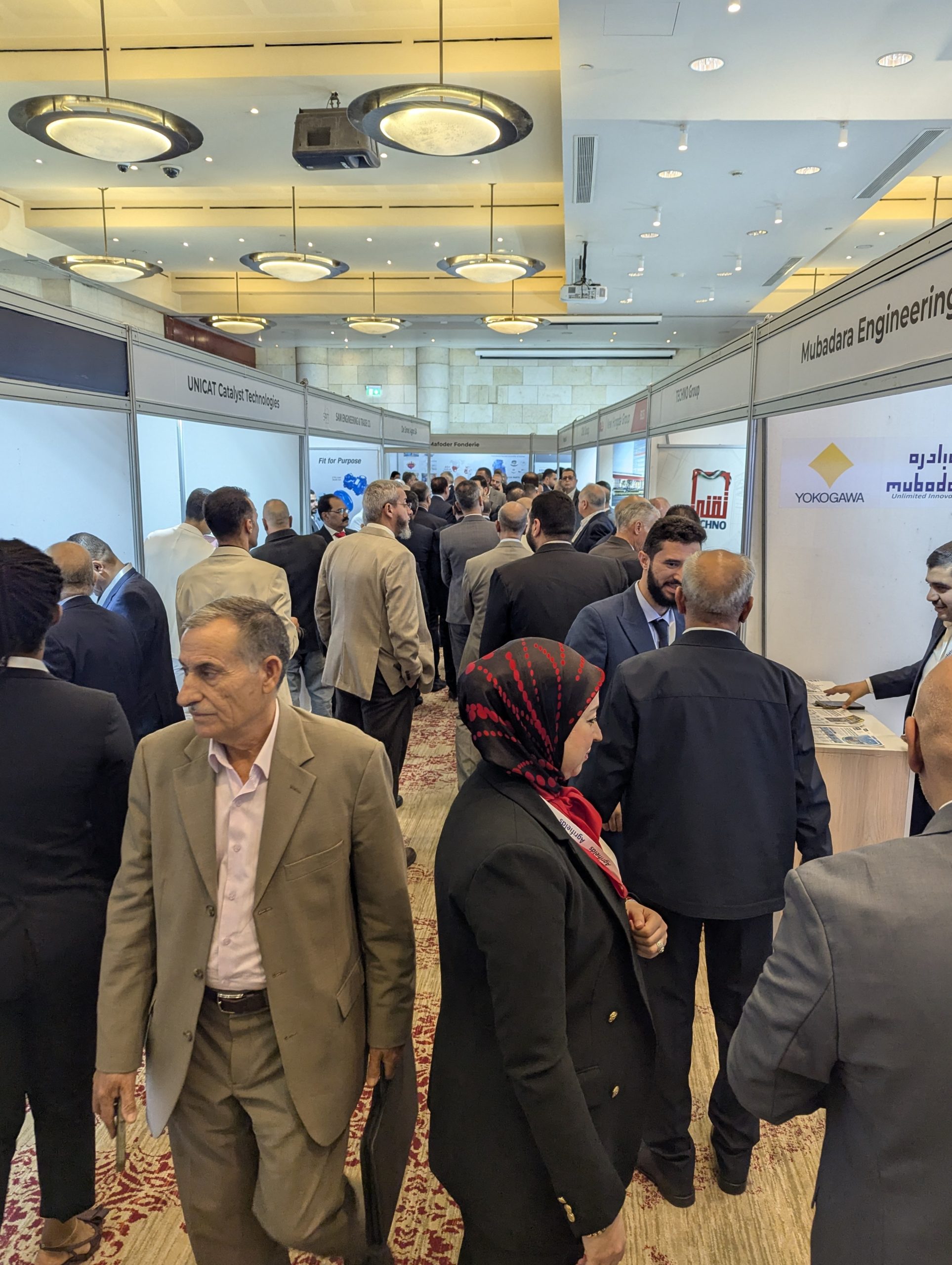
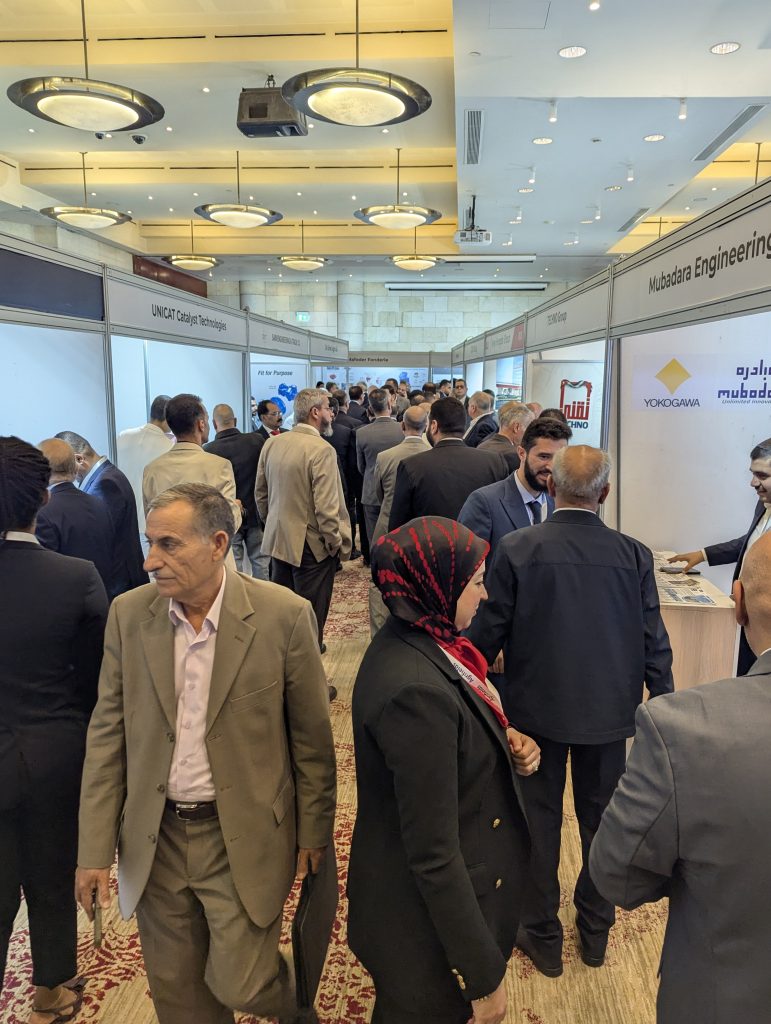
Exhibitors including CRU enjoyed a busy opening morning at the event in Amman, Jordan. PHOTO: CRU
Not whether but how the industry will change
The first day of the Arab Fertilizer Association’s 38th Technical Conference & Exhibition in Amman, Jordan, opened with executive panel discussion on the future of the fertilizer industry.
Moderator Tibaut Theys, general manager, Prayon Technologies, introduced the session:
“Fertilizers are fundamental to food production. We need to keep feeding a growing population while addressing the pressure on resources, energy, carbon emissions, environmental performance and geographical risk. More important, even, is to deliver affordable products that enable the farmer to produce food at a decent price.
“The central question we’re going to raise with the panelists here today is not whether the fertilizer industry will change, but how it will change in the coming years. Will this transformation come from improvements to existing technology or new technology, from decarbonisation, more efficient nutrient use, nutrient recycling/circularity, changes in the geographical balance of production, artificial intelligence or more resilient supply chains?
“More importantly, how can we adapt our industry to still have fertilizers that are competitive and accessible to the farmer?”
Feeding the world, fuelling the future
Henrik Larsen, vice president at KBR, expected the energy transition to be back on the agenda from 2030:
“Right now, we’re seeing an unprecedented investment wave into new [fertilizer] plants and existing assets that would like to do their level best to either boost production or cut energy. We see a bright future ahead where the next five years will be very focused on feeding the world, and that’s definitely not going away [with] lots of mouths to feed on this planet.
“When we get to 2030, we will start seeing the energy transition coming back, which means you will start seeing ammonia, for instance, being used as a fuel on top of its use as a fertilizer. That’s why we say we’re ‘feeding the world and fuelling the future’ at KBR.
“Today, we are producing around 200 million tonnes per year of ammonia. The base case is that in another 20-25 years we will produce 300 million tonnes [annually]. If there’s even just a slight usage of ammonia for power consumption and so forth, we can easily see a doubling of the ammonia industry as you know it today.”
Options worth more than economies of scale
Paolo Iengo, Ballestra’s managing director, said optionality was the future. He advised the industry to start building flexible plants capable of producing more than one product:
“For 50 years, there’s been a simple answer to almost every question in our industry: do it bigger. Why? Because the scale lowered the cost per tonne. In a world and in an economy that was more or less predictable, the lowest cost per tonne won.
“That world is gone. In a few years, we have seen a pandemic, a war in Europe, a war in Middle East, prices multiplying, then collapsing, then surging again, [plus] tariffs, sanctions, trading routes halted. And finally, now, carbon being priced at the European border.
“So how do we deal with that? The message on my side is simple: scale was the answer for a predictable world. But in today’s world, options are worth more than economies of scale.
“We cannot forecast what will happen in the next 10 years, so we just should stop designing our projects as if we can. The company who will succeed in 2035 will be the producer who will build in the most options available, [with] the capability to pick the right [production] option at the right time.”
Bright future for brownfield
Brownfield projects are becoming more attractive for investors and producers, suggested Lucio Boschetti, sales director at Casale, due to their lower capital allocation and shorter payback periods.
“I think the one key challenge we should focus on is natural gas availability and energy security. Because today, to invest a multi-billion project where natural gas availability is not certain, the geopolitical scenario is changing on a weekly basis, demand is still fluctuating, there is a huge volatility.
“A brownfield revamping project, rather than a greenfield complex, could be the answer to all these questions. Because the asset is already with you, the capital allocation will be minimised, the capital risk will be much lower, the payback period will be less.
“Through a custom-made revamping project, you can maximise efficiency, reduce energy consumption, and at the same time implement all the decarbonisation measures that are required to comply with CBAM.”
Media partner
CRU is AFA’s official media partner for the event and is also exhibiting in Amman, Jordan. A full conference write-up will follow in the November/December issue of Fertilizer International magazine.