Sulphur 426 Sep-Oct 2026
17 September 2026
125 years of innovation: The IPCO story
SULPHUR SOLIDIFICATION
125 years of innovation: The IPCO story
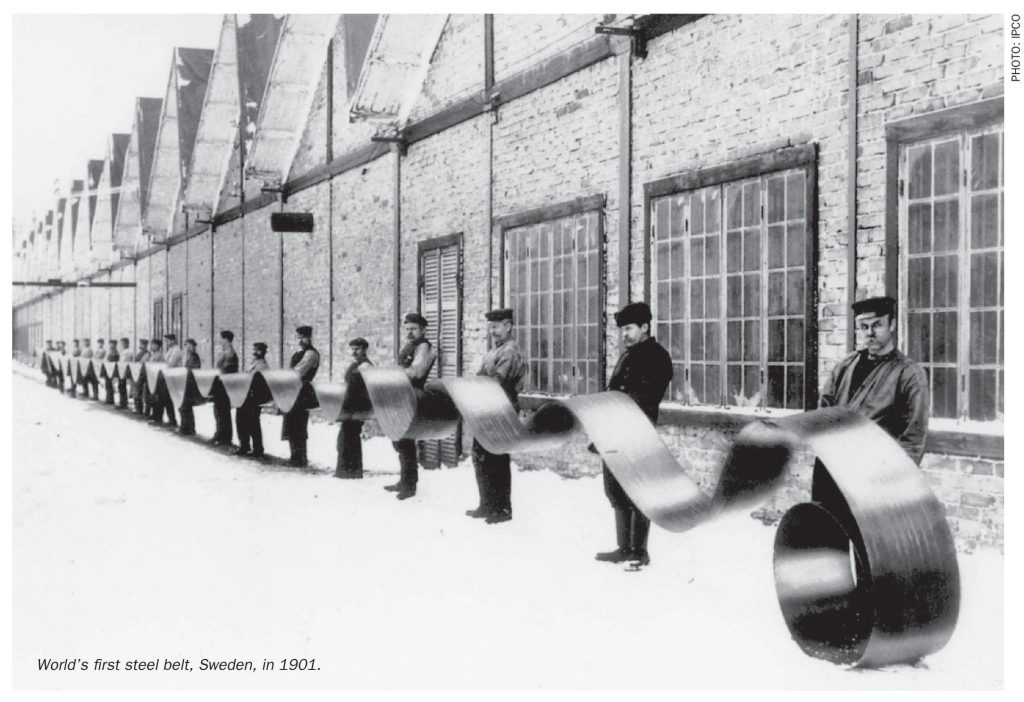
In 1901, the world’s first steel belt conveyor rolled off a production line in Sweden. Designed to transport waste at a timber mill, it was a modest beginning for a technology that would later underpin solidification processes across the chemical, oil and gas industries.
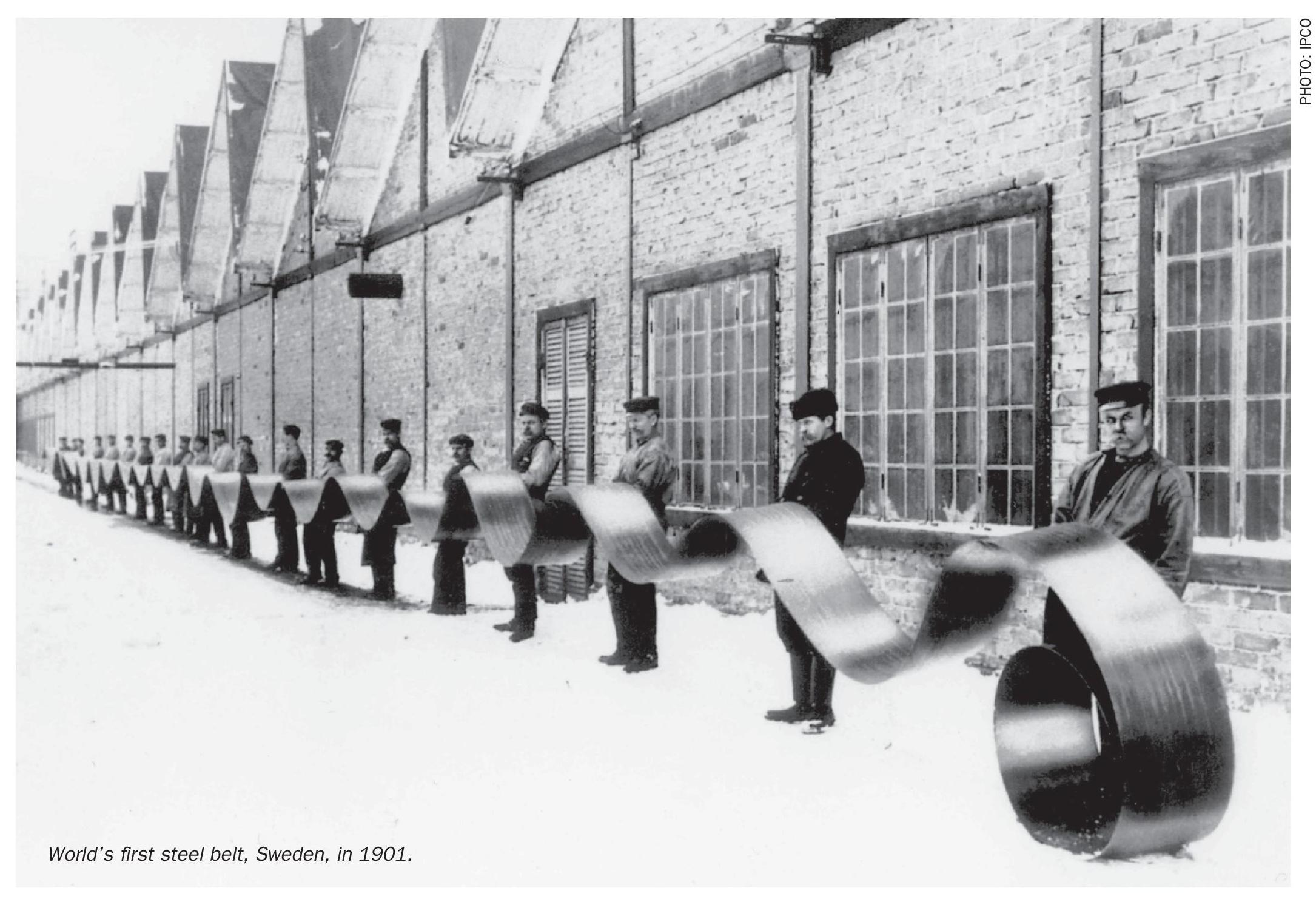
This year marks 125 years of steel belt production for process solutions manufacturer IPCO. The distinctive properties of steel belts remain central to many of the company’s solutions today.
Initially, steel belts were used primarily for conveying, where their exceptional wear resistance and fatigue strength – the ability to withstand the repeated bending stresses created by pulleys and drums – made them a reliable, durable choice. By the early 1920s, however, new applications were emerging. Baking and drying systems began to take advantage of steel’s excellent thermal properties, transforming the belt from a passive transport medium into an active processing tool.
For the chemical industry, a key milestone came in 1931 with the production of the world’s first chrome-nickel stainless-steel belt. This development opened the door to cooling and solidification applications. Four years later, the company produced and installed the world’s first continuous steel belt cooler for chemical products: a solidification line for resin and wax products.
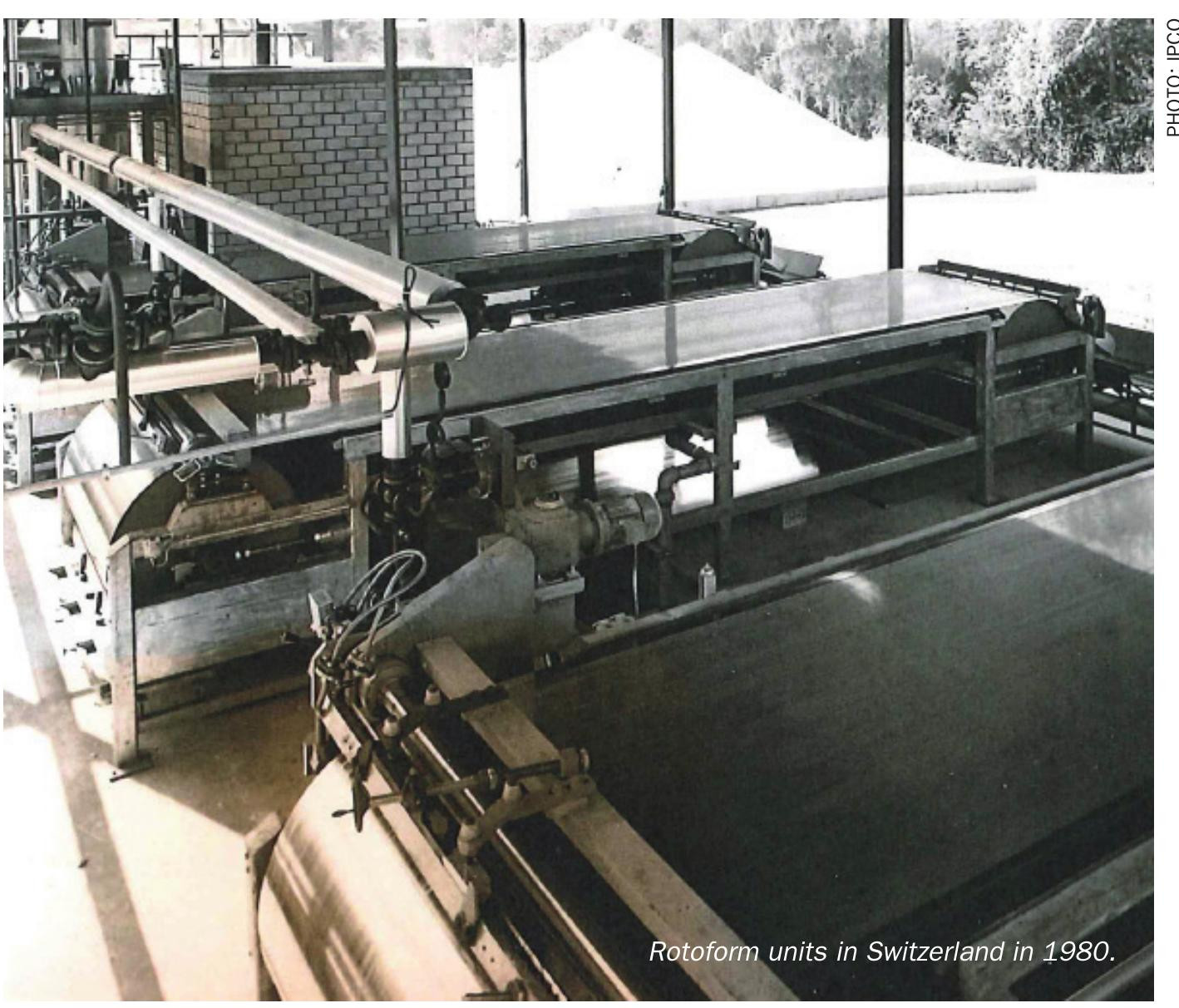
Just over a decade later, in 1951, the company supplied its first system for the oil and gas sector – a continuous sulphur slating line installed at a refinery in Mexico. As the global oil and gas industry expanded, so did demand for reliable and efficient sulphur solidification. Steel belt technology evolved accordingly, culminating in the introduction of the system that would come to define sulphur solidification worldwide: Rotoform.
While systems had advanced considerably between the first chemical cooler and the arrival of the drop-forming process, the fundamental principle remained unchanged. Rather than producing a continuous sheet or flake, however, the product left the belt as individual, uniform pastilles.
A chemical melt was deposited onto a continuously running steel belt, which then passed through a cooling zone. Chilled water was sprayed onto the underside of the belt, drawing heat from the melt through the steel. As the product solidified, it was discharged from the belt, ready for downstream storage, transport and reprocessing.
Today, 125 years on, that spirit of innovation continues. Sulphur processing, in particular, has seen some of its most significant impact. More than 2,500 Rotoform systems have been installed worldwide since launch, with more than 750 designed specifically for sulphur solidification at refineries and gas plants.
Among the earliest adopters was Shell, which installed Rotoform technology at its Jumping Pound facility west of Calgary, Canada, in the mid-1980s. The relationship expanded from there: Shell Canada’s Shantz plant installed 46 Rotoform lines, which remain the largest installation of their kind anywhere in the world. That scale reflects the trust the technology earned early on – and has continued to earn ever since.
The enduring reliability and performance of Rotoform
What established Rotoform as the industry standard was its combination of consistency and simplicity. Molten sulphur is deposited through a rotating perforated shell directly onto a moving steel belt. It is then rapidly cooled from beneath, solidifying into uniform hemispherical pastilles without ever coming into contact with the cooling water.
The result, across a range of throughputs, is:
- consistent pastille size and shape;
- high-bulk-density, free-flowing product;
- a clean, dry process with minimal handling loss;
- efficient, direct solidification from the melt.
This single-step, liquid-to-solid process delivers product quality classified as premium under Sulphur Development Institute of Canada (SUDIC) specifications. The uniform size and shape of Rotoform pastilles make them free-flowing for easy handling, while their predictably high bulk density offers significant benefits for storage and transportation.
Innovation at increasing scale
As sulphur producers sought higher throughput, the technology continued to evolve. The Rotoform S8 is now the world’s most widely used sulphur solidification system, producing 2–5 mm pastilles at rates of up to 130 t/d, with an on-stream factor of 96%.
For operations requiring greater capacity, the Rotoform HS, introduced in 2005, represented a substantial scale-up. Its extra-large depositing shell, featuring more than 30,000 holes, increases throughput to 260 t/d while maintaining pastille quality.
Most recently, in 2020, IPCO introduced a high-capacity solution that moved beyond steel belt-based processing while continuing to deliver a SUDIC-quality end product. The SG range of rotating drum granulators takes a different mechanical approach: the SG20 handles up to 800 t/d, while the SG30 – the highest-capacity sulphur solidification solution on the market – handles up to 2,000 t/d.
Both systems operate on a single-pass principle. Sulphur nuclei are generated externally and progressively built up to the required size as they travel through a slowly rotating drum. A bank of nozzles applies molten sulphur, while controlled water evaporation within the drum provides cooling.
The successful development of the SG range is a reminder that the company’s defining constant over 125 years has been its willingness to engineer the solidification solution best suited to the product and the industry’s requirements.
Global demand for sulphur continues to be driven by agriculture, energy, chemicals and healthcare. Whether the market requires high-precision pastilles or bulk-ready granules, solidification remains the critical final step in turning molten sulphur into a stable, transportable product.
This is a 125-year story that begins with the first steel belt, continues through a single steel belt cooler installed in 1935, and includes the refinery in Mexico that first applied steel belt technology to sulphur in 1951. It encompasses the launch of Rotoform in Switzerland in 1980 and, more recently, the decision to look beyond the steel belt where a different principle was needed to achieve the required throughputs.
As the sulphur industry enters its next chapter, IPCO’s continued focus on innovation will help it meet the evolving needs of sulphur processors around the world for many years to come.