Fertilizer International 514 May-Jun 2023

Argus Sustainable Fertilizer Americas welcomes you to Tampa!


CONFERENCE PREVIEW

Argus Sustainable Fertilizer Americas welcomes you to Tampa!

The inaugural Argus Sustainable Fertilizer Americas Conference is being held at the Grand Hyatt Tampa Bay, Tampa, Florida, USA, 5-6 June 2023.

The Grand Hyatt Tampa Bay.
PHOTO: HYATT.COM

Argus is launching a new fertilizer sustainability event this summer. The pioneering event will explore ways of improving sustainability and maximising returns on investment in the fertilizer markets of the Americas.

The inaugural event is being held at the Grand Hyatt Tampa Bay, Tampa, Florida, in the first week of June. The conference’s overarching themes include:

  • The importance of sustainable fertilizer management and practices
  • How to finance and build a sustainable fertilizer economy
  • Case studies which highlight key policies and those companies at the vanguard of fertilizer market sustainability.

Why sustainability?

Global fertilizer markets have experienced unprecedented changes in recent times, with supply lines disrupted, global inflationary pressures driving prices upwards, and in 2022 the world’s population soaring to over eight billion – to name just a few. As a result, the pressing concern across the global fertilizer community is how to work together to ensure food security, improve fertilizer self-sufficiency, and how to do so while meeting growing sustainability targets for the sector.

Future-proof your business

Attending the Argus Sustainable Fertilizer Americas Conference is a great way of ensuring your business is future-proof and helping to drive the industry forward. The event will provide attendees with unrivalled networking opportunities and a chance to link up with like-minded colleagues – all of whom are committed to furthering fertilizer industry sustainability.

The line-up of expert industry speakers, alongside insights from pioneering companies, will allow you to benchmark your sustainability strategy and embrace new opportunities in the fertilizer markets of the Americas – at a time when the sustainability, security, and affordability of fertilizer supply have become pressing matters.

Who will be there?

100+ delegates from across the fertilizer value chain are expected to attend the two-day event, including representatives from key producers, trading houses, financing firms, storage and logistics companies, governments, industry associations, AgTech companies and more.

There will be frequent discussion breaks throughout the two days. A cocktail reception on 5th June will also allow you to network and relax with colleagues, old and new, in an informal setting.

Learn from the experts

Featured expert speakers include:

  • Jeremy Buchman, Senior Agronomy Manager, McCain Foods
  • Mariana Contreras, Global Regenerative Agriculture Lead, Mars
  • Dr Robert Mikkelsen, Director of Agronomic Services, Yara
  • Matt Simpson, Chief Executive, Brazil Potash
  • Dr Catherine Roue, Innovation and Sustainability Director North America, Fertinagro Biotech International
  • Dr Kuide Qin, Chief Science Officer, Verdesian Life Sciences.

Experts from Aqua Yield, The Fertilizer Institute, PhycoTerra, Livestock Water Recycling, Nitricity, Phospholutions will also be speaking!

The sustainability agenda

Key topics on the agenda include:

  • How can food and beverage companies support the drive for agricultural sustainability?
  • Fertilizer self-sufficiency and food security: US and Brazil case studies
  • An introduction to nutrient recycling and its role in a sustainable circular economy
  • Renewable energy mixes, novel products and the future of fertilizer production.

Latest in Outlook & Reviews

CRU Phosphates+Potash conference focuses on sulphur

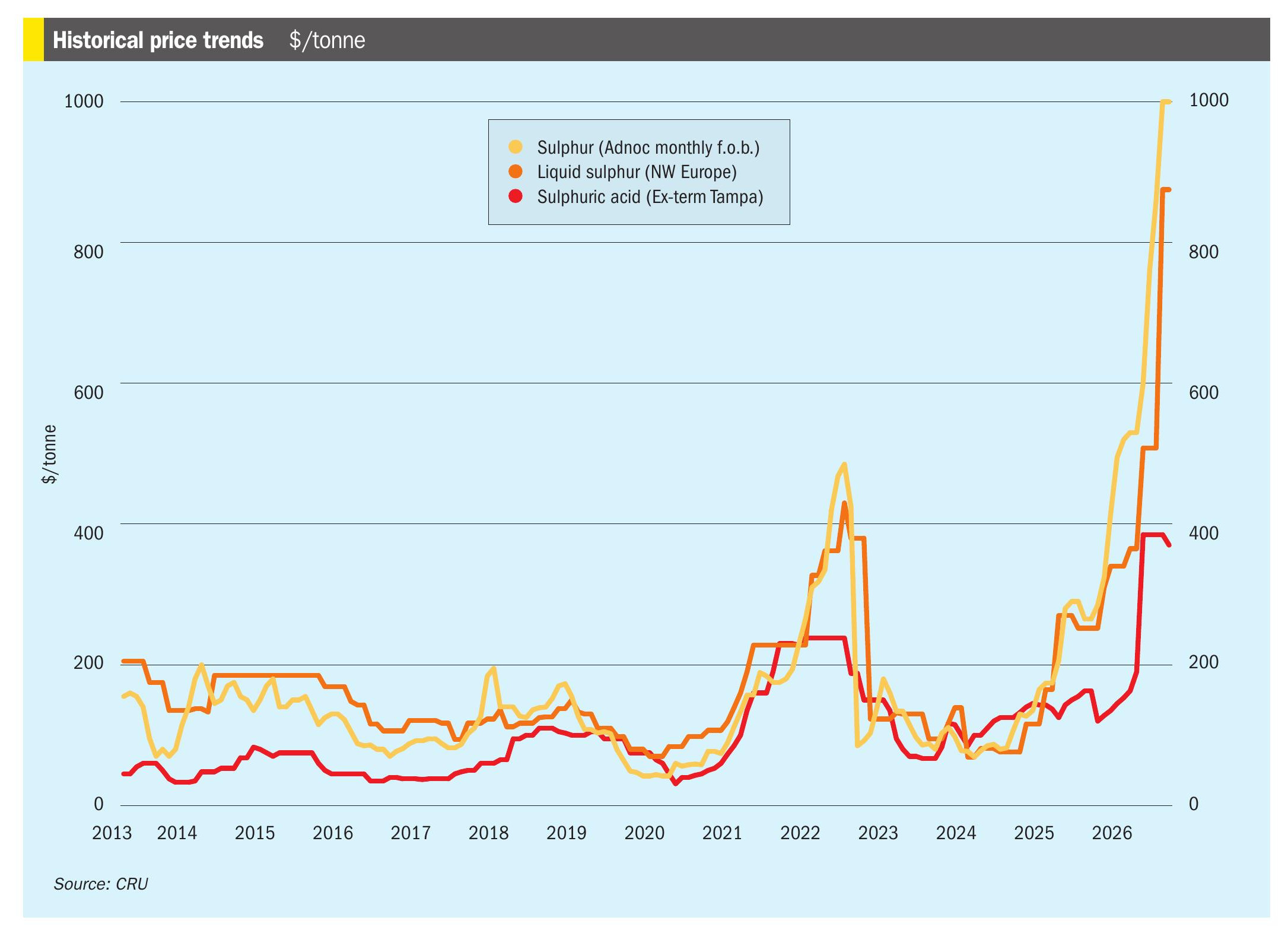
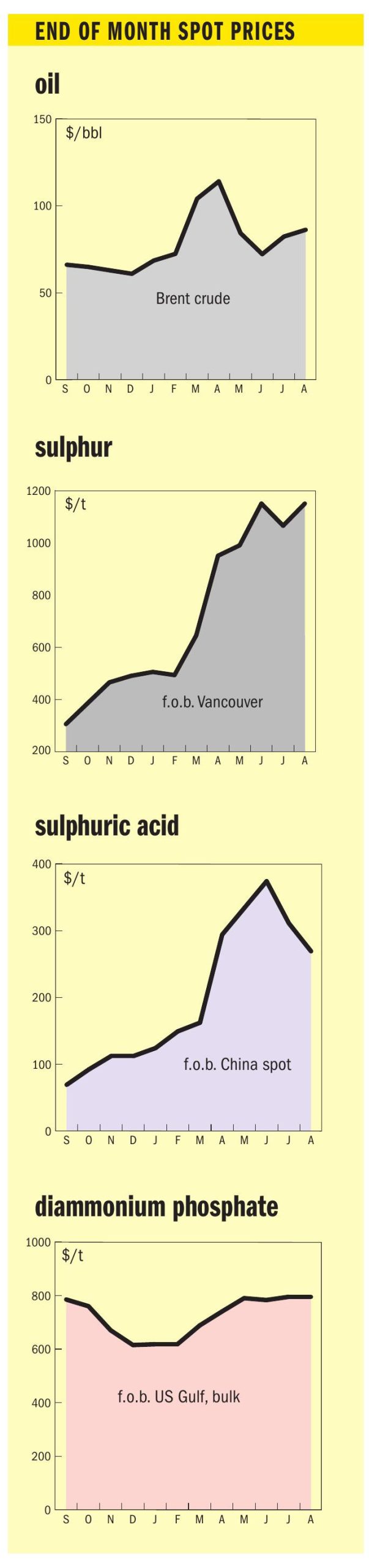
CRU’s Phosphates+Potash Expoconference was held in Paris in mid-April, with the Iran crisis uppermost in everyone’s mind. Margins are under pressure, sulphur has become a strategic constraint, and the phosphates investment pipeline is thin. CRU Principal Consultant Humphrey Knight examined the fallout from the closure of the Strait of Hormuz, noting that fertilizers have been hit harder than most bulk commodities. A large share of exportable sulphur and traded urea normally originates in, or passes through, Gulf producers. The effective closure of the strait has squeezed the traded part of these markets, where international prices are set, and pushed benchmarks up sharply. The global phosphate market is structurally tight, and the combination of Chinese export policy and Middle East logistics has pushed the traded segment into a much more fragile state.

Supply crisis worsens

It is two months on from our previous issue, and almost none of the news has been good from sulphur and downstream markets. Only three sulphur cargoes are confirmed to have transited the Strait of Hormuz since the US and Israeli strikes on Iran began, all loaded at Ruwais, with destinations in India, Tanzania and Morocco, carrying a total of 160,000 tonnes. It is believed that a couple of Iranian vessels with a total of 75,000 tonnes may also have left covertly. But in spite of some Middle Eastern sulphur making its way to Saudi Red Sea ports or Duqm on Oman’s Indian Ocean coast, around 700,000 tonnes is still trapped on ships stranded in the Gulf, and coupled with production cuts in the region, it is estimated that over 1.2 million tonnes has so far been removed from the market.