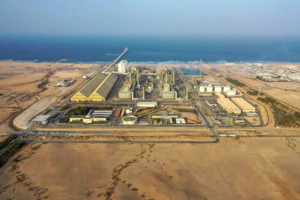
OMIFCO prepares 25% IPO on Muscat Stock Exchange
Oman India Fertilizer Company (OMIFCO) has formally announced plans to proceed with an initial public offering of 25% of its existing ordinary shares and list on the Muscat Stock Exchange (MSX).


Oman India Fertilizer Company (OMIFCO) has formally announced plans to proceed with an initial public offering of 25% of its existing ordinary shares and list on the Muscat Stock Exchange (MSX).
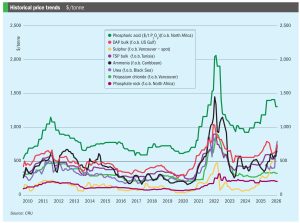
Price trends and market outlook, 7th May 2026.

Energy, food, and fertilizer are three faces of the same system, says Alzbeta Klein, CEO of the International Fertilizer Association (IFA).
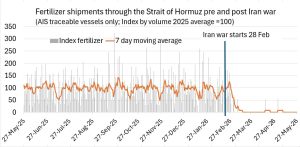
Strait of Hormuz disruptions linked to the Iran war have choked off fertilizer shipments from the Middle East and pushed prices sharply higher, prompting a wave of emergency support and trade measures as governments try to shield farmers ahead of key planting seasons.

QatarEnergy has agreed a 15-year urea supply contract with Koch Fertilizer, covering up to 740,000 t/y of Qatari-origin product from July 2024 into the US and other export markets.

MAIRE has announced fresh awards and scope additions worth about €1.3 billion ($1.4 billion), including a new urea licensing package that reinforces its fertilizer technology pipeline.
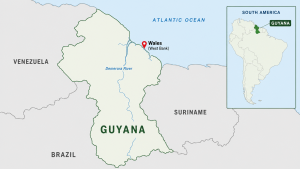
Guyana has attracted a mix of Chinese, US, Indian, European and local engineering groups to bid for the Guyana Ammonia and Urea Plant (GAUP), a 300,000 t/y fertilizer project planned at Wales alongside the country’s gas‑to‑energy complex.

Brussels has put Europe’s gas‑exposed fertilizer industry at the centre of its new Fertilizer Action Plan, warning that high energy costs and plant closures threaten the region’s nitrogen capacity and long‑term food security.

In an ideal natural draft urea prilling tower, molten droplets fall, cool air rises, and prills solidify – but what happens when airflow at the tower base is disturbed? Small adjustments can have big consequences.
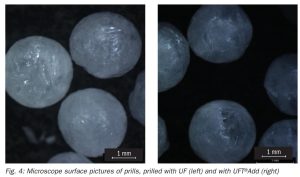
thyssenkrupp Uhde Fertilizer Technology) has developed a series of formaldehyde-free additives, UFT®Add, which keeps solid urea free-flowing during transport and storage, enabling compliant automotive grade urea production.