Fertilizer International 527 Jul-Aug 2025
7 July 2025

Reducing dust, enhancing safety: a coating-based approach
PRODUCT INNOVATION
Reducing dust, enhancing safety: a coating-based approach
Dust generation during the handling and storage of fertilizers poses ongoing challenges to operational efficiency, worker safety, and environmental compliance. In this article, John Suldickas, Heather McKay and Juan Gonzalez Leon explore Arkema’s innovation in fertilizer dust control through its Dustrol® line of coating solutions, including new bio-based alternatives. These coatings significantly reduce dust by up to 95% while preserving the integrity and flowability of fertilizer granules. Laboratory testing methods and industrial application strategies are discussed, demonstrating how these coatings enhance product quality and sustainability in modern crop nutrient production.


Introduction
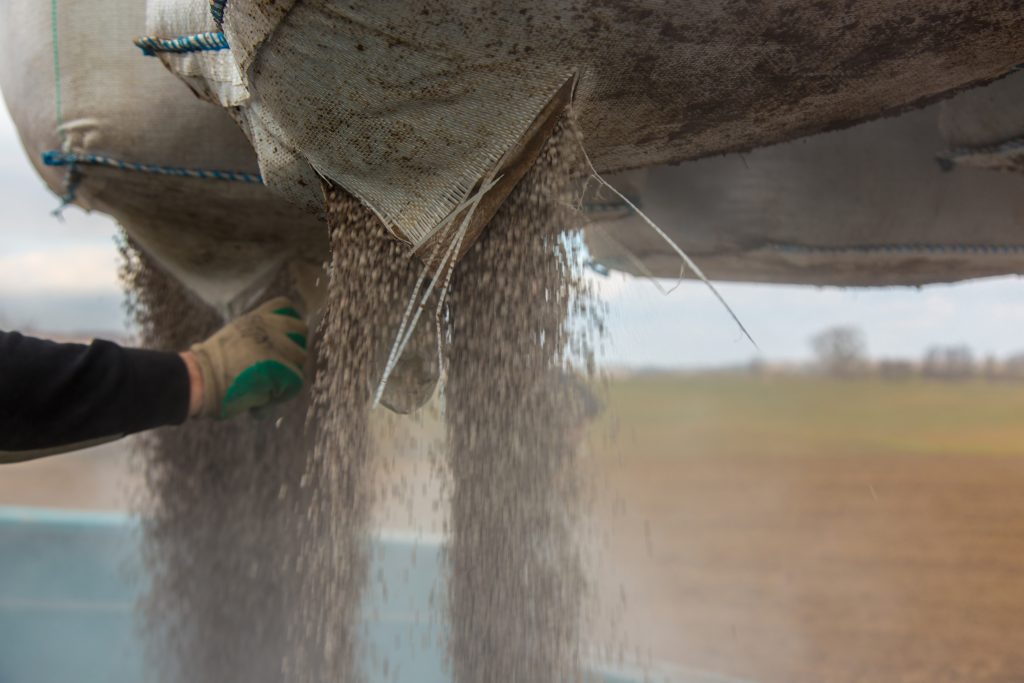
The transport and handling of mineral fertilizers from production plants to agricultural fields present significant challenges, particularly concerning dust generation. Excessive dust not only diminishes product quality through material loss but also raises concerns related to worker health and environmental safety. Although they may appear uniform and intact, the physical degradation of fertilizer granules during handling and atmospheric exposure often releases fine dust particles into the surrounding environment.
This issue is especially pronounced in phosphate-based and compacted NPK fertilizers, as these fertilizer types tend to release more dust than ammonium nitrate and other granulated products. Mechanical abrasion, friable crystal breakage, and inconsistent bonding within granules all contribute to dust formation, particularly under variable humidity and temperature conditions. Even seemingly compact granules can release surface-bound micro-crystals upon impact.
The creation and loss of fertilizer dust during transit or storage poses serious health risks to workers and degrades the product. While manufacturing improvements and storage practices can help, applying dust control coatings during postproduction remains one of the most effective mitigation methods. These coatings enhance storage, transport, and application performance by forming a protective layer that binds fine particles.
Arkema has developed a series of coatings tailored for a wide range of fertilizers under its Dustrol® brand. Coating selection is based on substrate characteristics and is typically determined through laboratory evaluations to identify the most effective formulation and dosage.
No universal standard currently exists for evaluating fertilizer dust generation or coating performance. Instead, Arkema compares the performance of different coatings using controlled laboratory simulations to apply coatings and mimic industrial conditions. Two methods in particular are favoured for the laboratory evaluation of dust control performance:
• Optical drop testing (Microtrac Dustmon)
• Modified IFDC dust tower.
Optical drop testing (Microtrac Dustmon)
This method evaluates airborne dust released from fertilizer samples dropped into a sealed chamber. A laser-based sensor measures light transmission changes caused by suspended dust. Lower light transmission equates to higher dust levels. This approach provides real-time, quantitative dust values (Figure 1). In one test, triple superphosphate (TSP) treated with Dustrol® A and Dustrol® B reduced dust levels by over 90% compared to untreated samples (Table 1).


Modified IFDC dust tower
This method uses a vertical vacuum dust extractor to quantify free dust in fertilizer samples. Dust values are reported in ppm and as a percentage of total sample weight. Monoammonium phosphate (MAP) granules coated with Dustrol® C (petroleum-based) and Dustrol® D (biobased) both showed over 85% dust reduction initially. Coating performance was also prolonged with dust reduction remaining above 50% after six weeks of ageing (Figure 2 and Table 2).


Consistent coating application for optimal performance
The uniformity and durability of coatings significantly affects dust suppression. Even coverage is paramount, as it ensures improved granule flowability, consistent nutrient release, and resistance to clumping or breakdown during handling. Darker coatings are easier to assess visually, while clear coatings are more challenging, often requiring UV or fluorescent lighting or extraction testing to verify coating coverage.
Achieving the consistent application of a coating to fertilizer granules depends on proper spray techniques, precise dosing, and efficient mixing systems. Hydraulic or pneumatic spray systems are used initially to evenly coatings the surface of granules. Then, following initial spraying, the granules enter mechanical mixers – such as ribbon, paddle, or pugmill designs – to ensure coatings are thoroughly distributed over their entire surface.

Industrial application best practices
The industrial-scale application of dust control coatings involves specialised storage, heating, and application infrastructure. Coating tanks must accommodate bulk deliveries and maintain the correct temperature for flowability, often through insulated, heat-controlled systems. Automated Vendor Managed Inventory (VMI) platforms can also enhance operational efficiency by enabling remote monitoring and ordering.
Key components of industrial coating systems (see schematic in Figure 3) include:
• Circulating loops with backpressure regulators for temperature and flow consistency
• Weigh belt scales linked to automated dosing control systems
• Coriolis-effect mass flow meters for accurate coating delivery
• Spray systems integrated with actuated valves to prevent unintended discharge.
Machine learning and imaging technologies are also emerging as tools for real-time coating quality control, providing manufacturers with continuous performance data and early issue detection.

Conclusion
Fertilizer dust control is vital for ensuring product quality, operational efficiency, and workplace safety. Arkema’s Dustrol® coatings, available in both petroleum-and bio-based versions, deliver proven performance validated through laboratory testing and field application. With the right combination of formulation, application technique, and infrastructure, producers can achieve significant reductions in dust emissions, contributing to cleaner, safer, and more sustainable fertilizer production.
References
Acknowledgements
The authors would like to give their special thanks to Anna McLeroy, Bob Xing, and Ahmed El Kasbaji for their contributions.
Authors’ note
Dustrol® is a registered trademark of the Arkema Group of Companies.
ArrMaz Products Inc. hereby maintains the copyright to the attached article and grants a world-wide, perpetual, royalty free license to reproduce, distribute and display the article to CRU Group.