Fertilizer Industry News Roundup
The United States has imposed duties on Russian and Moroccan phosphate imports.


The United States has imposed duties on Russian and Moroccan phosphate imports.
Norilsk Nickel has finally closed down its nickel smelting operation at Nikel in Russia’s Murmansk region; the company’s oldest still operating production facility. The shutdown is part of the company’s environmental programme, which aims to significantly reduce its environmental impact at all production sites. The Nikel closure will eliminate SO2 emissions in the cross-border area with Norway, which had become a major bone of contention with the Norwegian government. Norilsk aims to reduce SO2 emissions at Kola by 50% by the end of 2020 and 85% by the end of 2021, and is modernising its production in Monchegorsk, including the construction of new state-of-the-art facilities.
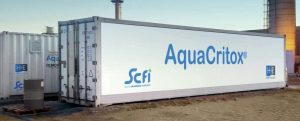
Construction work has begun on a new hydrocracking complex for the Assiut refinery in Egypt, in the central Nile valley, according to TechnipFMC plc, who won the $1 billion engineering, procurement, and construction (EPC) contract for the project. The contract involves construction of new processing units including a vacuum distillation unit, a diesel hydrocracking unit, a delayed coker unit, a distillate hydrotreating unit and a hydrogen production unit which will use TechnipFMC’s proprietary steam reforming technology.
Brimstone STS Ltd. today announced a new partnership with Sulphur Recovery Engineering Inc (SRE). The two companies say that this collaboration will bring together decades of experience and the latest technology in support of the sulphur recovery and gas treating industry worldwide.
In early October Tesla held a ‘battery day’ event at its headquarters in Fremont, California. Speaking at the event, company founder and CEO Elon Musk outlined his vision for the electric car industry over the coming decades, and spoke particularly to his ambitions for the nickel industry. He had already called for more mining of nickel earlier in the year, and has said that Tesla is developing cathodes that will contain higher nickel and no cobalt. The latter comes after a lawsuit against Tesla and several other high-tech US firms for allegedly supporting human rights violations by buying cobalt from the Democratic Republic of Congo. Musk echoed the potential ‘reputational risk’ for the nickel market and called for more sustainable nickel production, dangling the prospect of a “giant contract” with any miners that could produce nickel in an “environmentally sensitive way.” Tesla is reportedly in discussions with Vale and BHP as well as the Indonesian government concerning potential investments in nickel production.

Brazil’s phosphate industry is on a growth dash to meet rising domestic demand. We report on the major acquisitions, investments and expansions by CMOC, Mosaic, Yara and Itafos.
Recent protests in Belarus have triggered a wave of share price volatility, London’s Financial Times reported on 18th August.
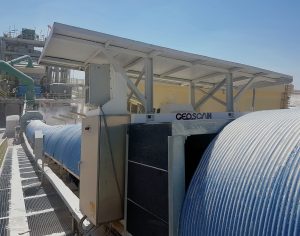
Sophisticated control of phosphates production is now possible thanks to the availability of real-time process analysers. We assess the range of technologies currently on the market and their key advantages.
DuPont Clean Technologies has announced the successful startup and performance test of a 300,000 t/a STRATCO® alkylation unit licensed at the Hengli Petrochemical Company’s new refinery complex on Changxing Island in the Harbour Industrial Zone, China. The new alkylation unit enables Hengli to produce high-quality alkylate from a 100% isobutylene feed stream, catalysed by sulphuric acid. This first-of-a-kind unit was developed through DuPont research into the best ways to maximise product octane and minimise end point with this feedstock. Hengli had awarded DuPont the contract for the new alkylation unit as well as a MECS® sulphuric acid regeneration unit in 2015.

Spanish fertilizer producer Fertiberia is teaming up with energy firm Iberdrola to build Europe’s largest plant for generating green hydrogen for industrial use – in this case ammonia production. The 100MW solar plant and accompanying 20 MWh lithium-ion battery system and 20MW electrolytic hydrogen production system will be built at a cost of $174 million, and electrolyse water to produce 720 t/a of hydrogen. When fed into Fertiberia’s existing ammonia plant at Puertollano, 250km south of Madrid, the hydrogen will allow a 10% reduction in natural gas use by the plant, saving the company 39,000 t/a in annual CO 2 emissions. Start-up is planned for 2021. Fertiberia will also use electrolysis-generated oxygen as a raw material for nitric acid, which is used to produce ammonium nitrate at the site.