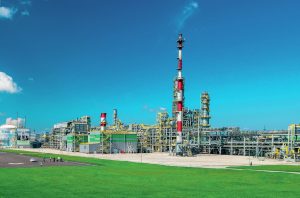
Fertilizer Industry News Roundup
A consortium of Chinese buyers has agreed the first potash contract with the Belarusian Potash Company (BPC) since September 2018.


A consortium of Chinese buyers has agreed the first potash contract with the Belarusian Potash Company (BPC) since September 2018.
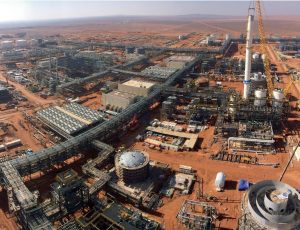
Three large-scale phosphoric acid plants constructed as part of the world-class Umm Wu’al project in Saudi Arabia are now fully operational. James Byrd of Worley (formerly Jacobs ECR) describes the execution of the project from basic engineering through to plant performance tests.
China’s copper industry is facing difficulties caused by the coronavirus outbreak in the country. Prolonged factory closures, particularly in Hubei province, at the centre of the outbreak, as well as neighbouring Guangdong and Zhejiang, also badly affected, have caused a slump in demand for copper domestically as copper fabricators remain on extended closure. However, smelters have resisted cutting production. Daye Nonferrous, based in Huangshi at the centre of coronavirus outbreak, continues to operate at 80% of its 600,000 t/a capacity for 1Q 2020, according to the company, in spite of quarantine and transport restrictions which have reduced truck shipments to the smelter – Daye is reportedly still able to receive copper concentrate shipments via the Yangtze River to Huangshi port.
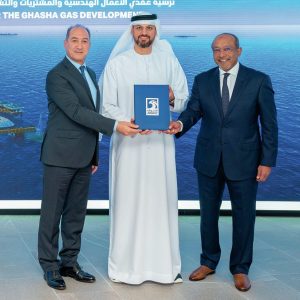
The Abu Dhabi National Oil Co. (ADNOC) has awarded two EPC contracts with a total value of more than $1.65 billion for the offshore Dalma sour gas development, 190 km northwest of Abu Dhabi city. Dalma is one of the fields in the offshore Ghasha ultra-sour gas concession, which ADNOC views as central to the UAE achieving self-sufficiency in domestic gas supplies.
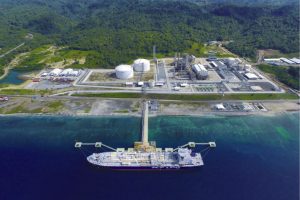
Lessons can be learned from the challenges faced during the construction, commissioning and start-up phases of major projects. In this article challenges and experiences are shared from the recent successful commissioning of ammonia and urea plants around the world, including projects in Indonesia, India, Egypt and the Middle East.

New ammonia and urea plants in Nigeria and Ethiopia are part of a wave of new capacity in Sub-Saharan Africa, and may help pull up regional demand from its current low base level.

At the Nitrogen+Syngas Conference 2020, held in The Hague, Netherlands, Haldor Topsoe launched its new TITAN ™ series of steam reforming catalysts. The company says that the new series, which consists of the RC-67 TITAN and RK-500 TITAN catalysts, offers improved performance and longer catalyst lifetime thanks to the hibonite-rich composition. The addition of titanium promoters adds exceptional mechanical strength while a seven-hole cylindrical shape yields both a very low pressure drop and a high surface area. Pressure drop build-ups in syngas plants can cause unscheduled downtime and cost millions of dollars, while thermal instability during operation can lead to operational risk and reduce plant lifetime. Topsoe says that the catalysts can mitigate these risks, ensuring lower operating costs, increased profit margins, and reduced energy usage.

Schoeller-Bleckmann Nitec (SBN), an experienced manufacturer of high pressure equipment for ammonia and urea plants for many years, also helps customers when things go wrong. SBN has come to the aid of operators on numerous occasions, helping them return their plant to operation as soon as possible when a problem occurs. R. Bunzl discusses SBN’s approach to finding solutions to a number of exceptional problems in urea equipment.
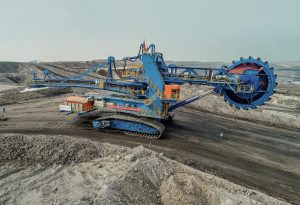
We look at state-of-the-art technology used in phosphate and potash mining, including equipment and systems for excavation, tailings thickening, transport, tunnelling and processing.
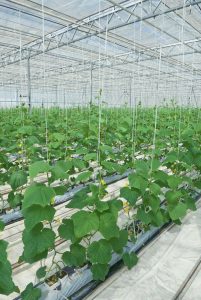
With more than 15 million hectares of land watered by drip irrigation globally, the technology’s agricultural potential remains enormous. Fertigation – the ability to manage and regulate both water and plant nutrients – is a key advantage helping drive worldwide growth.