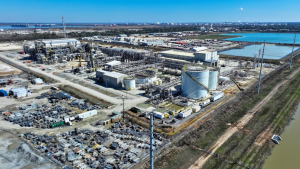
The outlook for low carbon hydrogen
The scale up of low carbon hydrogen has proved slower, more selective and more geographically concentrated than the ambitious plans announced earlier in the decade had anticipated.


The scale up of low carbon hydrogen has proved slower, more selective and more geographically concentrated than the ambitious plans announced earlier in the decade had anticipated.
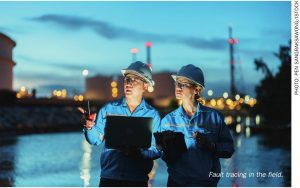
Digitalisation brings with it a fresh set of issues as well as opportunities for safety management.
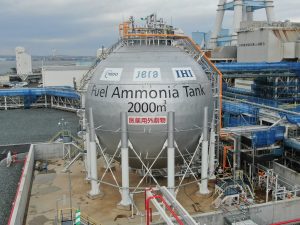
While the power sector has been advanced as a major long term source of demand for emerging low carbon ammonia projects, the pace of development in leading proponents such as Japan and South Korea remains patchy.

Graham Roeber, CEO, Orono Spectral Solutions, looks at how to test the oil content limit in anhydrous ammonia specifications.

Cover story! In an exclusive interview, Fertilizer International speaks to Tibaut Theys, General Manager, Prayon Technologies, ahead of the Arab Fertilizer Association’s Technical Conference in Amman, Jordan, in November.

CRU’s Ashmita Sen and Humphrey Knight assess the largest capacity expansion by the Arab Potash Company (APC) in 20 years.

Ballestra’s Stefano Vignando provides an overview of an innovative, room-temperature, water-based route for potassium sulphate (SOP) production.

ERM and Systemiq, in collaboration with the International Fertilizer Association (IFA), have developed a roadmap on phosphate and potash decarbonisation.

Lyndsay Tran, Khanh Pham and Gabriela Olvera of Hatch look at the options for rare earth element (REE) recovery from phosphogypsum (PG) and their relative merits.

Novel technology from UK start-up Vateris combines potassium hydroxide with gypsum and captured carbon dioxide to deliver high-purity potassium sulphate (SOP).