Fertilizer International 534 Sep-Oct 2026

11 September 2026

Decarbonising the phosphate and potash industries
ENERGY TRANSITION
Decarbonising the phosphate and potash industries
A roadmap on phosphate and potash decarbonisation, developed by ERM and Systemiq in collaboration with the International Fertilizer Association (IFA), was published in July. This highlights affordable near-term options – and the need to deliver more costly, deeper decarbonisation out to 2050.

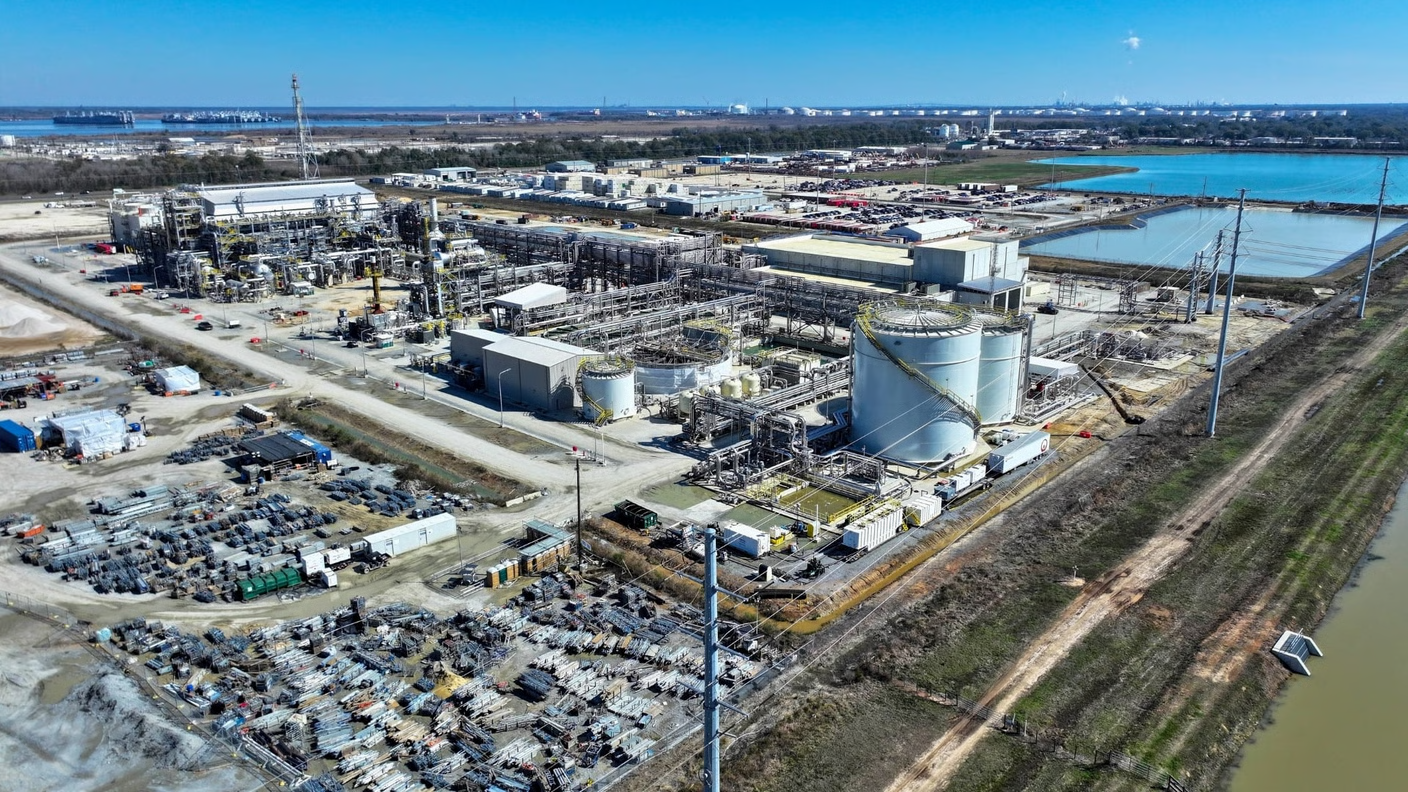
Mosaic’s Riverview phosphate plant, Florida, United States. The site celebrated its 100th anniversary in November 2024. PHOTO: MOSAIC
The global potash and phosphate industries have been offered practical, science-based guidance on greenhouse gas emissions (GHG) reduction in a newly-published roadmap. This covers the whole value chain, from raw materials and production through to transport, trade and agricultural use (Figure 1).
The roadmap – Decarbonizing the Phosphate and Potash Fertiliser Industry – sets out how these two sectors can cut their emissions in line with the Paris Agreement, while maintaining fertilizer affordability, supply resilience and food security1 . It is an initiative of the European Bank of Reconstruction and Development (EBRD) and was developed by sustainability consultancies ERM and Systemiq in collaboration with the International Fertilizer Association (IFA).

The phosphate and potash sectors were consulted extensively about the roadmap over a nine month period, through a series of workshops, surveys, one-to-one consultations and reviews by an advisory group.
The roadmap is designed to help fertilizer producers, investors and policymakers assess both the near-term and long-term levers for decarbonisation and identify the enabling conditions for this transition. It also balances the trade-offs between the speed of action on decarbonisation versus its cost and the impacts on food system stability.
Deep emissions cuts by the potash and phosphate industries, while possible, will require shifts in production systems, regulation and infrastructure, according to ERM.
Enablers of decarbonisation
The roadmap identifies four key enablers of phosphate and potash decarbonisation. These levers could deliver significant emissions reductions as part of a long-term transition, advises ERM, if technical, cost and policy barriers are removed:
1. Low-carbon energy underpins the system. For production, the use of renewable electricity, power purchase agreements (PPAs) and low-carbon heat are necessary to displace fossil-based power and steam, with alternative fuels playing supporting roles, where viable.
2. Carbon capture and storage (CCS) and electrification can also unlock process emissions reductions. CCS in phosphoric acid production in combination with targeted process electrification provide key routes for abatement of the sector’s most complex emissions.
3. Nutrient use efficiency is the primary downstream lever. Precision agronomy, 4R practices (right source, right rate, right time, right place) and enhanced efficiency fertilizers (EEFs) can cut emissions without compromising yield or soil health.
4. Non-sulphur production pathways could become long-term strategic options. The diversification of phosphate production via alternative process pathways is being driven by rising competition from battery raw materials and heightened geopolitical volatility.

The case for urgent action
Early action on decarbonisation by phosphate and potash producers will be critical, says ERM, to avoid long-term emissions from new assets and infrastructure. Acting sooner will also unlock extra investment, spur new technologies and help forge the partnerships needed to decarbonise the sector at scale.
The roadmap highlights several near-term measures that can help reduce production emissions. These include energy efficiency improvements, heat recovery, renewable electricity procurement and mining equipment decarbonisation.
Overall, ERM sees the roadmap as very much a positive that provides “an opportunity to boost competitiveness, resilience and food system stability”. Achieving its objectives on decarbonisation will require:
• Coordinated action across industry, finance and government, underpinned by policy certainty, investment and deployment of low-carbon technologies.
• Agri-food companies, retailers and producers working closely together to create demand for low-carbon fertilizers and unlock decarbonisation investment.
• Investors scaling-up innovative funding mechanisms that support the transition.
• Policymakers providing clear long-term signals and the enabling infrastructure.
• Producers accelerating deployment of priority emissions reduction technologies.
• Standards setting that reduces fertilizer-related emissions while safeguarding agricultural productivity.
Richard Platt, partner at ERM, said: “By decarbonizing the phosphate and potash industry, we have a strategic opportunity to help drive a transition that strengthens competitiveness, resilience, and food system stability in a rapidly changing world. If we want a sustainability transition that can withstand geopolitical stress, the next phase must focus on real value chains, real risks, and real investment conditions.”
Value chain emissions
Global emissions from phosphate and potash production and use totalled 448 million tonnes carbon dioxide equivalent (MtCO2e) in 2024. These are divided between 94 MtCO2e associated with raw materials, 60 MtCO2e associated with production (15%), 7 MtCO2e associated with downstream transport and 287 MtCO2e associated with agricultural use (60%) (Figure 2).

Under business as usual scenarios, total phosphate and potash emissions are set to reach 553 MtCO2e per annum by 2050, an approximate 25% increase from today, with limited scope for efficiency improvements to offset rising demand.
Breakdown by industry
The value chains of the phosphate and potash industries contribute 360 MtCO2e and 89 MtCO2e, respectively, to the present day emissions total of 448 MtCO2e. Production emissions for both industries also differ as a percentage of total value chain emissions, making up a larger share for potash.
For the phosphate industry, production emissions account for 11% of total value chain emissions, with process emissions and electricity being the major hotspots. Emissions associated with phosphate raw materials (feedstocks) also contribute significantly.
Emissions from potash production, in contrast, make up 21% of total value chain emissions. These are dominated by fuel use and electricity consumption. Raw material emissions are generally less significant.
Ammonia can be a particularly significant contributor to raw material emissions for both industries. Ammonia production emissions are, however, restricted to the manufacture of the sector’s four main nitrogen-containing products: monoammonium phosphate (MAP), diammonium phosphate (DAP), compound NPKs and potassium nitrate (NOP).
Overall, although the proportion of phosphate and potash value chain emissions under direct producer influence is small, addressing these emissions is still of strategic importance, ERM advises.
“The impact of leaving production emissions unaddressed will increase the investment risks associated with producers as these emissions may increasingly translate into financial impacts on balance sheet/profit-and-loss statements and reduce their competitiveness as climate related regulations become more stringent,” the roadmap states1 .
Reducing production emissions
The roadmap shows that an 89% reduction in phosphate and potash production emissions – from 60 MtCO2 e to 7 MtCO2e – is technically feasible under a ‘net zero by 2050’ scenario (Figure 3). Achieving this would, however, require large-scale changes to production systems and regulation, and also involve significant economic and environmental trade-offs. Additionally, the technologies needed to decarbonise fuel use and address process emissions are at varying stages of maturity and would require demonstration and scale-up.

The roadmap highlights fossil fuel use, electricity use, process emissions, heat recovery and internal transport as the key areas for production emissions reduction, as these are under the operational control of phosphate and potash producers. In terms of fuel use, the consumption of natural gas or fuel oil in drying processes and diesel in mining equipment is most significant.
Electricity decarbonisation is a crucial lever for emissions reduction across both phosphate and potash production. For potash producers, decarbonisation of electricity is a particularly critical, given the industry’s sizeable power and heat emissions.
Drying processes are a major source of fuel emissions, particularly for the phosphate industry. Rock drying require temperatures of up to 1,000°C, according to the roadmap, while fertilizer product drying temperatures are typically between 400-700°C.
Electrification is seen as a key lever for drying decarbonisation but only when combined with a changeover to renewable electricity. Fuel switching (e.g. sulphur, biomass or biomethane) is also an option. Looking ahead, the use of radio frequency drying, heat pumps, heat batteries and post-combustion CCS, as well as switching from froth flotation to electrostatic separation, may become viable in the long-term.

Mining equipment emissions can be reduced via operational efficiency improvements, fleet electrification using low carbon electricity, or by powering vehicles with low-carbon fuels such as hydrotreated vegetable oil (HVO). If feasible, transporting minerals and product materials on conveyors using renewable electricity or switching to slurry pipelines are other options.
In potash production, much of the fixed infrastructure is already electrified. That leaves the adoption of low-carbon power sources and the gradual electrification of diesel-powered mobile fleets as major mining goals. In phosphate production, which is typically based on open-pit mining, diesel-powered mobile equipment remains more common due to operational requirements. That makes fleet electrification, supported by low-carbon fuels, a key pathway for reducing emissions.
Electrifying the internal movement of phosphate and potash mining materials – by conveyors, electric haulage or rail – can further reduce emissions, subject to site-specific and logistical constraints.
Process emissions, especially those relating to phosphoric acid (CO2) and nitric acid production (N2O), can be addressed initially through abatement strategies and process efficiency improvements. Phosphoric acid is a key intermediate for phosphate fertilisers, while nitric acid is required for NOP production. These emissions sources are likely to represent the most significant long-term decarbonisation challenge for the industry, according to the roadmap.
Further reductions in process emissions from phosphoric acid production will rely on CCS. This could involve:
- Bolt-on CCS units for existing acid plants
• Advanced acid leaching techniques that capture high-purity CO2
• The Merseburg process or calcination of phosphogypsum to capture CO2 with sulphuric acid regeneration
• Carbonate mineralisation methods.
Significant technical, logistical, geological and economic barriers are, however, likely to prevent CCS adoption in the near-term, the roadmap advises.
Near-term action
Achieving the decarbonisation goals set out in the roadmap will depend on early action through the rest of this decade and into the early 2030s. This includes action by producers in the following areas:
• Mining and beneficiation. In the near term, emissions reductions could be delivered through battery electric, trolley assist systems in open-pit mining, and the use of HVO or other low carbon liquid fuels for light-duty engines.
• Efficiency initiatives. These include heat integration, equipment upgrades, insulation and better heat recovery from sulphuric acid production. These measures reduce both fuel and electricity demand and are critical enablers for subsequent electrification and power de-carbonisation.
• Process heat and drying. Emissions reductions measures include efficiency improvements and the use of combined heat and power (CHP), as well as partial electrification and fuel switching, where feasible.
• Process emissions. Opportunities are limited in the near term with N2 O abatement from nitric acid production and process optimisation being the main focus.
• Waste emissions. Early actions include water recycling and better PG management via gypsum valorisation and co-product recovery.
• Low-carbon electricity. Ahead of grid decarbonisation, phosphate and potash producers can reduce their electricity related emissions through on-site renewable electricity generation, PPAs and energy attribute certificates (EACs).
The cost challenge
The overall cost of decarbonising phosphate and potash production – to meet a net zero goal by 2050 – is likely to fall within the $235-320 billion range globally. This value illustrates the massive scale of the challenge to decarbonise production emissions. The figure also excludes the cost of associated infrastructure upgrades. Neither does it factor in the required policy support and demand signals needed to attract the necessary investment.
More positively, to help guide investment and set priorities, the roadmap assesses decarbonisation options using a global marginal abatement cost curve (MACC). This highlights the main bankable low-cost and negative cost options in the near-term – such as energy efficiency, process optimisation, renewable electricity generation, and selective electrification where cheap low-carbon power is available. Delivering deeper decarbonisation will, however, eventually require the pursuit of higher cost options – particularly alternative production routes, CCS and full electrification.
Reference
ERM, 2026. Decarbonising the Phosphate and Potash Fertiliser Industry. A science-based approach to reducing emissions from fertiliser production and use. ERM | SYSTEMIQ.