• Skip to main content

    Section: CRUSU Features

    The untapped potential of your sulphuric acid plant

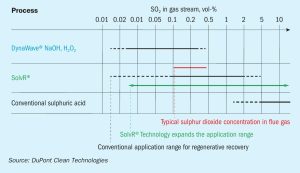
    Tightening regulations and growing global competition are increasing the pressure felt by sulphuric acid plant operators to reduce emissions and improve energy output. Conservation of energy is a continuous focus for operators, and environmental communities have grown more vocal in their desire for greater emissions oversight. In this article, DuPont Clean Technologies examines simple, tried, and true tactics, as well as new products and designs that can be incorporated into existing plants to address operating efficiency and emissions and to help to prolong the life of the plant.
    Ammonium salt formation conditions based on measured vapour pressures

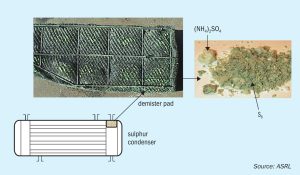
    ASRL has conducted studies on ammonia destruction in the sulphur recovery unit (SRU) for over a decade1-5 . Other studies at ASRL have investigated mechanisms for ammonium salt formation and deposition downstream in the Claus plant, as well as the potential sources of ammonia (NH3 )in a gas plant7 . A less understood subject is addressing how much residual NH3 is tolerable or at what temperature will residual NH3 cause ammonium salt deposition. In this study, existing knowledge on thermal stability of ammonium salts and new measurements have been used to identify the gaseous components required for deposition, through reversible vapour pressure expressions.

    Reducing NOx emissions in metallurgical oleum tower production

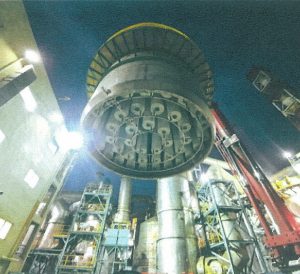
    A. Goudarzi of CECO Industrial Solutions discusses the science behind NOx content and how it impacts sulphuric acid producers. In a recent project in Korea, TWIN-PAK® candle filter technology was successfully used to reduce NOx emissions in metallurgical oleum tower production. After installation of the candle filter mist eliminators the plant was compliant with environmental regulations enabling the producer to operate the plant without penalties or shutdowns.