
Reducing the carbon footprint of ammonia plants
With the current focus on decarbonising ammonia production, Johnson Matthey explains the important role of high activity ammonia synthesis catalyst in the production of green ammonia.


With the current focus on decarbonising ammonia production, Johnson Matthey explains the important role of high activity ammonia synthesis catalyst in the production of green ammonia.
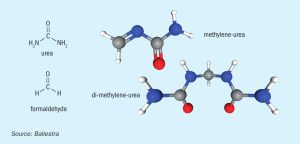
Ballestra is taking a new approach to improving nutrient use efficiency by moving methylene-urea production to the fertilizer industry. Massimo Gori and Svet Valkov of Ballestra discuss the technology and benefits of having a slow-release fertilizer that uses a product from within the fertilizer industry.
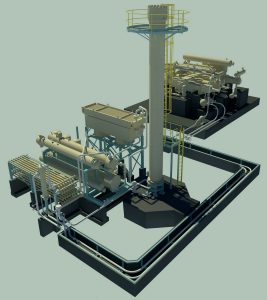
Distributed and carbon-free ammonia production with Stami Green Ammonia technology offers a highly competitive alternative to conventional grey processes, paving the way for scaling up and sustaining local communities with renewable energy sources.
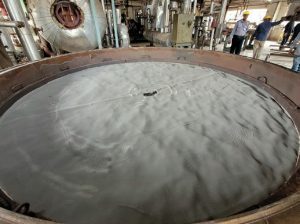
Hindustan Platinum describes two recent start-up issues with catalyst gauze packs at a nitric acid plant, and their remediation to allow production to continue.

Steinmüller Engineering shares its experiences of applying CFD to re-design the waste heat boiler downstream of the secondary reformer to successfully achieve the desired uniform cross flow across the tube bundle.
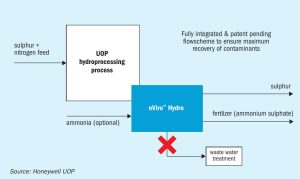
Honeywell UOP’s nViro Hydro process provides an alternative solution to conventional hydroprocessing waste treatment. Benefits include creating a new revenue stream and reduced capital outlays, operating expenses and water use.
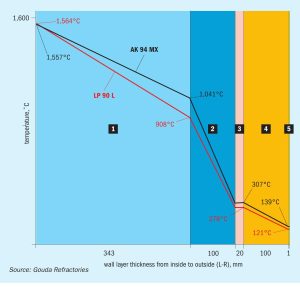
Gouda Refractories continues to upgrade its refractory solutions for the sulphur recovery industry as well as developing new superior products for installations operating at higher temperatures due to oxygen enrichment.
One of the things that produced a lot of worried news headlines over the past couple of years is whether the energy transition is likely to lead to a shortage of sulphur as we switch away from fossil fuels on a large scale. As we’ve discussed in this magazine, those fears are overblown, certainly in the medium term future. Peter Harrison of CRU tackled the issue in his sulphur markets presentation at the recent Sulphur and Sulphuric Acid conference in New Orleans, and while he did admit to some reduction in sulphur supply from oil in the 2030s and increasing into the 2040s, increased sulphur recovered from sour gas is likely to more than make up for that at least until the 2040s. But one of the things that did strike me about his presentation is the extent to which the energy transition is indeed already changing the way that the sulphur market works, and will increasingly do so over the next few years.

As plants move towards full unit control, Jochen Geiger of Ametek Process Instruments provides an overview of how the latest sulphur plant analysers are providing greater insight into sulphur plant operations.

The merchant market for sulphuric acid is only a small slice of overall global acid demand, dominated by smelter acid producers. Increasing replacement of acid imports by dedicated sulphur burning acid plants by end use consumers is reducing the scope for merchant sales and could lead to overcapacity in the near term.