Process optimisation with AI – hype or reality?
Navigance, delves into the world of artificial intelligence (AI) and discusses its potential to enhance process optimisation in syngas plants.


Navigance, delves into the world of artificial intelligence (AI) and discusses its potential to enhance process optimisation in syngas plants.

KBR outlines some of the key modules of the KBR end-to-end digitalisation solution developed to overcome the challenges in green ammonia operation and achieve best in class, safe and reliable plant operation.

Granulation technology generates a premium urea end-product in large volumes capable of withstanding lengthy storage and extreme shipping conditions. Prilling technology, meanwhile, given its typically lower investment cost, can be an attractive option for smaller-scale urea producers supplying local markets. Stamicarbon’s Dr Wilfried Dirkx, Ahmed Shams and Branislav Manic explore the technology options for urea finishing.
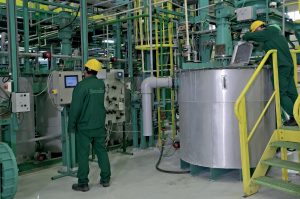
Kevin De Bois of Prayon Technologies describes an innovative process for removing magnesium from phosphate rock. Increasingly, phosphoric acid producers are looking to consume low-grade phosphate rock as a feedstock due to the prohibitive costs of high-grade rock sources. This has potentially negative consequences as the presence of impurities such as magnesium can negatively affect both the phosphoric acid process and the quality of the acid produced.
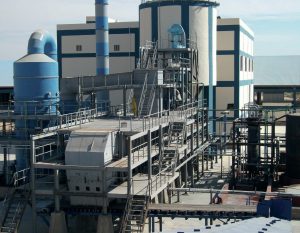
The cadmium and heavy metal content of sedimentary phosphates are of great concern. This has seen industry raw material consumption shift towards igneous phosphates or the blending of phosphate rocks from different sources. While rock blending can successfully reduce the heavy metal content of superphosphates, it needs to be accompanied by careful process adjustments, as Ian Hancock , Bradley Pulverizer’s vice president sales & operations, explains.

Servicing the growth in electric vehicles powered by lithium iron phosphate (LFP) batteries could require the global purified phosphoric acid industry to double in size. Senior CRU consultant Wahome Muya explores the opportunities for unlocking growth in this emerging and fast-moving market.

With the addition of Green Granulation technology (GGT), Casale is the only industry licensor able to provide customers with an entire nitrogen fertilizer complex. Ken Monstrey and Matteo Fumagalli of Casale outline the benefits of this technology and its revolutionary new elements.
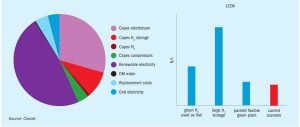
Casale presents different scenarios based on energy availability for the integration of an existing ammonia facility with green hydrogen to supplement or replace the grey ammonia production with green ammonia.
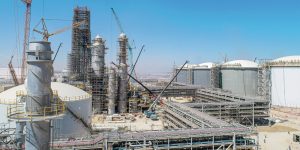
While producing ammonia with hydrogen from electrolysis remains expensive, large scale lower carbon ammonia has focused on carbon capture and storage from existing plants, so-called ‘blue’ ammonia. But exactly how green is blue?

TOYO has a long history in urea granulation technologies and has recently added two new technologies to its product line-up.