Fertilizer International 527 Jul-Aug 2025
7 July 2025
Vanguard views on future farming
INDUSTRY TRENDS
Vanguard views on future farming
Farming technology is moving on apace – even 50 years ago who could have predicted the widespread use of ultra precise, automated machinery in field crops and controlled environments? So, looking ahead, what might the next 50 years bring us? Three vanguard companies, ICL Growing Solutions, John Deere and BigSis, share their thoughts.
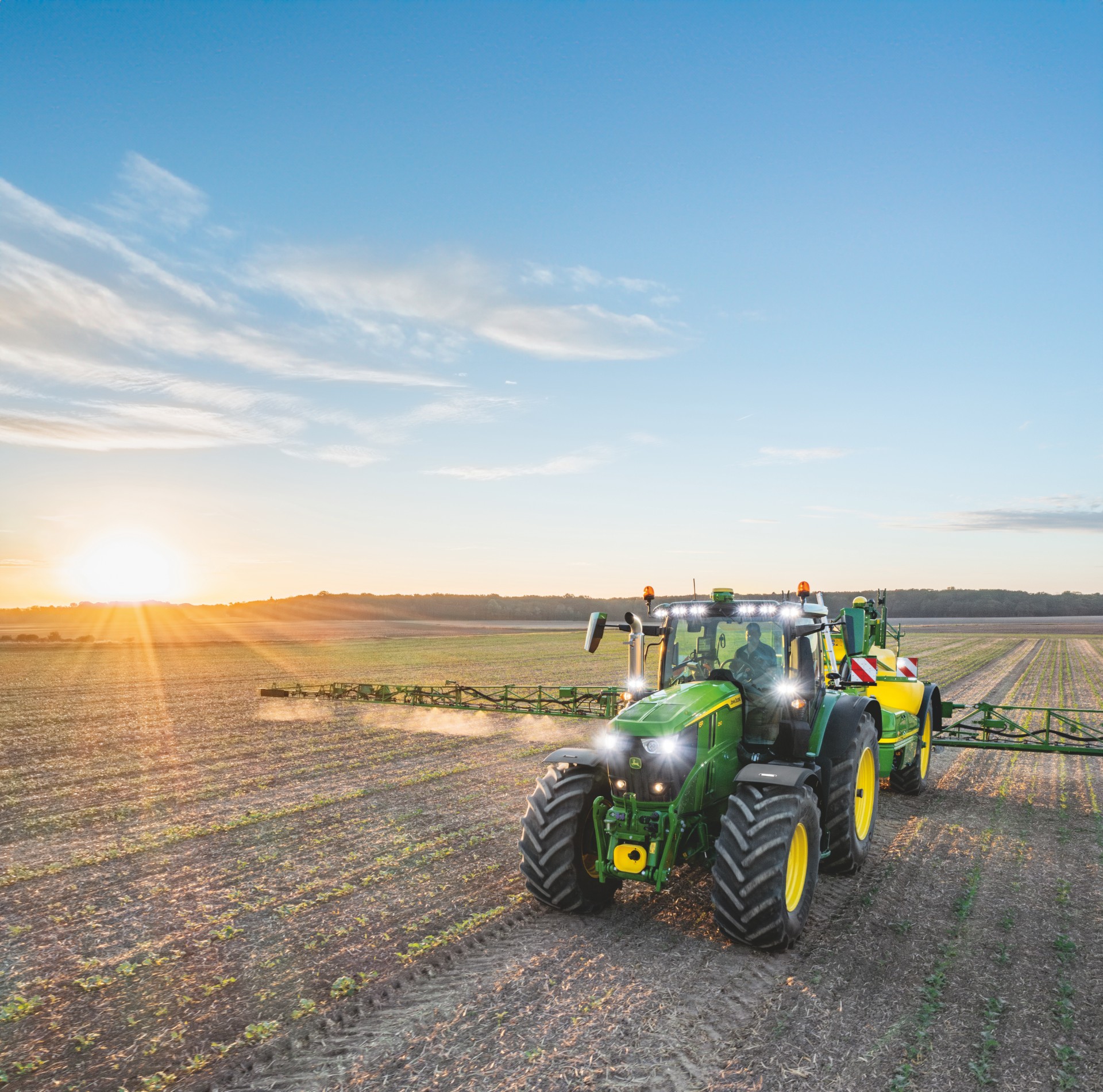 John Deere’s Sea & Spray technology can reduce chemical usage by up to 80%.
Crop resilience in a changing climate
Farming is facing a huge technological revolution – so what might the future look like? Will it be one dominated by vertical, soil-less farming, or will autonomous vehicles and artificial intelligence (AI) replace the need for people?
Climate change is driving many of the latest developments and investments, according to Dr Elinor Erez, vice president of research and development at ICL Growing Solutions. “In the past three years we’ve invested a lot in next generation products – dealing with resilience to stress,” she says.
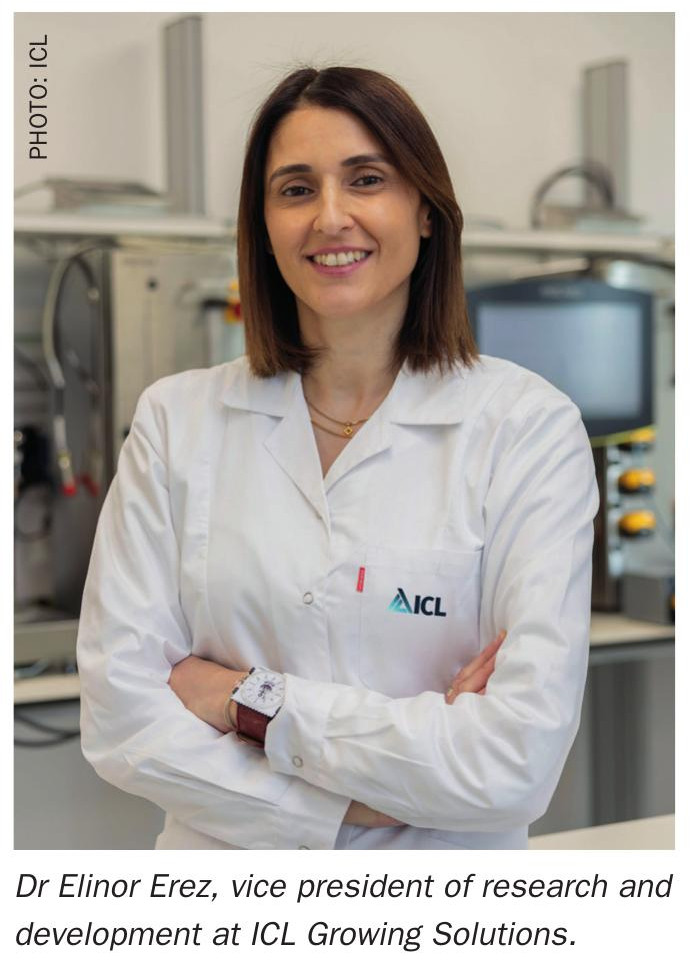
“Our climate is changing, with more extremes – areas in Brazil that were considered tropical with heavy rain events are now considered dry. Plants have to deal with different stresses, and we’re developing products to improve their resilience, whether that’s to high UV radiation, drought, or salinity, for example.”
Sustainability is being seen as absolutely critical too, and that involves creating healthy soils to support growing plants. It’s also about understanding the whole microbiome and plant-soil interactions and developing biological products to optimise that relationship.
“Today we understand that bacteria have a huge effect on our health and it’s the same with plants,” explains Dr Erez. “There is a tight synergy between microorganisms and plant health, and we can use that to help them cope with heavy metals or salinity, or to sequester carbon dioxide or fix nitrogen, for example.”
The biologicals era?
Plant nutrition has evolved over the years, through the eras of applying physics (mechanisation), then chemistry (mineral fertilizers), and more recently biology (biostimulants/biofertilizers) to farming systems, adds Dr Erez. “Looking ahead it’s about bringing them all together, and developing new molecules to benefit plant physiology, which is essential to improve crop productivity.”
The agricultural sector is borrowing heavily from developments in the pharmaceutical industry and is adopting cutting-edge technology to speed up product development. “We now use artificial intelligence (AI) to screen bacteria or metabolites for particular phenotypes that we’re looking for, so we can select those most likely to deliver what we need,” says Dr Erez.
This massively speeds up the research process – so, for example, the AI finds bacteria that are most likely to cope in drought conditions, the laboratory grows them under extreme conditions, and then tests the genetic phenotype of the next generation to see what has changed. “Nature does what it does and we cherry pick those that survive.”
But it’s not just about bacteria. “We have an unlimited number of molecules that exist in nature, and we need to discover their potential in agricultural practice.” ICL has access to a massive, and growing, library of molecules and metabolites, which can be quickly screened using AI and then developed.
“We can grow plants with less water to see what kinds of molecules they secrete, and then use them to help other plants to deal with drought,” notes Dr Erez. “The AI models predict the efficacy in the field, giving us a much higher success rate more quickly – it really shortens the whole process to field trials.”
So, will biologicals replace fertilizers in future? Dr Erez doesn’t think so. “We will need to have fertilizer forever – nutrients are the building blocks for plants to grow.” However, science will increase the efficiency of nutrient use, with biologicals providing extra support and resistance to various stress-related conditions.
“We will be able to use less fertilizer, with less damage to the environment, and fewer emissions. Also, smarter solutions mean we might not need to create nitrogen fertilizer with its associated high energy requirements and emissions. There are commercially available bacteria that can fix nitrogen from the air, and in the future farmers will potentially add proteins to prevent the formation of nitrous oxide, for example.”
Foliar applications – which are highly efficient – will become more commonly used and can be combined with biological products. But plants also need nutrition to germinate and grow, so controlled-release fertilizer (CRF) can be used at drilling to meet these needs without losses to the environment. “We’re developing a CRF product with live micro-organisms now, too.”
Soil-less systems and circular solutions
The rise of vertical farming, greenhouses and soil-less systems will continue, predicts Dr Erez. “But we will always have soils as the staple system to grow plants – energy won’t be able to replace the sun, from a cost perspective.”
And healthy soil is essential to the planet. “More sustainable solutions are our focus. Soil health is a key element for sustainable farming, and the regenerative farming trend is important. We will see more products focusing on sequestering carbon and creating a healthy rhizosphere,” she says. “With carbon credits food companies can incentivise practices to boost soil carbon – and the economics of the food system might change.”
Circular systems will evolve, so that nutrients are reused rather than having to be mined, but the changing climate will also see crop choices evolve. “We expect to see a movement of farmers from area to area – similar to the movement of tomato growing from California to Florida.”
And what about the emergence of lab-grown meat? Will that replace the need for real farms in future? “The chances for cultured crops are a lot higher than those for cultured meat,” says Dr Erez. “Cultured meat uses animal cells, which are very difficult and expensive to grow.”
Plant cells, in contrast, are generally cheaper and easier to grow – so new techniques could see, for example, tomato ketchup, produced entirely from lab-grown molecules. “But that won’t replace the need for fresh food, grown naturally,” concludes Dr Erez.
The view from Brazil
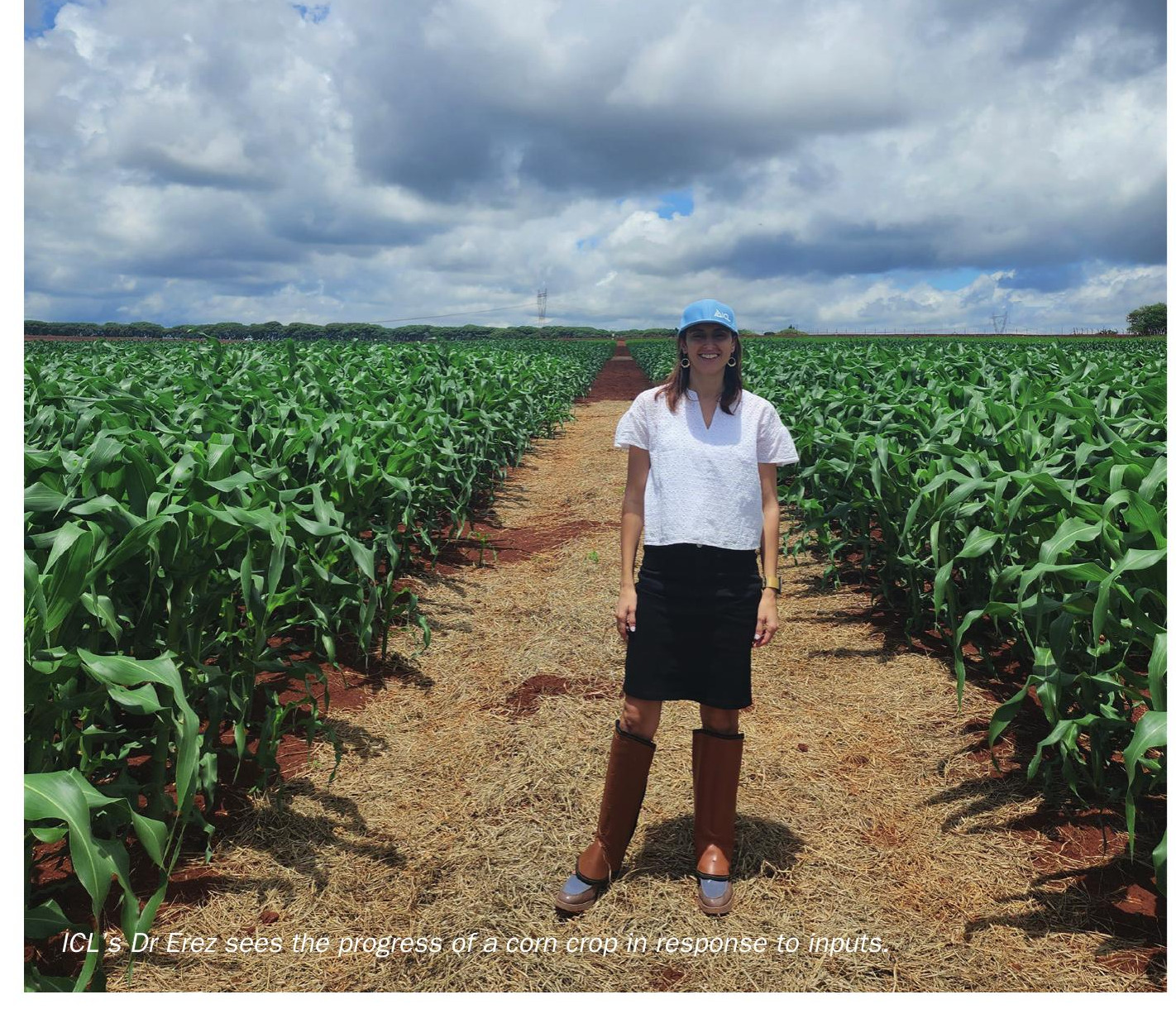
Eduardo Lopes Cancellier, the Brazil-based agronomist responsible for the global biostimulant portfolio at ICL Growing Solutions, points out that autonomous machines are already on the market. And that will change the role that farmers play. “The professional working in agriculture will have to be more trained in programming electronics and all types of computer skills,” he predicts.
Farmers often don’t like such developments until they see the benefits – and then they truly embrace them. “Combine harvesters already self-regulate their settings based on photos of the grain, GPS and autosteer, for example. And AI is going to improve the decision-making of these machines.”
AI will also improve decision-making when it comes to crop management, with more accurate diagnostics improving the choice and timing of treatments – while biological products will also play a far greater role, says Eduardo. “Today, biostimulants are quite generic, but they will become more specific and targeted. The future is specialisation.”
For example, certain strains of nitrogen-fixing bacteria might be used in UK wheat crops, with different strains chosen for barley in Spain. And the next generation of biostimulants, using secondary metabolites, will have more consistent and specific effects, making them more competitive.
“Even with this technology, fertilizers will never be eliminated,” Cancellier says. “But they will be used more efficiently and therefore reduced. And crop protection products will be tools for emergency use. We will manage quite well with biological products, but chemical products will be a backup, for example, if diseases mutate into new strains. We are fine tuning and perfecting the technologies, and the future is extremely exciting.”
Farming smarter with John Deere
Innovation in agricultural machinery is evolving as rapidly as developments in crop inputs, with technology playing a central role in shaping how farms operate now and in the future.
For John Deere, the world’s largest manufacturer of agricultural machinery, the mission is clear: To support more profitable, sustainable, and efficient farming practices through each new advancement. A clear example of this progress can be found in intelligent spraying systems that use advanced imaging and artificial intelligence (AI) to distinguish weeds from crops, applying herbicide only where needed.
“There are a few brands that have spent many years working on technology to spray green weeds growing on a brown, soil background, and indeed unwanted weeds in a growing, green crop,” says Chris Wiltshire, tactical marketing manager at John Deere.
“Our technology, called See & Spray, can result in up to 80% less chemical usage – good news for both farmers and the environment. These systems rely on sophisticated algorithms that recognise crop rows and focus attention on the inter-row space, where weeds typically thrive, using cutting-edge digital and mechanical tools.”
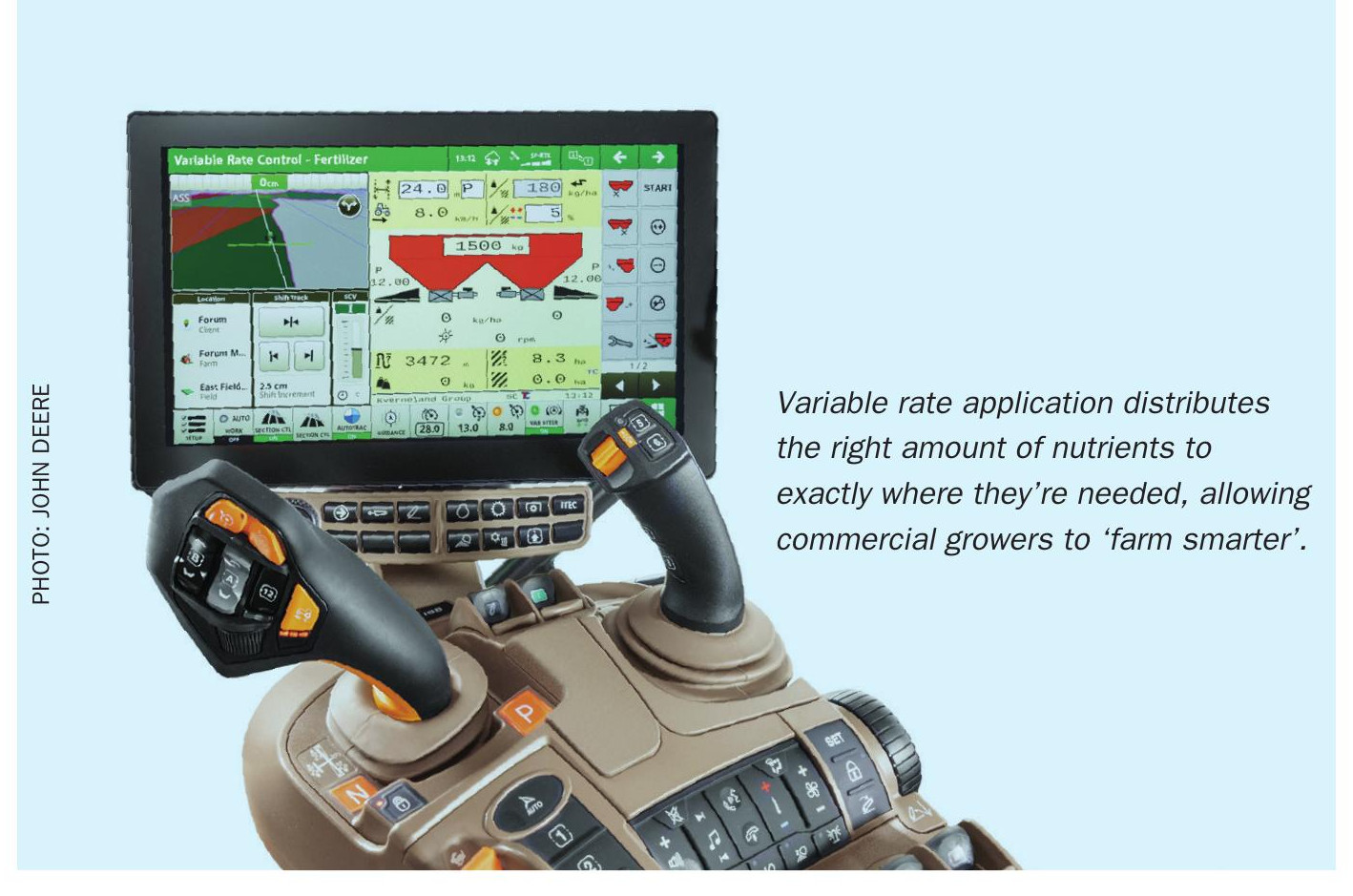
But the power of today’s machinery doesn’t stop at what happens in the field – it extends into how information is collected, analysed, and acted upon. With connected platforms and digital dashboards, farmers now have access to field-by-field performance data that helps them make timely, informed decisions.
From identifying yield differences to tracking the effects of variety choice, seed rate, or input strategy, the goal is to farm smarter. That includes the variable rate application of fertilizers. “All of this information is captured automatically as the machine works, building a real-time picture of the farm’s performance,” Mr Wiltshire adds. “By the time the next season rolls around, you’re better equipped to refine and improve your approach.”
Recent moves in aerial imaging hint at where things are heading – towards rapid, high-resolution field analysis that can seamlessly inform what happens on the ground. Drone-based crop insights, processed through intelligent software platforms, are already making it easier to detect plant health issues, identify weed pressure, and create targeted application plans.
“You can now imagine a future where drones scan the field from above, machines adjust their actions below, and the farmer oversees it all from their phone,” says Mr Wiltshire. “It’s a fast-moving, exciting space.”
Back to the future for plant protection
Biostimulants and biologicals may be shaking up crop nutrition, yet progress on bio-based plant protection, like bio-herbicides or bio-insecticides, has been less clear-cut. However, BigSis, a British startup, hopes farmers won’t need to turn to insecticides to tackle pests in future, for the company has reinvigorated the sterile insect technique (SIT), a decades-old concept that until now has proven uneconomical in commercial situations.
“With artificial intelligence and better robotics, we reinvented SIT,” says Glen Slade, the company’s founder and CEO. “SIT outperforms chemical insecticides and comes with the unbeatable advantage of lower regulatory hurdles.”
Its premise is simple: Release sterile male insects into a crop, where they mate with wild females – stopping a pest population like spotted-wing drosophila (SWD) from ever reaching a level high enough to cause damage in the high-value soft fruit crops it targets.
The BigSis production facility rears each insect individually, with minimal operator input, before artificial intelligence (AI) selects the males for a burst of X-rays, rendering them sterile. “SIT tears up the biologicals rule book. Traditionally we leveraged the ‘three Ps’: Predators, parasites, or pathogens,” Mr Slade explains. “Now we use the pest against itself. Sterile males will always find wild females and mate. When they do, the job is done. Any eggs laid will never hatch. There will be no population explosion.”
Contrast this certainty with the efficacy of other biologicals, constrained or limited by factors beyond grower control: Pest population, crop type, soil, environment, weather, and regulations. “SIT has no such restrictions. We can even use SIT against one pest then deploy much-reduced insecticide doses for other pests. Nor does its effectiveness rely on protected environments, like a glasshouse or polytunnel. It works in open fields.”
The company’s trials have proven season-long control of SWD using SIT in outdoor commercial strawberries, with a reduction of up to 91% in female SWD numbers. A further trial cut female SWD numbers in commercial raspberries by up to 88%, compared to controls given one insecticide application.
“Perhaps the biggest advantage is that we’re using locally captured native insects, so we achieve a zero-regulatory approach,” Mr Slade notes. “And with a production facility that’s replicable and scalable, we can always produce locally using local insects.
“Being non-toxic, species specific and non-GMO, this approach provides highly effective insect control that fits seamlessly into existing crop protection programmes and integrated pest management protocols.”
Acknowledgement
Reporting by Olivia Cooper, Ben Pike and Adrian Bell of Agri-hub.