Category: Products

New phosphoric acid plant

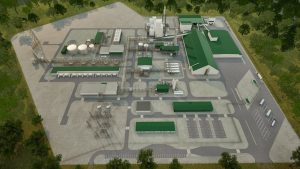
Egypt’s Minister of Petroleum and Mineral Resources, Karim Badawi and New Valley Governor, Mohamed Al-Zamlout were present at the signing of a framework agreement between a consortium of Egyptian public companies to build a new phosphoric acid plant at Abu Tartour in the New Valley region. The project aims to maximise added value and increasing the economic return on Egyptian phosphate ore by using it in higher-yield industries rather than exporting it as a raw material. The Egyptian state-owned consortium includes Abu Qir Fertilizers; East Gas Company, Mineral Resources and Mining Industries Authority; Misr Phosphate, AT-PHOS, Petroleum Projects and Technical Consultations Company (PETROJET), and Engineering for the Petroleum and Process Industries (ENPPI), all of which are shareholders in the project. The contractor agreement was signed with a Chinese consortium of China State Construction Engineering Corporation (CSCEC) and East China Engineering Science and Technology Co (ECEC).

Sonatrach awards Saipem phosphate project FEED contract

Saipem has won a front-end engineering design (FEED) contract from Sonatrach for an integrated phosphate fertilizer project in Algeria. The contract was awarded through a dual competitive process, enabling the design work to be conducted by both Saipem and a competitor company. Sonatrach will assess and compare the two FEED options from both parties, select the best technical and economic design, and then proceed with the direct award of an engineering, procurement and construction (EPC) contract to execute the project.

KazZinc to invest in increased SO2 recovery

Kazakhstan Zinc (KazZinc) is progressing with plans to reduce sulphur dioxide emissions from its Ust-Kamenogorsk site following an environmental audit in December 2024 as a result of smogs caused fugitive emissions which forced residents to stay indoors. The site has reduced emissions from 69,000 t/a in 2011 to 15,000 t/a, but plans to invest $210 million in in new technologies, including sulphur dioxide recovery systems and upgraded filters for solid particle capture. The key measure is the modernisation of gas purification units which is expected to reduce SO2 emissions by 2,200 t/a by 2026. Another important initiative is the construction of the “Hydropolimet” workshop at the KazZinc Ridder metallurgical complex, which aims to reduce sulphur dioxide emissions by 714 t/a.