• Skip to main content

    Category: Products

    Methanol Reformer to supply MGC with methanol reformer for Niigata plant

    Spain’s Methanol Reformer has signed a sales and purchase agreement with Mitsubishi Gas Chemical Company, Inc. (MGC) for the supply of an L18 methanol reformer compliant with Japanese industry requirements. The system will be delivered and installed at MGC’s Niigata plant, with commissioning planned for the second half of 2026. Methanol Reformer says that this, their first industrial project in Japan, reinforces the company’s presence in the Asian market, while for MGC, the collaboration supports the adoption of innovative hydrogen-generation solutions designed to enhance operational applicability and efficiency with reliability.

    Clariant catalysts selected for waste-to-methanol plant

    Clariant says it is collaborating in Repsol’s pioneering methanol plant in El Morell near Tarragona, Spain. The Ecoplanta project will be the first of its kind in Europe to convert municipal waste into renewable methanol, using Enerkem’s advanced waste gasification process, supported by a range of Clariant’s syngas purification catalysts and its highly active MegaMax methanol synthesis catalysts. Scheduled for completion in 2029, the plant will use 400,000 t/a of non-recyclable solid municipal waste to produce 240,000 t/a of methanol.

    BASF to supply hydrogen-based ammonia to OCI’s Geleen fertiliser plant

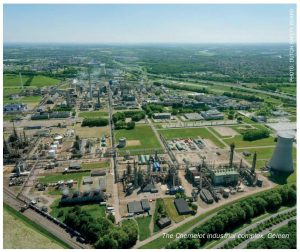
    BASF and OCI Global have agreed for the first deliveries of renewable ammonia produced at BASF’s site in Ludwigshafen in order to produce low-carbon fertilizers at OCI’s site in Geleen. This initiative expands OCI’s low-carbon portfolio and introduces the “Pure” product line, delivering the same fertilizer quality at a substantially reduced carbon footprint without compromising on performance. BASF says that its renewable ammonia is certified according to ISCC PLUS and is produced using a mass balance approach, through which renewable energy-derived hydrogen is attributed to the renewable ammonia grades.

    ASU contract for blue methanol plant

    Air Water Gas Solutions, a subsidiary of Air Water America, will build an air separation unit to support the production of 1.1 million t/a of blue methanol at Sandpiper Chemicals’ blue methanol facility in the US. The low carbon methanol producer has contracted Air Water to design, build, and operate the ASU to provide oxygen, nitrogen, and instrument air for blue methanol production. The project is still at the pre-final investment decision (FID) stage, with production targeted for 2030.

    Technology selected for green hydrogen projects

    Nel ASA says that it has entered into an agreement with GreenH to be the technology provider for the Enova-supported projects in Kristiansund and Slagentangen. GreenH develops, builds, owns, and operates hydrogen production facilities based on renewable energy. The company aims to establish a network of distributed hydrogen production sites to enable decarbonisation in the maritime, transport, and industrial sectors. GreenH focuses on scalable solutions located close to end users, reducing logistics costs and supporting the development of efficient, regional hydrogen value chains. The facilities in Kristiansund and Slagentangen are intended to supply green hydrogen to industrial and maritime users and form part of GreenH’s broader efforts to establish a network of distributed hydrogen production in Norway.

    KBR selected for biomethanol plant

    KBR has been awarded a contract for its PureM green methanol technology by Fikrat Al-Tadweer for a biomethanol plant in Saudi Arabia which will convert landfill gas into clean fuels. KBR’s technology is designed for commercial-scale deployment with a low cost of renewable methanol production, and can utilise a wide range of feedstocks, including biogas, gasification-derived syngas, hydrogen, and pure CO2 , enabling flexibility and efficiency. Under the terms of the contract, KBR will provide technology licensing, proprietary engineering design, catalyst, and proprietary equipment for the biomethanol facility.

    Toyo to build AN plant

    Gujarat Narmada Valley Fertilizers & Chemicals (GNFC) has announced a contract award worth approximately $40 million to Toyo Engineering India Pvt Ltd for the supply of a second ammonium nitrate on an LEPC (Lump Sum Engineering, Procurement and Construction) basis. The plant will have a capacity of 480 t/d (160,000 t/a), and is projected to be built over a 20 month project timescale. The project received board approval during GNFC’s most recent board meeting. Toyo Engineering India has established a strategic tie-up with Spain’s INCRO SA for the technology license and supply of process knowhow. The new ammonium nitrate plant represents a substantial expansion for GNFC, with the company stating that this installation will enhance their capacity by 94%. GNFC says that it will better position the company to serve India’s growing demand for AN, while leveraging advanced international technology through the Toyo-INCRO partnership.

    CIMC Enric commissions biomethanol project

    CIMC Enric Holdings Ltd says that it has commissioned China’s first large-scale biomethanol facility in Zhanjiang, Guangdong Province, marking a major step forward in the decarbonisation of global shipping and clean fuel supply chains. The project, developed by CIMC Enric and its subsidiaries, is designed as a fully integrated closed-loop system converting forestry residues into green methanol for use as marine fuel. With an initial annual capacity of 50,000 t/a, it is the country’s first commercial scale green methanol plant, and is backed by the port of Zhanjiang and abundant local forestry wastes.

    Drone attack on Acron

    Acron’s fertilizer complex at Veliky Novgorod was reported to be on fire following a Ukrainian drone strike on December 10th. At least five explosions were reported at the facility, according to Ukrainian media. Novgorod Governor Alexander Dronov confirmed the attack and said the air defence system intercepted 19 drones over the region. Earlier, on December 4, Ukrainian drones struck the Nevinnomyssk Azot plant in Russia’s Stavropol region, a major facility that produces over 1 million t/a of ammonia and 1.4 million t/a of ammonium nitrate annually.