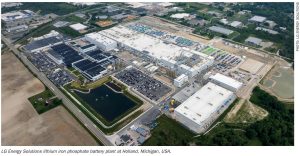
Acid demand for battery production
The switch towards battery technologies like lithium iron phosphate (LFP) is leading to major growth in demand for sulphur and sulphuric acid.


The switch towards battery technologies like lithium iron phosphate (LFP) is leading to major growth in demand for sulphur and sulphuric acid.

Madhya Bharat Agro Products has announced board approval for a major capacity expansion at its Dhule manufacturing facility. The expansion represents a comprehensive enhancement of the company's fertilizer production capabilities, including 330,000 t/a of diammonium phosphate and NPK fertilizer, a 66,000 t/a phosphoric acid plant, and a 396,000 t/a sulphuric acid plant. The expansion plan is part of a strategy of vertical integration in fertilizer production. The addition of phosphoric acid and sulphuric acid production capabilities will support the primary DAP/NPK manufacturing operations, creating operational synergies and potentially reducing input costs, according to the company.

PT QMB New Energy Materials, a major Chinese-owned nickel smelter in Indonesia, is temporarily cutting production due to mounting waste management challenges, according to a 24 November report from local news source Sina, a move expected to temporarily impact regional sulphur demand. The facility, located in the Morowali Industrial Park, will reduce output for at least two weeks as its tailings ponds are nearing capacity while it awaits approval for a new facility. The shutdown may have implications for the sulphur market, as QMB is a major consumer.
World Energy GH2 has shelved its 1.2 GW green hydrogen and ammonia project in Stephenville, Newfoundland, after failing to secure offtake agreements. Project Nujio’qonik was conceived as a major green hydrogen/ammonia scheme backed by 2 GW of new wind capacity, intended to export green ammonia to Europe. However, despite a $50 million investment from South Korea’s SK Eco-plant and high-profile endorsement by then German chancellor Olaf Scholz, the developer has confirmed that the project is being replaced by a new initiative, called Clean Grid Atlantic, which will use the wind resource to power domestic markets instead.
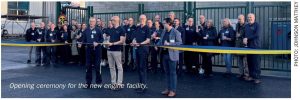
Johnson Matthey (JM) has officially opened its first hydrogen internal combustion engine facility, where emission control systems will be tested. Hydrogen internal combustion engines use zero carbon hydrogen fuel in tried-and-tested engine technology, presenting a viable path for decarbonising medium and heavy-duty transport, such as trucks and buses.

Spain’s Methanol Reformer has signed a sales and purchase agreement with Mitsubishi Gas Chemical Company, Inc. (MGC) for the supply of an L18 methanol reformer compliant with Japanese industry requirements. The system will be delivered and installed at MGC’s Niigata plant, with commissioning planned for the second half of 2026. Methanol Reformer says that this, their first industrial project in Japan, reinforces the company’s presence in the Asian market, while for MGC, the collaboration supports the adoption of innovative hydrogen-generation solutions designed to enhance operational applicability and efficiency with reliability.

Clariant says it is collaborating in Repsol’s pioneering methanol plant in El Morell near Tarragona, Spain. The Ecoplanta project will be the first of its kind in Europe to convert municipal waste into renewable methanol, using Enerkem’s advanced waste gasification process, supported by a range of Clariant’s syngas purification catalysts and its highly active MegaMax methanol synthesis catalysts. Scheduled for completion in 2029, the plant will use 400,000 t/a of non-recyclable solid municipal waste to produce 240,000 t/a of methanol.
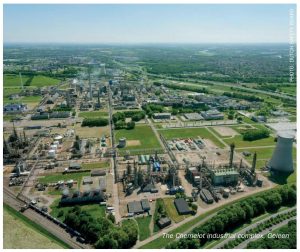
BASF and OCI Global have agreed for the first deliveries of renewable ammonia produced at BASF’s site in Ludwigshafen in order to produce low-carbon fertilizers at OCI’s site in Geleen. This initiative expands OCI’s low-carbon portfolio and introduces the “Pure” product line, delivering the same fertilizer quality at a substantially reduced carbon footprint without compromising on performance. BASF says that its renewable ammonia is certified according to ISCC PLUS and is produced using a mass balance approach, through which renewable energy-derived hydrogen is attributed to the renewable ammonia grades.
Air Water Gas Solutions, a subsidiary of Air Water America, will build an air separation unit to support the production of 1.1 million t/a of blue methanol at Sandpiper Chemicals’ blue methanol facility in the US. The low carbon methanol producer has contracted Air Water to design, build, and operate the ASU to provide oxygen, nitrogen, and instrument air for blue methanol production. The project is still at the pre-final investment decision (FID) stage, with production targeted for 2030.
Nel ASA says that it has entered into an agreement with GreenH to be the technology provider for the Enova-supported projects in Kristiansund and Slagentangen. GreenH develops, builds, owns, and operates hydrogen production facilities based on renewable energy. The company aims to establish a network of distributed hydrogen production sites to enable decarbonisation in the maritime, transport, and industrial sectors. GreenH focuses on scalable solutions located close to end users, reducing logistics costs and supporting the development of efficient, regional hydrogen value chains. The facilities in Kristiansund and Slagentangen are intended to supply green hydrogen to industrial and maritime users and form part of GreenH’s broader efforts to establish a network of distributed hydrogen production in Norway.