
Safety in digitised ammonia plants
Digitalisation brings with it a fresh set of issues as well as opportunities for safety management.


Digitalisation brings with it a fresh set of issues as well as opportunities for safety management.

We preview the Arab Fertilizer Association (AFA) 38th International Technical Conference & Exhibition, 3-5 November, Amman, Jordan.
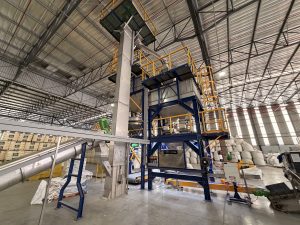
Brett Binnekade of Bagtech International highlights how predictive maintenance is improving the efficiency and reliability of fertilizer blending and bagging plants.

Toyo Engineering Corporation combines its its PMOS™ digital twin platform with AI-tools to improve urea plant monitoring, issue detection, and technical advisory services.
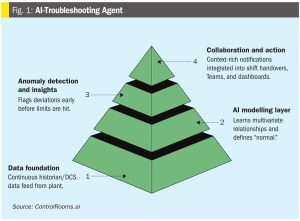
ControlRooms.ai introduces the application of an AI Troubleshooting Agent: a system that analyses real-time plant data to detect anomalies and support proactive troubleshooting between operations, engineering, and reliability teams.

Delegates gathered in Morocco in September for AFA's Technical Conference. We present selected highlights from this year’s event.
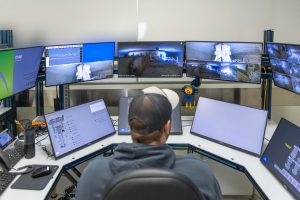
Does artificial intelligence (AI) really herald a revolution in fertilizer production and, if so, what are the practical examples of this?
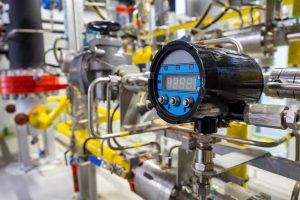
Artificial intelligence is beginning to extend into all facets of modern life, and the chemical process industry is no exception. This article looks at where and how AI is being applied in the ammonia and downstream industries, what data and infrastructure are required, and the potential risks.

Metso describes how digital solutions can profit from the deep integration of using a digital process twin in sulphuric acid technology, helping to improve operation, monitoring and reporting.

thyssenkrupp Uhde has signed a 5-year framework service agreement with Brunei Fertilizer Industries, aimed at advancing digitalisation and implementing clean technologies in the fertilizer industry. Central to these efforts is the set-up and implementation of a digital twin, which will provide a virtual representation of the plant to enable real-time monitoring, predictive maintenance, and data-driven decision-making. This technology, together with specialized trainings, will allow BFI to enhance operational safety, reduce downtime, and achieve greater energy efficiency.