Nitrogen+Syngas 395 May-Jun 2025

Sustainability and digital services for Brunei Fertilizer Industries


BRUNEI

Sustainability and digital services for Brunei Fertilizer Industries

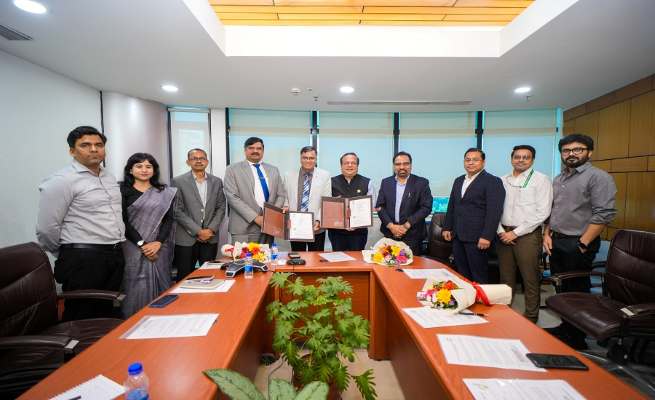
thyssenkrupp Uhde has signed a 5-year framework service agreement with Brunei Fertilizer Industries, aimed at advancing digitalisation and implementing clean technologies in the fertilizer industry. Central to these efforts is the set-up and implementation of a digital twin, which will provide a virtual representation of the plant to enable real-time monitoring, predictive maintenance, and data-driven decision-making. This technology, together with specialized trainings, will allow BFI to enhance operational safety, reduce downtime, and achieve greater energy efficiency.

In addition to that, Uhde says that it will evaluate opportunities to reduce the carbon footprint of a potential second BFI fertilizer complex, ensuring that operations meet the highest environmental standards. This includes evaluating the feasibility of expanding into sustainable ammonia production such as incorporating blue ammonia by adding carbon capture technologies, and green ammonia derived from renewable energy sources.

Brunei Fertilizer Industries commented: “This agreement is a testament to the excellent cooperation between BFI and thyssenkrupp Uhde. Together, we are committed to driving innovation and sustainability in the fertilizer industry. The development of a digital twin and the exploration of low-emission ammonia projects are key steps towards achieving our environmental objectives.” BFI’s CEO, Dr. Harri Kiiski added: “Reducing our environmental impact is at the core of our efforts, particularly in improving the carbon footprint of our products. We are identifying strategies to cut emissions during production and transportation. With one of the most advanced plants globally, we inherently operate at a lower carbon footprint than older facilities, which typically average 50 years in operation.“

Nadja Håkansson, CEO of thyssenkrupp Uhde, commented: “We are proud to support BFI in its ambitious journey towards innovation and sustainability. By leveraging our technology and implementation expertise, we create lasting value for our customer and set new standards in operational excellence.”

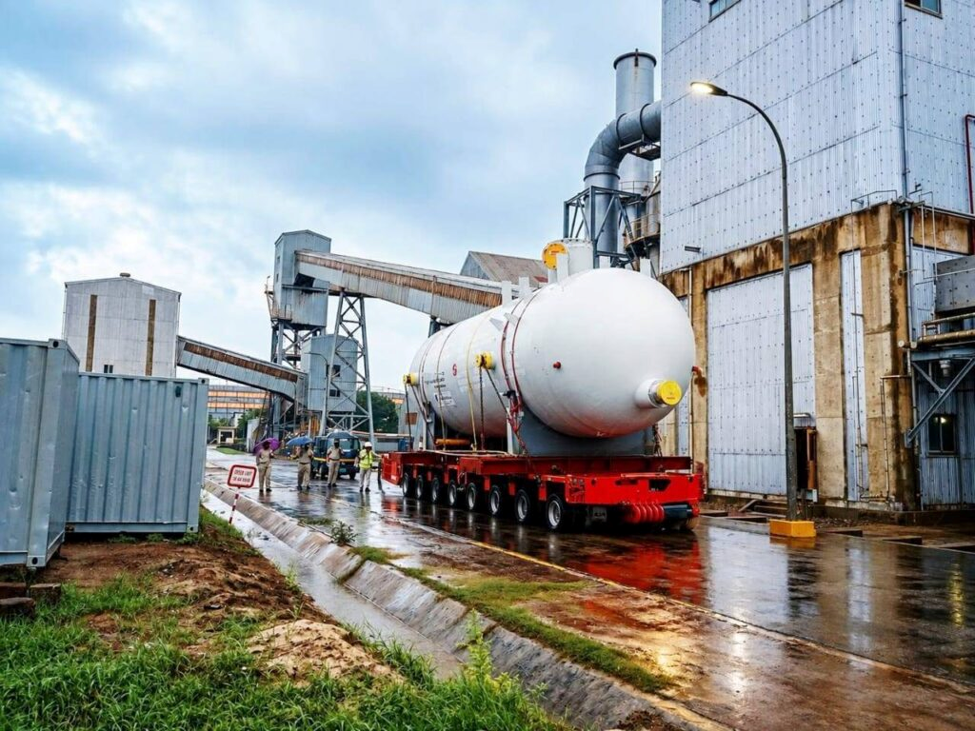
The BFI plant was built by thyssenkrupp Uhde as a fully integrated fertilizer complex, and comprises an ammonia plant with a capacity of 2,200 t/d as well as a urea plant and a urea granulation plant, both with a capacity of 3,900 t/d.

Latest in Asia

Nickel Industries starts up ENC acid plant

Nickel Industries announced started up the sulphuric acid plant at its new Excelsior Nickel Cobalt (ENC) HPAL project in the final week of June. The ENC Project is a massive, multi-billion dollar high-pressure acid leach (HPAL) facility located in the Indonesia Morowali Industrial Park (IMIP) in Central Sulawesi, Indonesia. It is operated by Australia’s Nickel Industries to supply battery-grade materials for the electric vehicle (EV) market. At capacity, it is expected to yield roughly 72,000 t/a of contained nickel equivalent as mixed hydroxide precipitate (MHP), nickel sulphate, and nickel cathode.

Russia bans rail transport of Kazakh sulphur

Russia has ordered a “temporary cessation” of rail transport of all sulphur originating from Kazakhstan that is destined for Russian seaports and railway checkpoints, representing a significant policy shift, according to an official order from the Federal Agency for Railway Transport (Roszheldor). The directive, which took effect from May 26th, orders a halt to the loading and movement of Kazakh sulphur “until further notice.” While the measure is officially described as temporary, the order provides no specific timeline for when the transit might resume. The action cites instructions from Russia’s First Deputy Prime Minister, D.V. Manturov, as its basis.

Restart for Hongda smelter

Hongda's 100,000 t/a zinc smelter, in China's Sichuan Province, completed scheduled maintenance and equipment upgrading and officially resumed production on 21st June, the company said. The smelter had been shut down for planned maintenance since January, during which time a modernisation project for the electrolytic zinc smelting system was also carried out. Following the nearly six-month revamp, the resumption of production is expected to improve overall operational efficiency, reduce unit production costs, and increase the utilisation rate, The company said. The stable supply of sulphuric acid generated by the zinc smelter will effectively leverage the synergies of the "sulphur-phosphorus" industrial chain in the company, an help alleviate cost pressures on the company's phosphorus chemical business segment.