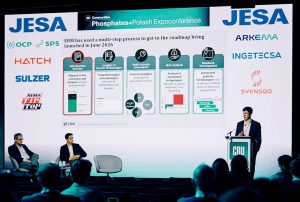
Phosphate and potash industry decarbonisation roadmap published
A roadmap on phosphate and potash decarbonisation, developed by ERM and Systemiq in collaboration with IFA, was published on 16th July.


A roadmap on phosphate and potash decarbonisation, developed by ERM and Systemiq in collaboration with IFA, was published on 16th July.
While there has been a focus on switching to low carbon hydrogen feeds, many options exist to decarbonise refineries, including energy efficiency, carbon capture and changing to bio-feedstocks.

Topsoe has, together with Sasol, signed a single point licensing agreement with SUS-TAERO to deliver process technologies for a sustainable aviation fuel (SAF) project in Canada. Feedstock will be gasified wood waste. The project has a planned capacity of 3,200 bbl/d. SUSTAERO expects to take final investment decision in 2028 with expected operations in 2031.
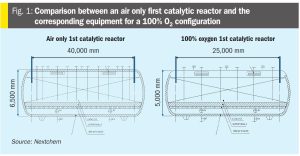
Gas processing facilities are increasingly required to reduce industrial carbon footprint. A significant opportunity lies in recovering CO2 from tail-end gas streams that are typically routed to thermal oxidation. MAIRE Group presents an integrated recovery configuration combining cryogenic separation with pressure swing adsorption (PSA) to recover high purity CO2 and H2 from SRU/TGTU tail gas.

Compact Syngas Solutions (CSS) says that it has completed work on a government funded demonstration project which aims to be “the next generation of waste-to-energy plants”. The new £4 million ($5.4 million) MicroHub plant, developed as part of the Department for Energy Security and Net Zero’s (DESNZ) Hydrogen BECCS Innovation Programme, produces hydrogen and electricity from biogenic waste while capturing carbon emissions using water scrubbing. Unlike traditional methods that use chemical solvents like amines, CSS’s system uses water to remove carbon dioxide from syngas, which the company says is a safer and more sustainable solution.
HyOrc Corporation says that it has secured financing for the first module of its 8 t/d (2,650 t/a) waste-to-methanol facility in Porto, Portugal. Manufacturing is actively underway for an initial modular unit capable of producing up to 1 t/d of green methanol, targeted for shipment in September 2026. The plant uses municipal waste as a feedstock, gasifying it and converting it into syngas for downstream methanol synthesis. HyOrc has previously completed a 25 t/d gasifier in Coimbatore, India, and a 3 t/d waste to methanol unit in Assam, India (May 2026).

Lloyd’s Register (LR) has issued the first Type Approval Certificate for a 100% hydrogen-fuelled, spark-ignited marine engine. The approval has been awarded to the hydrogen engine developed by BeHydro and confirms the design meets LR’s requirements for safety, performance and reliability in marine applications.
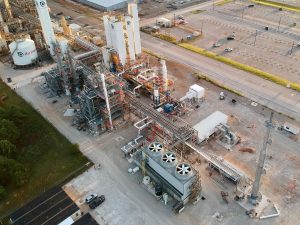
Air Liquide explains the key features and benefits of GasPOx, a catalyst-free syngas platform that enables cost-efficient, low-carbon production from diverse feedstocks with minimal pretreatment.
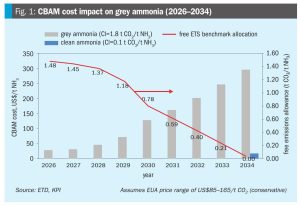
VK Arora of Kinetics Process Improvements (KPI) compares the delivered-cost competitiveness of blue ammonia from regions including the US Gulf Coast, Western Canada, Atlantic Canada, the Middle East, Indonesia, and Malaysia into Japan, the European Union, and South Korea.
Selecting the right syngas technology is a critical early decision for low-carbon hydrogen and ammonia projects. Shell shows how gas-based partial oxidation (POx) can offer a potentially simpler and lower-cost route designed to deliver high carbon capture performance.