Asia

Kakinada green ammonia project inaugurated

Written by Simon inglethorpe


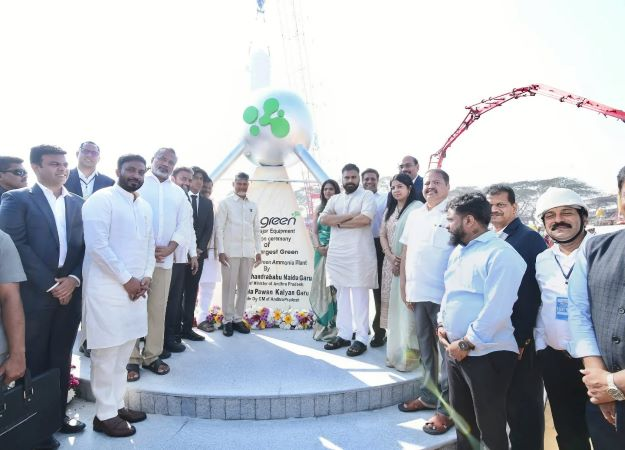
Construction has officially begun on India’s largest green ammonia project. The foundation stone was laid for the 1.5 million t/a capacity Kakinada project in a groundbreaking ceremony attended by Andhra Pradesh’s Chief Minister N Chandrababu Naidu.

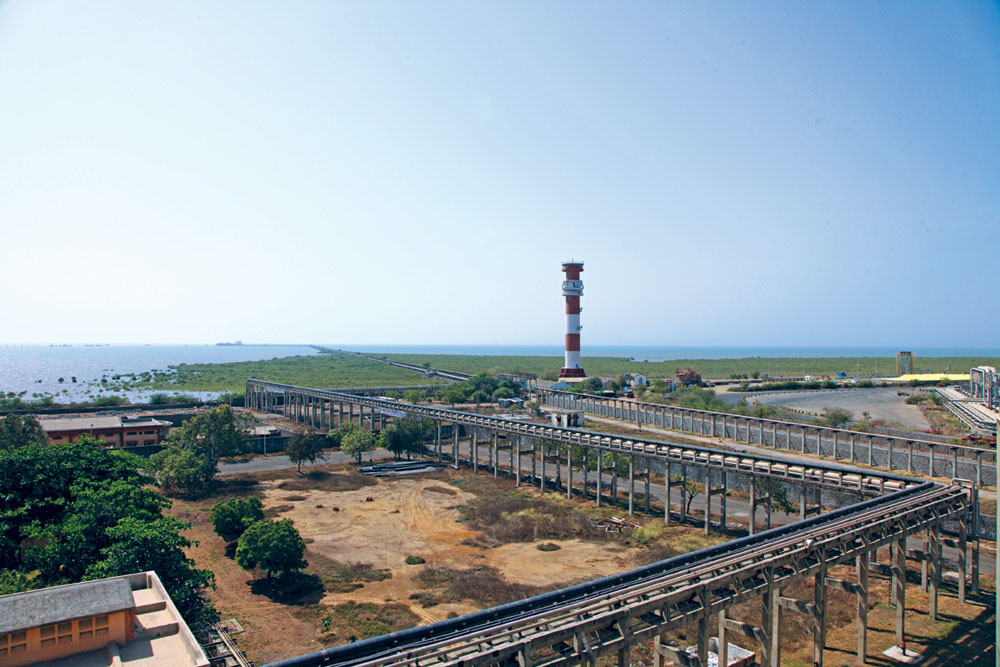
Kakinada is located on a 495-acre site in Andhra Pradesh formerly owned by Nagarjuna Fertilizers. It is one of the largest under construction green ammonia projects globally.

“The first production of 0.5 million metric tonnes of green ammonia is expected to be achieved by mid-2027 as part of AM Green’s annual production target of 1.5 million metric tonnes,” Naidu said. “Today’s equipment erection ceremony marks the beginning of a new chapter for Andhra Pradesh as a leader in the clean energy transition.”

The $10 billion Kakinada project is being developed by the consortium AM Green Ammonia, a partnership between AM Green, Gentari, GIC and Abu Dhabi Investment Authority (ADIA). The project reached a final investment decision (FID) in 2024 and all the major contracts and key approvals are in place.

The project’s technology and engineering partners include CASALE, Air Liquide, Rely (a joint venture between Technip Energies and John Cockerill), Toyo, Gentari and NTPC Renewables.

The integrated project will generate green hydrogen from a 1.95 GW alkaline electrolyser array powered by 7.5 GW of wind and solar electricity capacity. Access to 2 GW of pumped-storage hydropower will also be used to avoid power intermittency and ensure uninterrupted production.

In January, AM Green signed a long-term binding offtake agreement with Uniper, for 500,000 tonnes per annum of green ammonia. This will be destined for the European market and be RFNBO (Renewable Fuel of Non-Biological Origin) certified. The first shipment is expected to happen as early as 2028.

“For Uniper, the agreement represents a significant step forward in developing a diversified portfolio of renewable and low-carbon molecules for European customers. As a feedstock and a potential hydrogen carrier, renewable ammonia will help decarbonize industrial sectors such as chemicals, fertilizers, refining, and, over time, shipping,” Uniper said in a statement.

Uniper CEO Michael Lewis said: “We are proud to help establish one of the first large-scale supply corridors between India and Europe.” While AM Green’s founder Anil Kumar Chalamalasetty said: “This partnership is milestone for India’s role in the global energy transition.”

Latest in Asia

Nickel Industries starts up ENC acid plant

Nickel Industries announced started up the sulphuric acid plant at its new Excelsior Nickel Cobalt (ENC) HPAL project in the final week of June. The ENC Project is a massive, multi-billion dollar high-pressure acid leach (HPAL) facility located in the Indonesia Morowali Industrial Park (IMIP) in Central Sulawesi, Indonesia. It is operated by Australia’s Nickel Industries to supply battery-grade materials for the electric vehicle (EV) market. At capacity, it is expected to yield roughly 72,000 t/a of contained nickel equivalent as mixed hydroxide precipitate (MHP), nickel sulphate, and nickel cathode.

Russia bans rail transport of Kazakh sulphur

Russia has ordered a “temporary cessation” of rail transport of all sulphur originating from Kazakhstan that is destined for Russian seaports and railway checkpoints, representing a significant policy shift, according to an official order from the Federal Agency for Railway Transport (Roszheldor). The directive, which took effect from May 26th, orders a halt to the loading and movement of Kazakh sulphur “until further notice.” While the measure is officially described as temporary, the order provides no specific timeline for when the transit might resume. The action cites instructions from Russia’s First Deputy Prime Minister, D.V. Manturov, as its basis.

Restart for Hongda smelter

Hongda's 100,000 t/a zinc smelter, in China's Sichuan Province, completed scheduled maintenance and equipment upgrading and officially resumed production on 21st June, the company said. The smelter had been shut down for planned maintenance since January, during which time a modernisation project for the electrolytic zinc smelting system was also carried out. Following the nearly six-month revamp, the resumption of production is expected to improve overall operational efficiency, reduce unit production costs, and increase the utilisation rate, The company said. The stable supply of sulphuric acid generated by the zinc smelter will effectively leverage the synergies of the "sulphur-phosphorus" industrial chain in the company, an help alleviate cost pressures on the company's phosphorus chemical business segment.