Nitrogen+Syngas 399 Jan-Feb 2026

27 January 2026
Johnson Matthey opens first hydrogen internal combustion engine facility in Gothenburg
SWEDEN
Johnson Matthey opens first hydrogen internal combustion engine facility in Gothenburg
 Johnson Matthey (JM) has officially opened its first hydrogen internal combustion engine facility, where emission control systems will be tested. Hydrogen internal combustion engines use zero carbon hydrogen fuel in tried-and-tested engine technology, presenting a viable path for decarbonising medium and heavy-duty transport, such as trucks and buses.
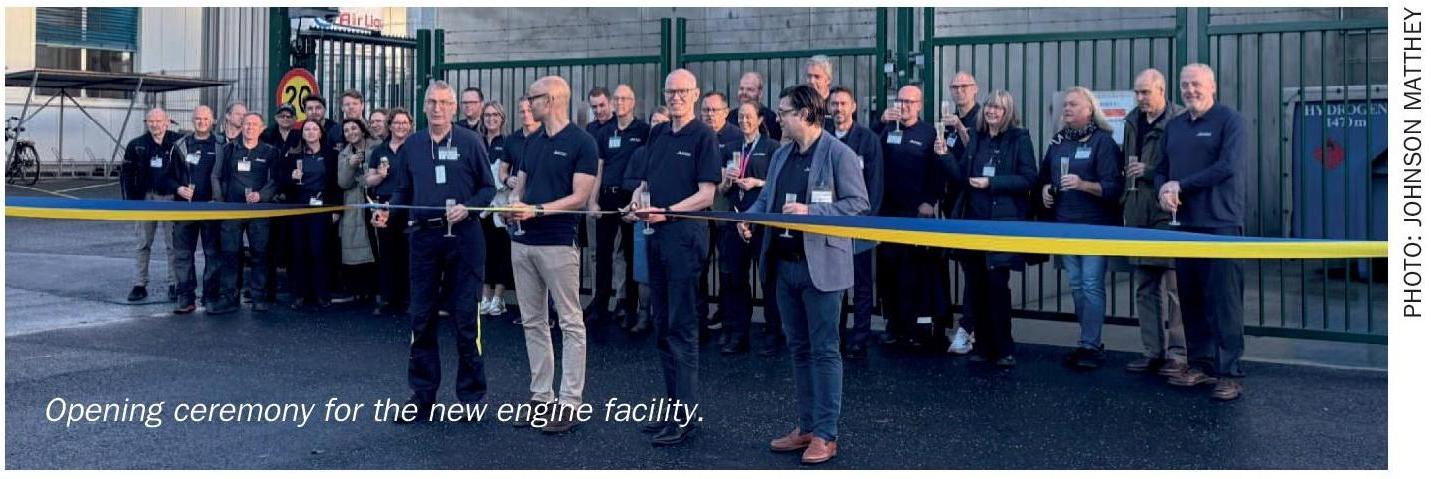
Announced back in July, the new testing area forms part of JM’s existing site in Gothenburg, Sweden. The facility has been completed on time and on budget, representing a £2.5m investment over three years. The opening was performed by Damien Sotty, JM R&D Director, Daniel Sandqvist, Gothenburg Test Centre Manager and Jonas Edvardsson, Managing Director JM Gothenburg.
Tauseef Salma, JM Chief Technology Officer in Clean Air, said: “This investment shows JM is backing H2 ICE as a ready-to-go technology that will enable mobility partners to meet their decarbonisation and climate goals. Our state-of-the-art Gothenburg facility positions JM as a world leader in sustainable technology solutions, transforming energy and reducing carbon emissions.”
The new Gothenburg installation supports engines up to 600kW (800hp). It will test the performance of catalysts within the wider engine after-treatment and control systems, providing key insights into the development of hydrogen mobility solutions. Gothenburg is already home to medium and heavy-duty diesel engine test cells. Johnson Matthey is a founding member of the Global Hydrogen Mobility Alliance, a coalition of more than 30 major companies across the automotive, energy and technology sectors, aiming to accelerate the deployment of hydrogen solutions in Europe’s transport sector. The alliance – which includes companies such as BMW, Toyota, Hyundai, Air Liquide, and Linde – is urging EU policymakers to prioritise hydrogen mobility as a key component of their decarbonisation and industrial strategies.