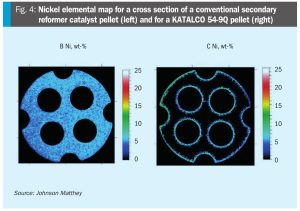
Optimised catalyst design for secondary reformers
Johnson Matthey Davy Technologies presents an innovative nickel catalyst for secondary reformers that lowers catalyst refill costs, aids reliability and reduces environmental impact.


Johnson Matthey Davy Technologies presents an innovative nickel catalyst for secondary reformers that lowers catalyst refill costs, aids reliability and reduces environmental impact.
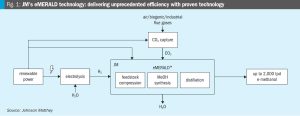
Johnson Matthey demonstrates how its eMERALD CO2-to-Methanol technology offers a bankable, scalable, and renewable-ready pathway for delivering cost effective e-methanol at the volumes required to support global aviation and maritime decarbonisation.

Honeywell and Johnson Matthey have agreed to amend the agreement for Honeywell’s purchase of JM’s Catalyst Technologies business segment. Honeywell’s payment for the business has been reduced from £1.8 billion ($2.43 billion) to £1.325 billion ($1.8 billion), and the completion date for the transaction has been extended to July 21, 2026, with a possible extension […]

Johnson Matthey (JM) has officially opened its first hydrogen internal combustion engine facility, where emission control systems will be tested. Hydrogen internal combustion engines use zero carbon hydrogen fuel in tried-and-tested engine technology, presenting a viable path for decarbonising medium and heavy-duty transport, such as trucks and buses.
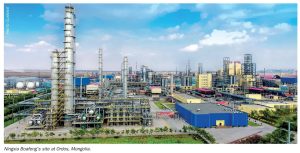
Johnson Matthey (JM) says that the three methanol production trains of Inner Mongolia Baofeng Coal-based New Materials Co., Ltd., a wholly owned subsidiary of Ningxia Baofeng Energy Group, were successfully commissioned in November 2024, February 2025, and March 2025, respectively. Located in the Wushenqi Sulige Economic Development Zone of Ordos City, Inner Mongolia Autonomous Region, this plant employs Johnson Matthey’s advanced methanol synthesis technology and catalysts, making it the largest single methanol plant in the world. Inner Mongolia Baofeng also stands as one of the largest chemical enterprises globally that produces polyethylene and polypropylene by using coal as a substitute for oil.
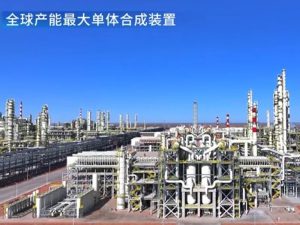
World's largest methanol plant - Johnson Matthey designed methanol plant uses syngas as feedstock, combined with advanced catalysts

Johnson Matthey Plc (JM) says that it has reached an agreement to sell its Catalyst Technologies (CT) business to Honeywell International, Inc. for £1.8 billion ($2.45 billion) on a cash and debt-free basis.

This year’s International Methanol Technology Operators’ Forum (IMTOF) was held at the Holiday Inn Regents Park hotel, London, from June 15 to 18.

No longer viewed as only a chemical feedstock, methanol is increasingly being regarded as a low-carbon energy carrier. Zinovia Skoufa of Johnson Matthey discusses the role of sustainable methanol as a multi-pathway fuel for the energy transition.
Tecnicas Reunidas and Siemens Energy have been awarded the contract to carry out front-end engineering design (FEED) for a major green methanol project in La Robla, Spain. The consortium will work on the project for Spanish developer Reolum, part of a partnership that says it is building the largest green methanol plant in Europe. The La Robla Nueva Energia facility will combine biogenic CO2 from a co-located biomass-based cogeneration plant with green hydrogen to produce 140,000 t/a of low carbon methanol. Tecnicas Reunidas will focus on the biogenic carbon capture and methanol production units, while Siemens Energy will handle the renewable hydrogen unit. Johnson Matthey has been selected to supply its eMERALD methanol technology, while Mitsubishi Heavy Industries will license it CO2 capture technology for the project.