• Skip to main content

    Nitrogen+Syngas 396 Jul-Aug 2025

    Uhde and Uniper to partner on ammonia cracking


    thyssenkrupp Uhde and Uniper are entering into a strategic partnership to bring large-scale ammonia cracking technology to technological maturity. In the first phase, a demonstration plant with a capacity of 28 t/d of ammonia per day will be built at Uniper’s Gelsenkirchen-Scholven site in Germany. The plant will serve as the basis for the planned hydrogen import terminal in Wilhelmshaven, northwestern Germany, where the technology is to be applied on a large industrial scale in a second phase. The aim of the partnership is to convert imported ammonia into hydrogen on an industrial scale and make it available for a wide range of industries such as energy, steel, and chemicals. The cooperation marks an important step towards strengthening energy security and the sustainable transformation of energy-intensive industries. The partners say that the use of ammonia as a transport and storage medium makes it possible to provide green or low-carbon hydrogen from global production sites in large quantities at low cost – a prerequisite for the successful ramp-up of the hydrogen economy.

    Holger Kreetz, COO of Uniper said: “Uniper is actively committed to establishing hydrogen as an important component of the future energy mix that combines security and sustainability. Our aim is to strengthen the resilience of the economy. In order to meet Germany’s future hydrogen needs, we are dependent on imports from abroad. The partnership between Uniper and thyssenkrupp Uhde is therefore an important milestone for the hydrogen ramp-up and the decarbonisation of industry. With the ammonia cracker in Scholven, we’re laying the groundwork to trade hydrogen internationally and making it available across industries.”
    Nadja Håkansson, CEO of thyssenkrupp Uhde said: “Uniper’s position as a leader in the energy markets and experienced asset operator, combined with our proven track record as a global leader in ammonia technology and large-scale plant delivery, forms a strong foundation for success. This joint capability ensures that the cracker plant is optimized not only for performance and efficiency but also for safety, long-term reliability, and total lifecycle cost. This integrated approach ensures a high level of confidence across the industry that the plant will consistently deliver top-tier operational performance throughout its entire lifecycle.”

    The project is supported by funding from the state of North Rhine-Westphalia to realise innovative components of the demonstration plant at the Scholven site. The plant serves to gain knowledge for the subsequent construction of a large-scale commercial plant. Both companies are also contributing significant funds of their own.

    Latest in Commodity

    Nickel Industries starts up ENC acid plant

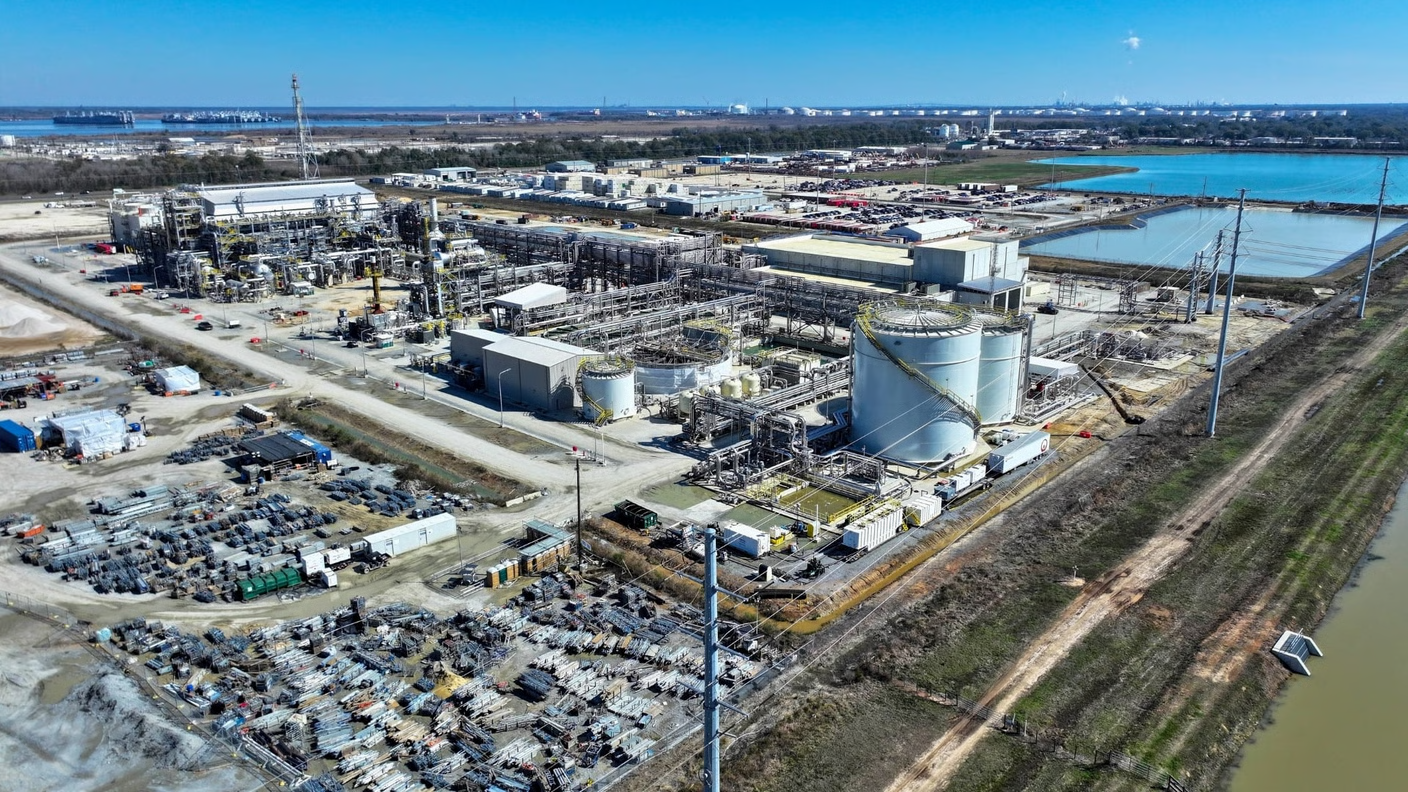
    Nickel Industries announced started up the sulphuric acid plant at its new Excelsior Nickel Cobalt (ENC) HPAL project in the final week of June. The ENC Project is a massive, multi-billion dollar high-pressure acid leach (HPAL) facility located in the Indonesia Morowali Industrial Park (IMIP) in Central Sulawesi, Indonesia. It is operated by Australia’s Nickel Industries to supply battery-grade materials for the electric vehicle (EV) market. At capacity, it is expected to yield roughly 72,000 t/a of contained nickel equivalent as mixed hydroxide precipitate (MHP), nickel sulphate, and nickel cathode.

    Russia bans rail transport of Kazakh sulphur

    Russia has ordered a “temporary cessation” of rail transport of all sulphur originating from Kazakhstan that is destined for Russian seaports and railway checkpoints, representing a significant policy shift, according to an official order from the Federal Agency for Railway Transport (Roszheldor). The directive, which took effect from May 26th, orders a halt to the loading and movement of Kazakh sulphur “until further notice.” While the measure is officially described as temporary, the order provides no specific timeline for when the transit might resume. The action cites instructions from Russia’s First Deputy Prime Minister, D.V. Manturov, as its basis.