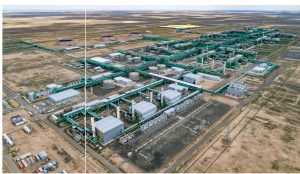
Sulphur in central Asia
The Caspian Sea region is home to extensive sour gas reserves which produce large volumes of sulphur. Exports are difficult, but the Kazakh uranium industry is consuming an increasing amount.


The Caspian Sea region is home to extensive sour gas reserves which produce large volumes of sulphur. Exports are difficult, but the Kazakh uranium industry is consuming an increasing amount.
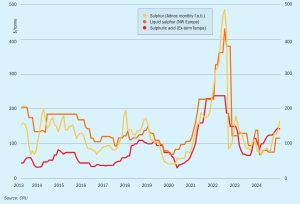
Sulphur prices may remain stable before decreasing on muted demand and transactions may increase in frequency contributing to price decreases in the first half of 2025.

Dr Karl Wyant of Nutrien outlines how the phosphorus and potassium removed during soybean/corn rotations are best replenished.

Market snapshot, 2nd January 2025
NextChem has been awarded two contracts to upgrade and expand the capacity of the Heydar Aliyev Oil Refinery (HAOR) industrial complex in Baku by state oil company SOCAR. As part of the contract, NextChem will conduct a technological assessment and deliver a process design package to upgrade the existing sulphur recovery unit (SRU) with oxygen enriched air, a cost-effective and flexible solution for expanding its current sulphur production capacity. Additionally, NextChem will provide the licensing and the process design package based on its proprietary NX SulphuRec TM technology for a new SRU. NX SulphuRec TM is a portfolio of proprietary sulphur recovery technologies, based on the integration of modified Claus and tail gas treatment processes, aimed at reducing the environmental impact of acid and sour gases produced during the refining process.
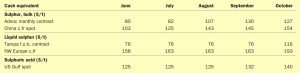
Global sulphur prices underwent increases in some key benchmark markets during October, but spot activity nevertheless remained muted, with demand subdued and availability tight. Market participants continue to closely track geopolitical developments.
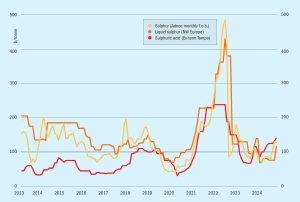
Global sulphur prices are expected to continue rising in certain regions but at a reduced rate of increase. Recent higher spot prices in the Middle East are likely to carry over to other markets. Sulphur affordability in key markets such as China remains good, reinforced by recent increases in phosphate prices.

A report on CRU’s annual Sulphur+Sulphuric Acid Conference, held in Barcelona, in early November.
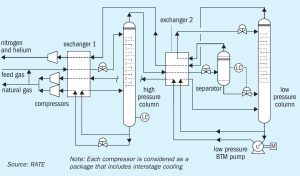
As the oil and gas industry focus on new requirements for CO2 recovery, cryogenic processes come under the spotlight. Mahin Rameshni and Stephen Santo of RATE USA discuss the importance of cryogenic processes in acid gas sweetening. Liquefied H2 S and CO2 reinjection is proposed as a cost effective alternative to large sulphur plants.
OCP’s recent award of a contract to Worley Chemetics for three new greenfield sulphuric acid plants has confirmed the phosphate giant’s plans for its new Mzinda Phosphate Hub in Morocco, one of the largest investments in new phosphate capacity anywhere in the world over the next few years. It is part of a number of new investments under way in Morocco as OCP continues to expand its already considerable phosphate facilities. Three new fertilizer lines came onstream at Jorf Lasfar in 2023 and 2024, each with a capacity of 1 million t/a of diammonium phosphate (DAP). The Mzinda mega-project will add another 4 million t/a of triple superphosphate (TSP) capacity by around 2028-29, and will relieve some of the issues that OCP has in importing ammonia for DAP production, as TSP only requires phosphate rock and phosphoric acid. There is also an additional 1 million t/a of TSP capacity under construction at Jorf Lasfar, which is expected to be completed next year, and OCP also announced last year that it would build an integrated purified phosphoric acid (PPA) plant at Jorf Lasfar. The first phase of the project consists of 200,000 t/a of P2 O5 pretreated phosphoric acid capacity, 100,000 t/a (P2 O5 ) of PPA capacity, and 100,000 t/a of technical MAP (tMAP) capacity. The site will also be home to downstream production of phosphate salts and lithium iron phosphate (LFP) capacities. The initial plants will be delivered starting in mid-2026, carrying through into 2029, constructed in conjunction with JESA, a joint venture between OCP and Worley.