SulGas Mumbai 2024
We report on the key highlights of the annual SulGas® conference, organised by Three Ten Initiative Technologies LLP,, which took place in Mumbai, India, from January 31 to February 2, 2024.


We report on the key highlights of the annual SulGas® conference, organised by Three Ten Initiative Technologies LLP,, which took place in Mumbai, India, from January 31 to February 2, 2024.
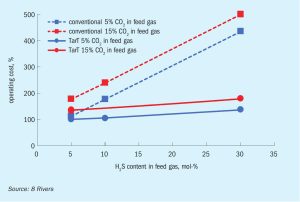
TarT technology, one of 8 Rivers’ decarbonisation technologies, shows promise as an economical, efficient, sour gas sweetening process with near-zero carbon dioxide emissions, and may be key to unlocking access to the world’s sour gas reserves.

This June marks a milestone for this magazine; a platinum jubilee since the very first issue of the magazine was printed in 1953. It began life as the Quarterly Bulletin of the Sulphur Exploration Syndicate. The Syndicate was created in 1952, and was backed by nine major chemical producers, mainly in Britain and the US, who were concerned about dwindling world supplies of sulphur. Though some of these companies have vanished by the wayside over the years, including F.W. Berk and Co. Ltd, British Titan Products, Brotherton & Co., and Charles Tenant & Sons Ltd, others remain household names to this day, including Monsanto, Courtaulds (now part of Akzo-Nobel), and Dunlop (now owned by Goodyear), while Fisons’ fertilizer division was sold to Norsk Hydro in 1982 and today trades as part of Yara.

Sulphur production continues to expand in the Middle East and China both from new refineries and major sour gas projects.
SulGas, South Asia’s sulphur recovery and gas treating conference, returned to a live event in 2023, providing participants with a platform to interact with experts in the field, share best practices and troubleshooting tips with fellow refiners and discuss advanced technologies and operating procedures with technology providers, vendors and licensors.
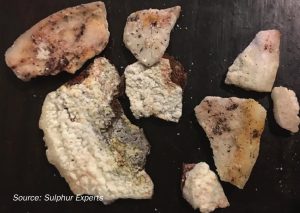
Sulphur Experts Inc. combines new learnings, historical data, and recent onsite experience from operating companies to show what factors really impact ammonia plugging risk and what can be done to control them in order to allow for a wider operating range for SWS processing in the refinery SRU.

The US refining sector continues to face operating pressures with 1.3 million bbl/d of closures in the past three years, while sour gas sulphur production has recovered somewhat. Meanwhile, demand from copper and lithium leaching projects will increase use of sulphuric acid over the next few years.
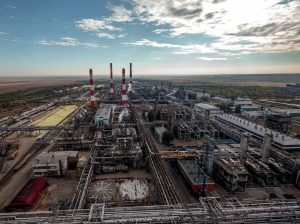
Sulphur processing from sour gas fields dominates regional production, but the geographical remoteness of the area from end use markets and restrictions on sulphur storage means that producers often opt to reinject acid gas into oil and gas wells.
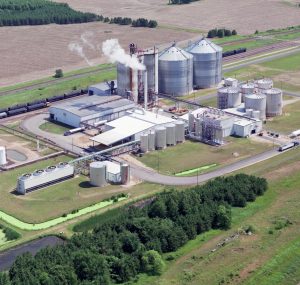
Considering the current shift to produce biofuels instead of conventional oil products, M. van Son of Comprimo discusses the impact that this may have on the ability to process the sour water acid gas streams produced in existing or new sour water strippers.

RSK and its subsidiary ADAS have developed a sustainable solution for the disposal of sulphur waste generated from a natural gas processing facility in Iraq. C. Teulon of RSK reports on the research that was carried out to test whether the waste sulphur from a biological sulphur removal process could be applied in agriculture to increase the quality and quantity of crops in Iraq.