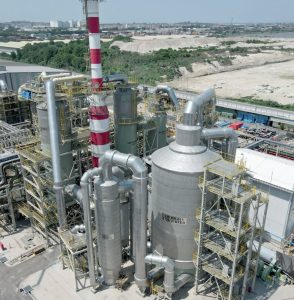
The merchant market for sulphuric acid
Short term supply constraints are dominating acid markets at present, but increasing smelter production across Asia may lead to oversupply in the longer term.


Short term supply constraints are dominating acid markets at present, but increasing smelter production across Asia may lead to oversupply in the longer term.
One of the biggest areas for new sulphuric acid demand in the past few years has been in nickel processing plants, particularly in Indonesia. A decade ago, incoming president Joko Widodo took a strategic decision that the country needed to try and capture more of the value chain from its mining and mineral industry, which was focused at the time on exports of aluminium, copper and nickel ores and concentrates, mainly to China. Over the past 10 years, the export of raw ores has been progressively restricted and companies instead compelled to build downstream processing plants for the metals. With China the main recipient of Indonesian ores, much of the investment in metals processing in Indonesia has been via Chinese companies.
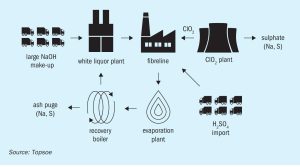
The implementation of WSA technology to recover sulphur as sulphuric acid from lean sulphurous off-gases offers significant environmental benefits. These include waste reduction, resource efficiency and reduced overall CO2 e footprint, while also producing profitable sulphuric acid. By embracing such practices, industries can ensure improved or better consumption and production patterns and foster a more sustainable and responsible future. J. Feddersen and S. S. Johansson of Topsoe illustrate these benefits using three distinct industrial applications where WSA technology provides a smarter way to treat sulphurous off-gases. It is not only waste stream management in the three cases, but also reduced transportation of chemicals, reduced opex and reduced CO2 e footprint.
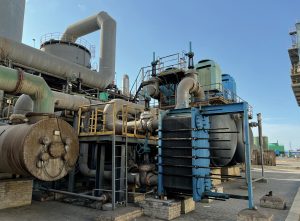
Alfa Laval reports on a case study of a sulphuric acid plant in Northwest China that is looking to capture its low-grade heat for re-use and to significantly reduce the amount of fossil fuels used in production.

In 2019 Topsoe launched its ClearView™ technology for WSA and SNOx sulphuric acid plants. This article focuses on the results and learnings from the first implementation of ClearView™ at a new WSA plant at Anglo American Platinum’s Polokwane smelter in South Africa.

The recovery of waste heat from Aurubis’ copper smelting operation in Hamburg is already helping to reduce global carbon emissions and has the potential to provide heat for up to 20,000 homes through the district heating network in Hamburg’s HafenCity. The energy for the network comes from waste heat that Aurubis recovers from their sulphuric acid plant, using unique Alfa Laval plate heat exchanger technology.
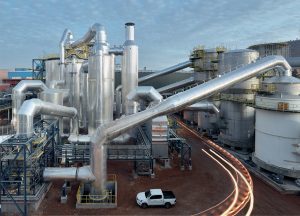
The sulphuric acid process is virtually carbon free and, as such, it is important to consider the energy requirements of the associated industrial complex before deciding upon what form the energy should be exported from the acid plant. In this article, Stefan Braeuner, Stefan Mohsler and Anne Mohsler of Metso Outotec use case studies to exemplify the need to fully analyse the local conditions at site before a decision is taken on a specific flowsheet.

Condensate formation in sulphuric acid plants can cause severe corrosion problems leading to high maintenance and plant downtime. Santhosh S . of Metso Outotec discusses the importance of carrying out regular monitoring and maintaining accurate and detailed data about condensate to increase equipment life and avoid downtime. Different sources of condensate formation in the plant are discussed as well as the typical locations in the plant where the condensates end up.

A look at the major factors influencing the sulphur market around the world.