
Serra do Salitre project profile
EuroChem Group recently completed the purchase of the Serra do Salitre project from Yara International for $452 million. This one million tonne capacity Brazilian phosphate project is due to be completed in 2024.


EuroChem Group recently completed the purchase of the Serra do Salitre project from Yara International for $452 million. This one million tonne capacity Brazilian phosphate project is due to be completed in 2024.
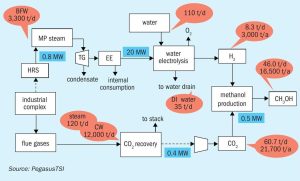
Ricardo L. Sepulveda of PegasusTSI reviews options to decrease the CO2 footprint of a fertilizer industrial complex and illustrates the technical and economic feasibility of utilising clean energy from a sulphuric acid plant in a fertilizer complex to produce green hydrogen, which in turn can be used to produce green methanol or green ammonia.
It was supposedly Lenin who said that there were “weeks when decades happen”, and the past few weeks have felt very much like that. The outbreak of conflict in Ukraine has sent shockwaves across the world and may have changed it permanently.

Yara and Lantmännen have signed an agreement to bring fossil-free mineral fertilizers to market.

As a quick glance through the Index of last year’s articles and news items in this issue of the magazine will amply demonstrate, 2021 was a year full of project announcements for low carbon ammonia and methanol projects of all hues; blue, green, turquoise and many other shades besides. Market analysts CRU said in December that they calculated that there have been a total of 124 million t/a of low carbon ammonia projects announced, 80 million t/a of which came in 2021 alone, equivalent to 55% of current ammonia capacity. These range from tentative pilot plants that are fully costed and often with government grants already secured to blue sky visions of vast electrolysis hubs in the deserts of Arabia with timescales towards the end of the decade – it’s often the case that the longer the proposed timescale, the less likely a project is to happen.

Fertilizer International presents a global round-up of current potash projects.
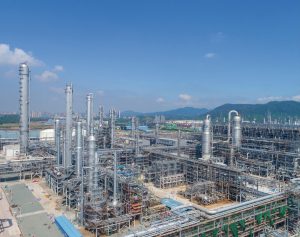
In China, requirements for methanol to produce olefins, mainly propylene and ethylene, from coal, has driven much of the growth in global methanol demand over the past decade. However, a new wave of ethylene cracker investment may put a stop to new MTO plant building.
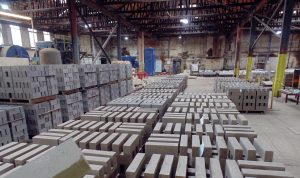
As sulphur recovery units operate at progressively higher temperatures, creep stress in the furnace refractory lining can lead to deformation or even failure of the bricks and require the shutdown of the SRU. UK-based DSF Refractories have developed a product which minimises creep stress damage at high temperatures, for a longer-lived furnace lining.
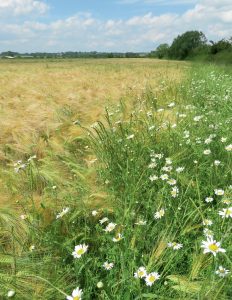
RSK and its subsidiary ADAS have developed a sustainable solution for the disposal of sulphur waste generated from a natural gas processing facility in Iraq. C. Teulon of RSK reports on the research that was carried out to test whether the waste sulphur from a biological sulphur removal process could be applied in agriculture to increase the quality and quantity of crops in Iraq.
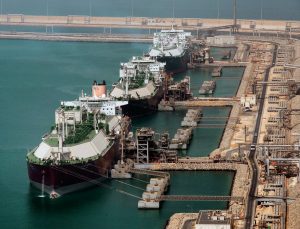
Although the number of new sour gas developments has slowed in recent years compared to the large boost of the previous decade, sour gas projects continue to be a major source of new sulphur production.