• Skip to main content

    Tag: India

    Urea plants running at reduced capacity

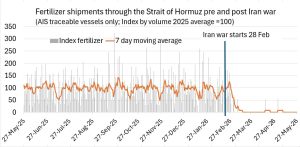
    India’s urea industry was running at approximately half capacity after force majeure declarations disrupted LNG flows through the Strait of Hormuz amid escalating Middle East tensions, according to local press reports. Petronet LNG Ltd, which operates India’s largest liquefied natural gas receiving terminal, declared force majeure after upstream suppliers cited their inability to deliver contracted volumes amid disruptions to cargoes transiting the Strait. The move triggered supply curtailments by state-owned gas distributors GAIL (India) Ltd, Indian Oil Corporation Ltd (IOC) and Bharat Petroleum Corporation Ltd (BPCL), which supply gas under RasGas contracts to fertiliser units across the country.

    Approval for biomass biomethanol plant

    The Government of Assam has approved a fiscal incentive package for the development of an industrial scale biomethanol facility at an estimated cost of $1.2 billion. Project developer Novel Biofuels is working in partnership with infrastructure company ACTUAL on the project, which will produce 1.4 million litres/day (1,100 t/d) of high-purity biomethanol from sustainably harvested bamboo sourced from Assam’s smallholder farming communities. It is expected to be commissioned by 2030, with site development and supply chain buildout commencing in 2026.

    Jindal Steel to use syngas for direct reduction iron

    Jindal Steel says that it has achieved a global first by establishing India’s first coal gasification-based direct reduced iron (DRI) plant, using syngas for iron making. In response to shortages of natural gas, LPG and propane, Jindal Steel has also looked to deploy syngas in galvanising and colour coating line furnaces, as well as injecting syngas into its blast furnace, reducing dependence on imported coking coal and lowering carbon emissions per tonne of steel.

    Methanol bunker fuel trial

    Deendayal Port Authority says it has completed India’s first methanol bunkering demonstration at Kandla port, furthering its port bunkering capabilities and alternative fuels provision aims. The authority says that the shore-to-ship methanol transfer marks a milestone for port infrastructure development aligned with maritime decarbonisation goals. Conducted on 2 April, the trial brought together multiple industry partners to validate operational readiness and safety procedures for handling alternative fuels within a working port environment.

    Coromandel starts trial operations at new acid plants

    Coromandel International says that it has started trial production at its new sulphuric acid and phosphoric acid plants in Kakinada, Andhra Pradesh. The company says that this marks a crucial step towards transforming the unit into a fully integrated facility, significantly enhancing production capacity and diminishing reliance on imported raw materials for fertiliser manufacturing. The company is now focusing on a phased ramp-up. The new plants have of 2,000 t/d of sulphuric acid and 650 t/d of phosphoric acid, respectively. The integration of these acid plants is strategic, aligning with Coromandel's objective to strengthen backward integration in its fertiliser manufacturing value chain. By producing key intermediates in-house, the company aims to secure stable supplies, enhance cost efficiencies, and achieve greater self-sufficiency, thereby reducing dependence on imported raw materials. The project aims to replace over 50% of the Kakinada plant's imported acid requirements and mirror the integration levels seen at its Vizag and Ennore facilities.