IMTOF 2023
The International Methanol Technology Operators Forum (IMTOF) met at the Leonardo Royal St Paul’s hotel in London from June 11th-14th.
While demand for ammonia remains – for now at least – strongly tied to fertilizer and farming, over the three decades that I’ve edited this publication, methanol’s story has been a very different one, with a succession of major new slices of demand coming every few years from new applications that flare up and then mature or even drop away again. For a while in the 1990s it was MTBE, the oxygenated fuel additive that had a brief flourish in the US before being shut down by leaking fuel tanks leaching into ground water. Then there was dimethyl ether (DME) as a blendstock for LPG, and methanol itself directly blended into gasoline in China to keep up with soaring vehicle fuel demand. More recently, methanol to olefins (MTO) has added almost another 25% of demand over and above existing chemical and fuel uses. But as the world cracks down on coal production and use, China’s attempt to use methanol as a way of using domestic coal to replace imported oil seems to have passed its high water mark and begun to recede.
The world’s transition toward the use of hydrogen and ammonia as clean energy and fuel sources will depend upon production technologies that are affordable, scalable, and meet net zero carbon targets. 8 Rivers recently introduced8 RH2 , a groundbreaking solution that offers world-leading efficiency in hydrogen production and captures over 99% of CO2 emissions. Maulik Shelat of 8 Rivers provides an overview of the technology with a comparison to other low-carbon hydrogen production technologies.
Linde has developed a new adsorptive carbon dioxide removal process, called HISORP® CC, including but not limited to blue ammonia production. Based on a combination of mature technologies the process overcomes the drawbacks of traditional CO2 removal techniques and provides a carbon capture rate of greater than 99%. Thomas Ried discusses the pros and cons of different process configurations for CO2 removal and the benefits of the new technology.
Gas Chemical Complex MTO Central Asia LLC has signed an agreement with Air Products to build a new methanol production facility. Known as Methanol Island, the facility would have a capacity of 1.34 million tons per year, as a part of the Methanol-to-olefin (MTO) gas chemical complex in Uzbekistan. The facility, to be built in the Karakul Free Economic Zone situated in Uzbekistan’s Bukhara region, will cover 15 hectares. It is planned to enter operation in 2025 for an expected operational life of 25 years.
Tessenderlo Kerley International recently published a tree nut crop brochure. This article draws on the brochure to highlight the importance of two essential nutrients, calcium and sulphur, as part of a balanced fertilization programme for nut crops.
Tree nuts are an important dietary source of unsaturated fatty acids, vitamins and minerals. Orchards require balanced fertilization to promote healthy root growth, maintain tree vigour, and achieve yield targets in response to growing market demand. ICL agronomists Cristian Filote, Gali Carmi and Patricia Imas review their nutrient needs.
The centre of gravity of the phosphate industry continues to shift, with Chinese exports less important, and fresh demand coming from India and Brazil.
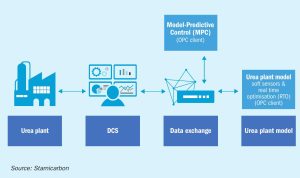
Pejman Djavdan , CEO of Stamicarbon looks at the ways in which the fertilizer industry must grapple with issues such as decarbonisation, sustainability and more efficient use of nutrients.
Advances in clean hydrogen and ammonia production is fuelling worldwide interest in a new market for hydrogen and ammonia to provide a reliable low-carbon energy future. Ammonia cracking, the dissociation of ammonia back into hydrogen, delivers a pathway to large-scale sustainable hydrogen production. In this article KBR, Johnson Matthey, thyssenkrupp Uhde, Duiker, Proton Ventures and Casale report on their technologies and approaches to ammonia cracking in a low carbon economy.